
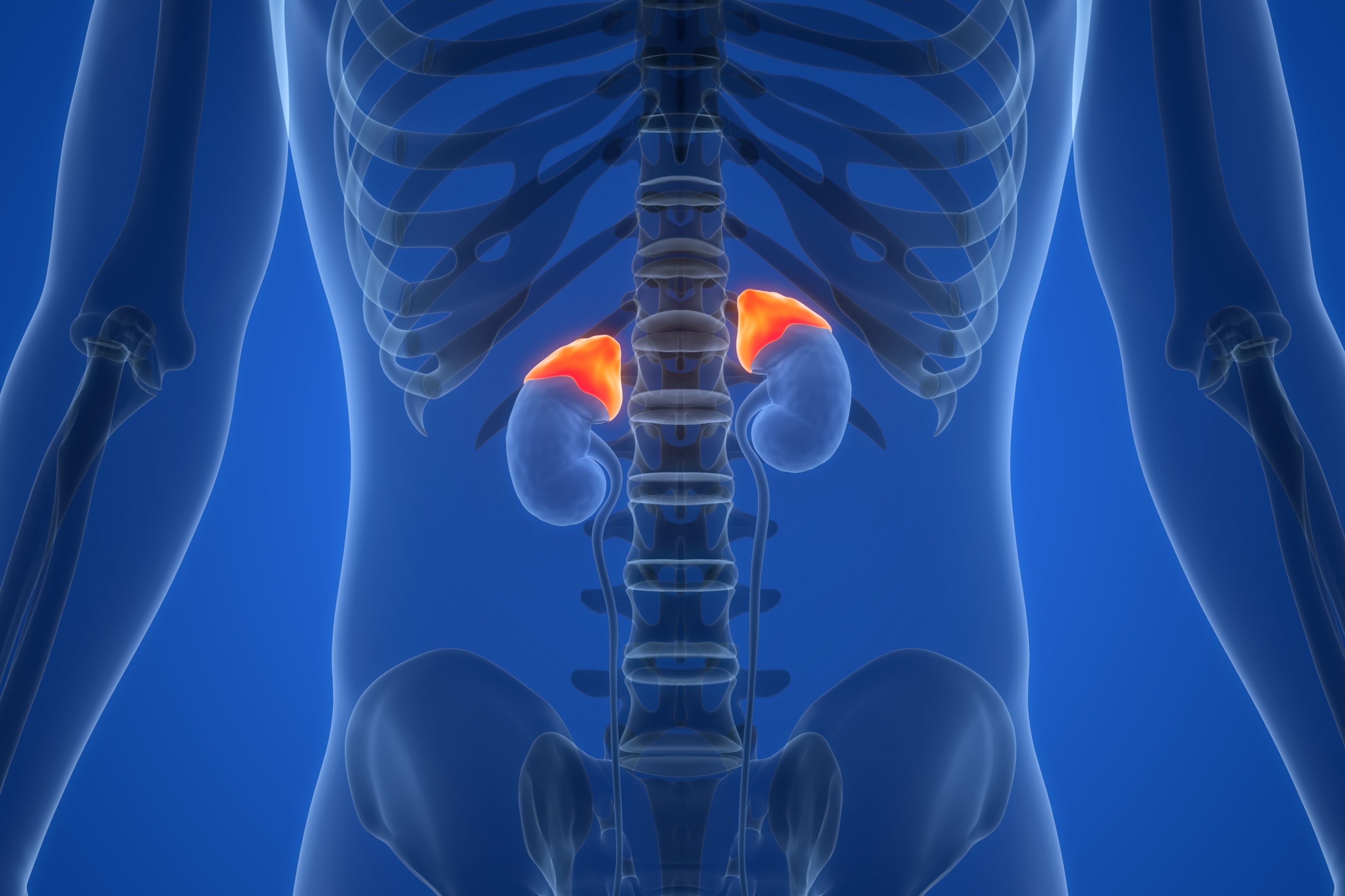
(Vienna, 29 September 2026) – A mildly elevated cortisol level could have particular health implications for people with an adrenal adenoma and concomitant type 2 diabetes. This was demonstrated in a retrospective study by the Medical University of Vienna. In people with an adrenal adenoma, mortality was significantly higher when type 2 diabetes and mild autonomous cortisol secretion (MACS) were present together. In contrast, among people with only MACS or only type 2 diabetes, mortality was not significantly higher than among those with an adrenal adenoma without type 2 diabetes and without MACS. The study, recently published in the journal Cardiovascular Diabetology, thus provides valuable insights for further research and potentially for future clinical assessment.
As part of the study, the research team led by Michael Leutner (Division of Endocrinology and Metabolism, Department of Medicine III, MedUni Vienna) analysed data from 668 people with adrenal adenomas who were examined at the endocrinology outpatient clinic of the Department of Medicine III at MedUni Vienna between 1 January 2000 and 31 December 2022. At that time, 151 of these individuals also had type 2 diabetes, and 277 were found to have mild autonomous cortisol secretion (MACS). This refers to a low level of independent cortisol production by the adrenal gland, without the typical clinical signs of a pronounced excess of cortisol, known as Cushing’s syndrome.
The analyses reveal a link between MACS and increased mortality in people with type 2 diabetes and adrenal adenomas: the ten-year survival rate in this group was 70 percent. In contrast, among people with type 2 diabetes and adrenal adenomas without MACS, it was 85 per cent. Among people with adrenal adenomas but without type 2 diabetes, the ten-year survival rate was 86 percent with MACS and 91 percent without MACS. "Even after taking into account key influencing factors such as hypertension, dyslipidaemia and atherosclerosis, the association remained," comment the first authors Luise Bellach and Sarah Hofer-Zeni (Division of Endocrinology and Metabolism, Department of Medicine III, MedUni Vienna).
"Our findings suggest that a mild excess of cortisol in people with type 2 diabetes and an adrenal adenoma could have particular prognostic significance. It is now crucial to verify this association in prospective studies and to clarify whether targeted treatment of the cortisol excess can actually reduce health risks," says the corresponding author, Michael Leutner.
Adrenal adenomas are benign lesions of the adrenal gland. Mild autonomous cortisol secretion is reported in around 20 to 50 percent of people with such adenomas. Cortisol is a hormone produced naturally by the body which, amongst other things, influences glucose metabolism. A prolonged excess of cortisol can impair insulin action and is associated with metabolic and cardiovascular diseases. The current study by the Medical University of Vienna now shows that this association was particularly pronounced in the group of people with type 2 diabetes and MACS who were examined. The data analysis thus provides valuable insights for further research and, potentially, for future clinical assessment: in people with type 2 diabetes and adrenal adenomas, the question of mild autonomous cortisol secretion could be particularly relevant.
Publication: Cardiovascular Diabetology (Impact factor 15.6)
Mild autonomous cortisol secretion (MACS) is associated with increased mortality in patients with adrenal adenomas only in the presence of type 2 diabetes – a retrospective cohort study.
Luise Bellach, Sarah Hofer-Zeni, Dorota Sluková, Dorothea Kalender, Clemens Zimmermann, Naima Michler, Liliana Gard, Sabina Baumgartner-Parzer, Rodrig Marculescu, Greisa Vila, Peter Wolf, Alexandra Kautzky-Willer, Michael Leutner.
DOI 10.1186/s12933-026-03360-4
https://link.springer.com/article/10.1186/s12933-026-03360-4