
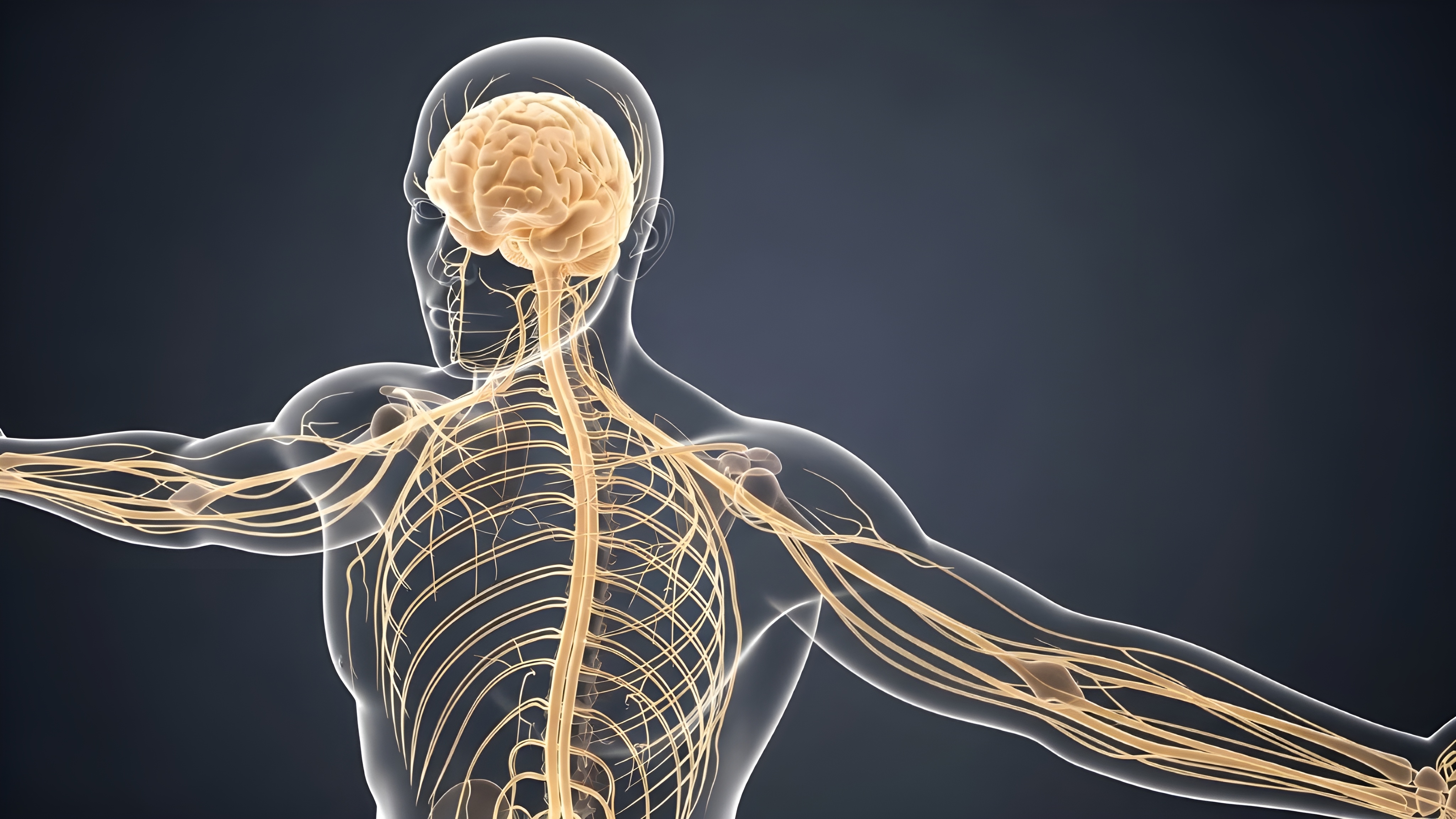
(Vienna, 13 November 2026) A research team at the Medical University of Vienna has investigated how the connection between nerve cells and muscles remains stable over time. In the course of their work, the scientists identified a previously unknown molecular mechanism that is important for the reliable transmission of nerve signals to the muscles. The findings provide new insights into how neuromuscular synapses function and could, in the long term, contribute to a better understanding of neuromuscular disorders. The study, led by Ruth Herbst from the Institute of Specific Prophylaxis and Tropical Medicine of the Center for Pathophysiology, Infectiology and Immunology at MedUni Vienna, was published in the journal Cell Chemical Biology.
For a skeletal muscle to contract, signals must be transmitted from the nerve cells to the muscle fibres. This takes place at specialised contact points known as neuromuscular synapses. These contain acetylcholine receptors, which bind the neurotransmitter acetylcholine released by the nerve cells. For reliable signal transmission, these receptors must be arranged in high density and permanently anchored to the muscle surface. The protein MuSK plays a central role in the organisation of these contact points. To date, our knowledge of how it orchestrates the required molecular processes has been limited.
Previously unknown component of the signalling network identified
The research team led by study director Ruth Herbst and first author Cinzia Barresi used modern molecular biology methods to investigate which proteins interact with MuSK. The researchers identified 74 proteins associated with the signalling network. Further investigations focused on the protein Rapgef1, whose function in this context was previously unknown.
The results show that Rapgef1 is integrated into the MuSK signalling network via other proteins and plays an important role in the organisation and anchoring of acetylcholine receptors.
“We have identified a previously unknown component of the signalling network that regulates the connection between nerves and muscles. Our findings demonstrate how crucial the interaction between different proteins is to ensuring that nerve signals are reliably transmitted to the muscles,” explains study leader Ruth Herbst.
Important for the long-term stability of the contact sites
In further experiments, the researchers investigated the effects of the absence of Rapgef1. They found that the arrangement of acetylcholine receptors is impaired. Even fully formed neuromuscular synapses lost their ordered structure when the protein was specifically inactivated in adult muscle tissue.
The results suggest that Rapgef1 plays a key role in anchoring the receptors stably to the muscle surface. The protein therefore plays an important role not only in the formation but also in the long-term maintenance of neuromuscular synapses.
“It is particularly revealing that Rapgef1 is also required for the stability of existing neuromuscular synapses. We have thus elucidated a further mechanism that helps to maintain the function of these important contact points in the long term,” said Ruth Herbst.
New insights for research into neuromuscular disorders
Disruptions at the junctions between nerves and muscles can lead to muscle weakness and neuromuscular disorders such as myasthenia gravis and congenital myasthenic syndrome. The identification of Rapgef1 as a key component of the MuSK signalling network broadens our understanding of the molecular basis of these connections. These findings could open up new avenues for research into neuromuscular disorders in the future. Whether this will lead to therapeutic options remains to be investigated in further studies.
The research, which was funded by the Austrian Science Fund (FWF), was carried out in collaboration with scientists from the University of Basel, the University of Vienna and the Max Perutz Labs.
Publication: Cell Chemical Biology
Crk/Crk-L-mediated Rapgef1 recruitment couples MuSK signalling to AChR anchoring at the neuromuscular junction.
Cinzia Barresi, Eleonora Maino, Weiqiang Chen, Jakob J. Prömer, Alexia Bock-Pereda, Markus Hartl, Markus A. Rüegg, Ruth Herbst.
DOI: https://doi.org/10.1016/j.chembiol.2026.08.014