
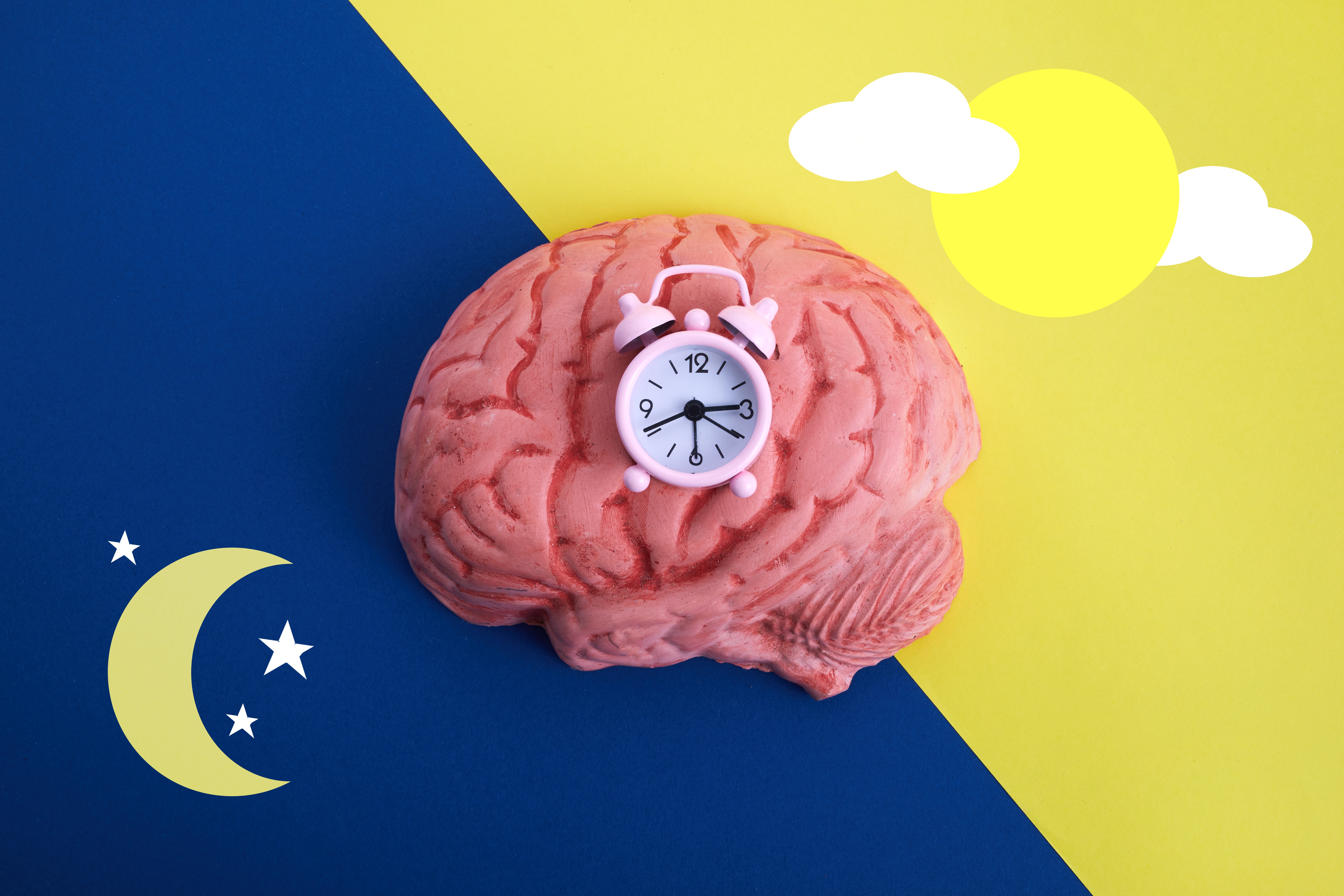
(Vienna, 22 July 2026) – An international research team led by the Medical University of Vienna has investigated the genetic basis of a newly developed "Circadian Imbalance Index". The index combines several characteristics associated with an increased risk to circadian rhythm disruption. The results, recently published in the journal eBioMedicine, show that this susceptibility to circadian imbalance cannot be explained by a single factor, but rather arises from the interaction of several characteristics, some of which have a genetic basis.
For the study, the research team led by Eva Schernhammer and Magdalena Żebrowska from the Center for Public Health at MedUni Vienna analysed genetic data from 312,935 participants in the UK Biobank, one of the world’s largest biomedical research databases. The Circadian Imbalance Index was developed in an earlier study by the research team to combine various characteristics associated with an increased susceptibility to disruption of the body’s internal clock (circadian imbalance). These include an evening chronotype (i.e. the tendency to become active and feel tired later in the day), an unusually short or long sleep duration, a higher level of neuroticism (i.e. a greater tendency towards negative emotions), atypical caffeine consumption, and low vitamin D levels.
Using a so-called genome-wide association study (GWAS), the researchers identified 27 genetic loci associated with the Circadian Imbalance Index. Several of the genes identified in this process had already been linked in previous studies to the regulation of the body’s internal clock or the biological signalling pathways involved in this process. Further analyses in two independent biobanks showed that a genetic predisposition to higher values on the Circadian Imbalance Index is associated with metabolic, cardiovascular and psychiatric characteristics.
"With our study, we were able to characterise the genetic architecture of the Circadian Imbalance Index for the first time," says lead author Magdalena Żebrowska from the Center for Public Health at MedUni Vienna. "The results suggest that susceptibility to circadian imbalance is not determined by a single biological mechanism, but by the interplay of several genetic influences, which are reflected in various behavioural, psychological and biological traits. The index makes it possible to consider these various dimensions collectively and to investigate their genetic interrelationships," adds study leader Eva Schernhammer from the Center for Public Health at MedUni Vienna.
The circadian rhythm is a key biological clock in the human body and is coordinated by a control centre in the brain, the suprachiasmatic nucleus in the hypothalamus. It synchronises bodily functions via light signals from the environment and ensures that physiological processes occur in a coordinated manner. A circadian imbalance may be associated with a range of health problems. The current study may, in the long term, contribute to a better understanding of patterns of disrupted circadian regulation. However, further research is required before the Circadian Imbalance Index can be used clinically for risk prediction.
The study was carried out as part of the European Research Council’s ERC Advanced Grant CLOCKrisk, funded by the European Union, under the leadership of Eva Schernhammer from the Department of Epidemiology at the Center for Public Health at MedUni Vienna.
Publication: eBioMedicine
Genetic architecture of a Circadian Imbalance Index: genome-wide association, phenome-wide association, and Mendelian randomisation analyses.
Magdalena Żebrowska, Matthias Wielscher, Jing Zhang, Ingvild Saksvik-Lehouillier, Lee DiMilia, Angus Burns, Jesse Valliere, Leonardo Vincenzi, Susan Redline, Olivia Okereke, Richa Saxena, Rebecca Richmond, Martin K Rutter, Eva S. Schernhammer.
https://www.sciencedirect.com/science/article/pii/S2352396426002641