
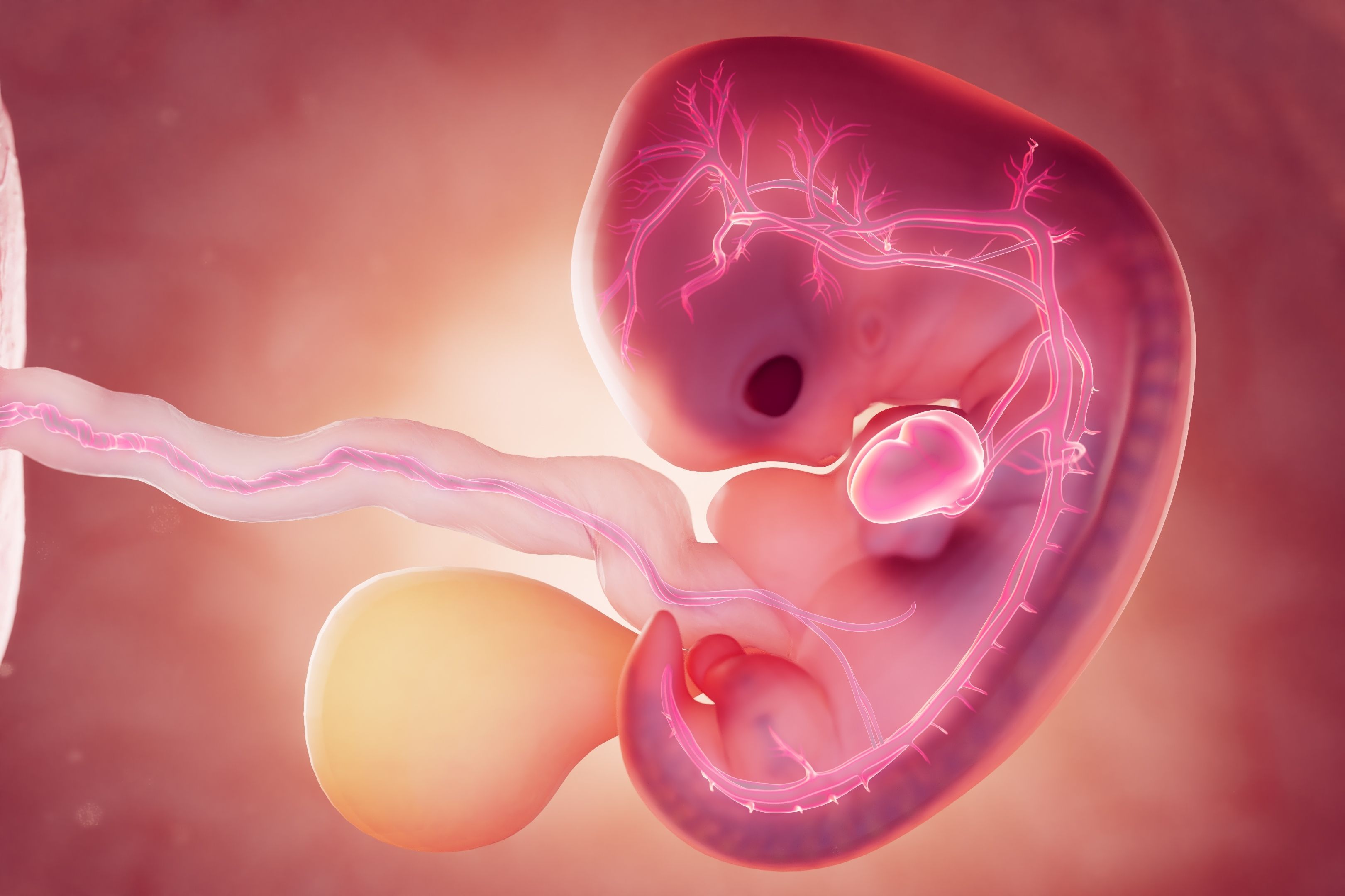
(Vienna, 03 November 2026) – Haematopoiesis – the formation of blood cells – is a fundamental process in embryonic development. It produces red blood cells that transport oxygen, as well as cells of the immune system. The earliest blood and immune cells were previously thought to arise exclusively in the yolk sac, a structure outside the developing embryo. Now, an international research team led by MedUni Vienna has identified a previously unknown site of haematopoiesis at the interface between maternal and embryonic tissue. Published in Nature Immunology, the findings expand our understanding of early blood formation in mice and provide preliminary evidence of related processes in humans.
The researchers named the newly described tissue at the maternal-foetal interface MIXER (Maternally Interfaced eXtraEmbryonic tissue). It contains various blood progenitor cells from which different types of blood cells can develop, including red blood cells and cells of the innate immune system. The research team led by Rohit Jain, Shweta Tikoo and Wolfgang Weninger from the Department of Dermatology at MedUni Vienna investigated these processes in a mouse model.
MIXER showed features of blood formation around seven and a half days after fertilisation (embryonic day 7.5, or E7.5), an early stage when the yolk sac also supports blood formation. Alongside previously known progenitors, MIXER contained a distinct population of blood precursor cells, termed eEMPROR cells, that was not detected in the yolk sac samples examined. The results suggest that blood formation occurs at more than one site before a functional circulation connects the embryo with the surrounding extraembryonic tissues.
Further experiments showed that progenitors in MIXER contribute to macrophage populations in several tissues during embryonic development. These immune cells are primarily responsible for eliminating pathogens and cellular debris and perform important functions in the development and maintenance of tissues.
"Our discovery of the MIXER tissue expands the existing model of embryonic haematopoiesis to include a distinct site at the maternal-foetal interface," emphasise lead authors Rohit Jain and Shweta Tikoo. "However, it also raises new questions about how different developmental environments influence the formation and function of blood cells, and what significance these early processes have for the development of the immune system," explains study leader Wolfgang Weninger. In very early human placental tissue, the researchers also found cells with features resembling those of the progenitor population identified in mice. Further research is needed to determine whether a corresponding precursor population and a comparable site of haematopoiesis exist in humans.
In an accompanying study in Nature Immunology, the same team describes EMPROR cells, a related precursor population in adult mouse bone marrow that provides an additional pathway for macrophage formation.
Publication: Nature Immunology
The maternal-fetal interface is an early hematopoietic niche enriched in distinct erythro-myeloid progenitors.
Rohit Jain, Shweta Tikoo, Carlos Márquez-Burgoa, Stephanie A. Gerhofer, Brendon Martinez, Mariagiovanna Barresi, Dörte Symmank, Minoo Ghannadan, Barbara Öhler, Anna-Lena Höbler, Rafael de Freitas e Silva, Dirk Baumjohann, Susanne Feil, Robert Feil, Sylvia Knapp, Philipp Starkl, Wilfried Ellmeier, Steffen Jung, Jürgen Pollheimer, Stuart T. Fraser & Wolfgang Weninger.
https://doi.org/10.1038/s41590-026-02683-4