
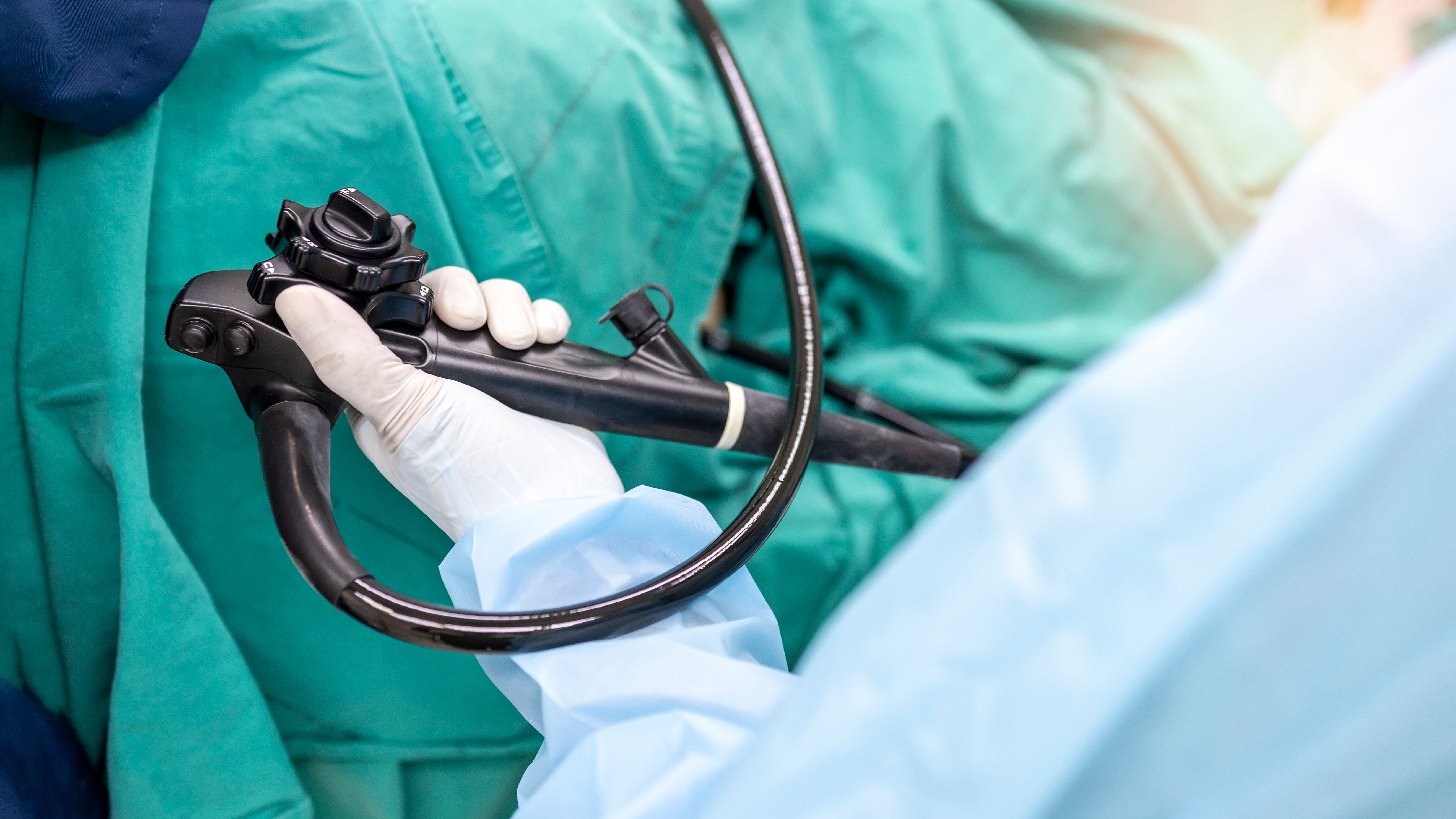
(Vienna, 17 September 2026) Following the removal of certain colorectal polyps, a follow-up colonoscopy is currently often recommended as early as three years later. A large European study involving the Medical University of Vienna and University Hospital Vienna has now shown that a first follow-up after five years was no less effective than a follow-up after three years in terms of colorectal cancer risk five years later. The EPoS-II study involved 10,799 patients from eight European countries. Monika Ferlitsch from MedUni Vienna is a co-author of the study published in the New England Journal of Medicine.
The study examined patients from whom so-called high-risk adenomas had been removed. Adenomas are benign bowel polyps from which bowel cancer can develop in some cases. High-risk adenomas include, for example, larger or conspicuously altered polyps, as well as multiple adenomas occurring simultaneously.
Similar risk of bowel cancer with fewer check-ups
The study participants were randomly assigned to two groups: in one group, the first follow-up colonoscopy took place after five years; in the other, after three years.
After five years, the risk of bowel cancer was 0.77 per cent in the group with the later follow-up and 0.82 per cent in the group with more frequent follow-ups. The five-year interval thus met the predefined criterion of non-inferiority. There was also no discernible difference in tumour stage at the time of diagnosis.
At the same time, significantly fewer colonoscopies were required: in the group with a five-year interval, around 49 per cent fewer colonoscopies were performed during the study period.
“Our findings suggest that the current screening intervals following the removal of high- adenomas should be reassessed. If these results are confirmed in the long term, many patients could be spared additional colonoscopies without compromising safety. A high-quality initial examination, in which all -relevant polyps are completely removed, remains crucial,” says Monika Ferlitsch from MedUni Vienna (she is Head of the Department of Internal Medicine with Gastroenterology, Acute Geriatrics and Remobilisation at the Floridsdorf Clinic)..
Results must be confirmed in the long term
The data now published represent an interim analysis after five years. The final evaluation of the study is scheduled for after ten years. Only then will it be possible to conclusively assess whether longer screening intervals are equally safe in the long term.
In parallel, a second EPoS study involving 1,861 patients showed that the risk of colorectal cancer remained low within five years, even after the removal of so-called serrated polyps.
Publication: New England Journal of Medicine
Colonoscopy Intervals and Colorectal Cancer Incidence after Adenoma Removal
Rodrigo Jover, Michael Bretthauer, Joaquin Cubiella et al., including Monika Ferlitsch
DOI: 10.1056/NEJMoa2603816