
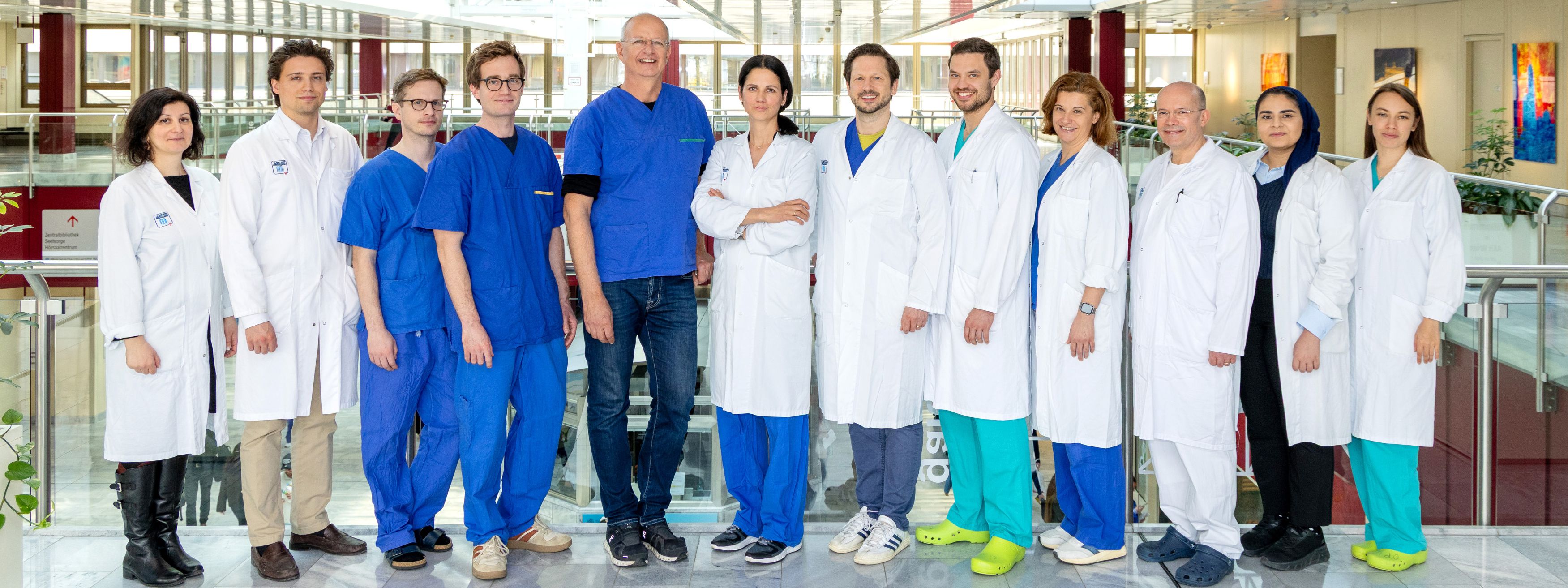
(Vienna, 08 April 2026) A year ago, a multidisciplinary endocarditis team was established at University Hospital Vienna/MedUni Vienna, closely linking clinical care and scientific advancement. Since its inception, 120 patients have been systematically evaluated using an interdisciplinary approach. The team is thus creating a structured platform for rapid diagnosis, coordinated treatment decisions and the further development of care for patients with endocarditis.
Endocarditis is a rare but highly dangerous infection of the heart valves. Diagnosis is often difficult, treatment complex, and in-hospital mortality can reach up to 30 per cent. To address this challenge with structured, multidisciplinary care, a specialised endocarditis team has been established at the Medical University of Vienna and University Hospital Vienna, with a core team comprising cardiac surgery, cardiology, infectious diseases, radiology, nuclear medicine and psychology. Where necessary, pharmacists, neurologists, nephrologists and psychiatrists are also consulted.
MedUni Vienna and University Hospital Vienna are thus following the current recommendations of European guidelines, which highlight specialised endocarditis teams as a key factor in improved diagnosis and better treatment outcomes.
Weekly case conferences with broad specialist expertise
The team meets weekly and brings together experts from numerous medical disciplines, including cardiac surgery, cardiology, infectious diseases, radiology, nuclear medicine, microbiology, nephrology and pharmacy. This breadth of expertise is complemented by psychosocial disciplines such as psychiatry and psychology.
This close interdisciplinary collaboration enables a comprehensive assessment of each individual case and ensures that diagnostic, therapeutic and supportive measures are closely coordinated. Around 50 per cent of the patients discussed required surgery, which underscores the severity of the condition.
Close networking with referring hospitals
Collaboration with referring hospitals takes place both via online case conferences and through on-site evaluations by members of the team. This supports rapid and structured decision-making even beyond the team’s own location.
The endocarditis team at University Hospital Vienna thus enables faster diagnoses, structured treatment decisions and optimised coordination between conservative and surgical treatment.
Foundation for registries, research and care analysis
The structured recording of cases also forms the basis for further scientific development. This includes the establishment of a clinical database and a registry, the analysis of care processes and outcomes, and the development of evidence-based treatment strategies.
A particular focus is on optimising diagnostic strategies, including modern imaging, improving the timing of surgical interventions, and interdisciplinary decision-making in complex disease courses.
In addition, the team is working on initiating research projects, integrating into international registry structures such as Euro-Endo, and producing scientific publications, for which initial work has already begun.
Model for structured interdisciplinary medicine
Close collaboration with external centres is also creating a network that could serve as a supra-regional reference structure for endocarditis in the future.
The team is led by Arezu Aliabadi-Zuckermann, Stefan Winkler and Clemens Gangl. Together, they combine clinical excellence with scientific advancement.
The endocarditis team demonstrates how structured interdisciplinary medicine can improve patient care whilst simultaneously creating a platform for innovation and research.