
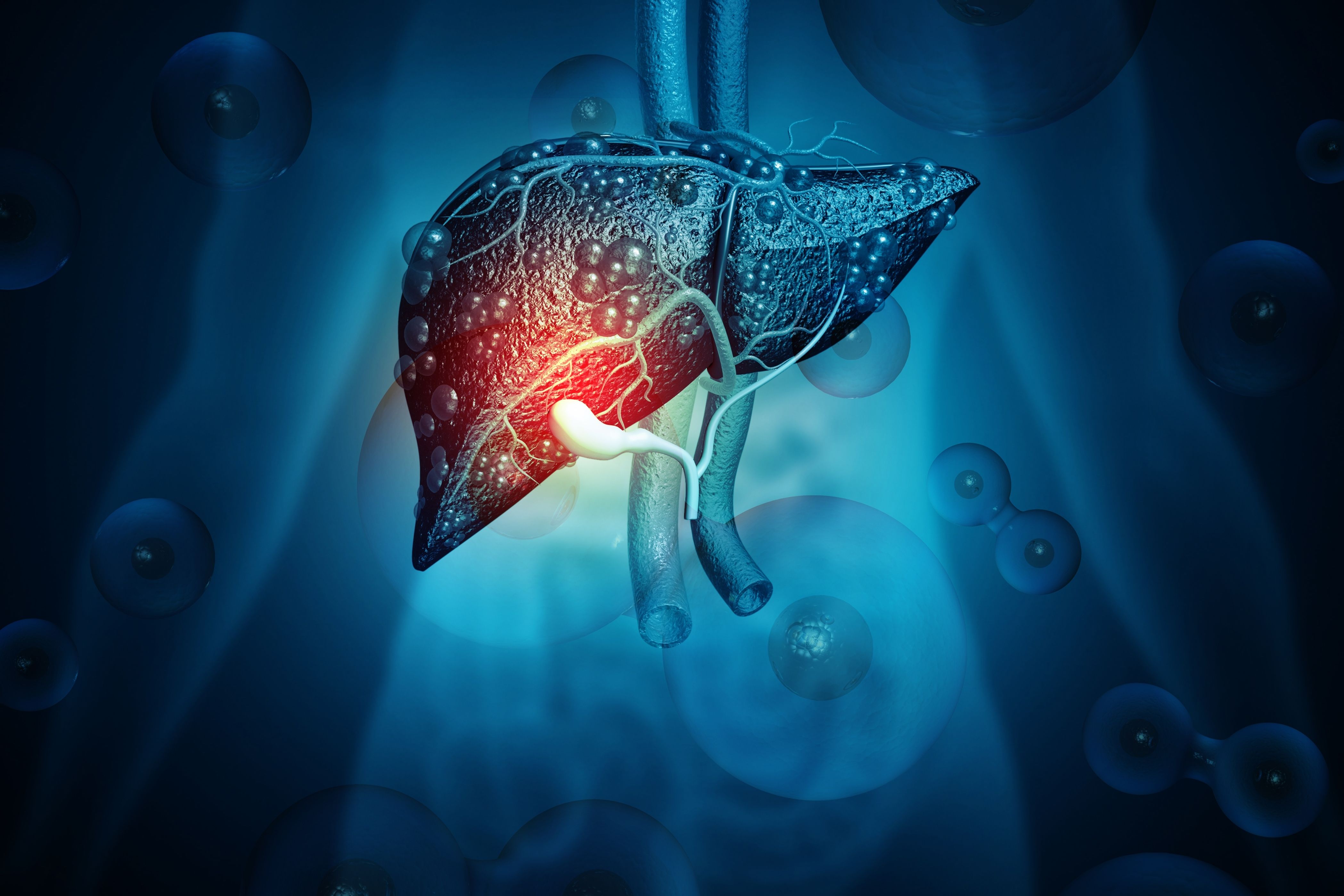
(Vienna, 26 August 2026) – The newly published Baveno VIII Consensus sets new international standards for the management of patients with advanced chronic liver disease and portal hypertension. The Medical University of Vienna played a prominent role in this internationally influential consensus process: five MedUni Vienna experts contributed as chairs or members of the international expert panels. In addition, numerous studies conducted at MedUni Vienna contributed to the evidence base underpinning the new recommendations.
Since the first Baveno Consensus Conference in 1990, international experts have convened approximately every five years to evaluate emerging evidence in portal hypertension and advanced chronic liver disease and translate it into recommendations for clinical practice. The Baveno recommendations have profoundly influenced the management of cirrhosis over the past three decades. Previous reports, particularly Baveno VI and Baveno VII, have each received several thousand citations and rank among the most influential publications in international hepatology.
Following the virtual Baveno VII conference held during the COVID-19 pandemic, Baveno VIII returned to an international in-person meeting in Baveno, Italy, in March 2026. A total of 84 experts from around the world participated. Across nine panels, the faculty systematically reviewed evidence generated since Baveno VII. This process resulted in 272 consensus statements and recommendations and a research agenda comprising 153 priority topics for future investigation.
Earlier identification and more targeted prevention
A major focus of Baveno VIII is improved and, whenever possible, non-invasive risk stratification. Blood-based biomarkers and imaging techniques, including liver stiffness measurement, can help identify patients with clinically significant portal hypertension at an earlier stage. The new consensus also goes beyond identifying portal hypertension itself. Increasing emphasis is placed on determining which patients are actually at greatest risk of developing a first major complication of their liver disease, allowing preventive therapies to be initiated earlier and targeted more precisely.
"The central goal today is no longer simply to treat complications of advanced liver disease, but to prevent them whenever possible," explains Thomas Reiberger of the Department of Medicine III at MedUni Vienna and University Hospital Vienna and Scientific Secretary of the Baveno Cooperation. Mattias Mandorfer, chair of the panel on non-invasive risk stratification, adds: "Refinements in the field of non-invasive methods have introduced precision medicine into clinical practice. Medical therapy with carvedilol can prevent severe complications in patients who are at high risk."
Other major updates include revised recommendations for preventing and managing variceal bleeding, ascites and other complications of portal hypertension, as well as guidance on the use of transjugular intrahepatic portosystemic shunts (TIPS). Criteria for recompensation have also been refined, addressing patients whose previously decompensated cirrhosis becomes clinically stable following successful treatment of the underlying cause of liver disease. For the first time, the consensus also includes specific recommendations for paediatric patients. Another major area is the diagnosis and management of vascular liver diseases.
Strong representation of MedUni Vienna
MedUni Vienna was exceptionally well represented within the international Baveno VIII expert faculty. Thomas Reiberger contributed as Scientific Secretary of the Baveno Cooperation and chair of one of the panels, while Mattias Mandorfer chaired another panel. Mathias Jachs and Georg Semmler contributed as hepatology panel members, and Katharina Lampichler contributed her expertise in radiology. In total, five MedUni Vienna researchers were therefore directly involved in developing the international recommendations. In addition, numerous studies from MedUni Vienna addressing non-invasive diagnosis, risk stratification and treatment of portal hypertension, and vascular liver disease contributed to the scientific evidence evaluated during the consensus process. "The involvement of five experts from MedUni Vienna highlights the international visibility of Vienna’s research in portal hypertension," says Thomas Reiberger. "More importantly, research findings generated at MedUni Vienna and University Hospital Vienna are now directly informing international recommendations and can therefore contribute to improving the care of patients with advanced liver disease worldwide."
From treating complications to preventing them
Over more than three decades, the Baveno Consensus Conferences have fundamentally changed the understanding and clinical management of cirrhosis and portal hypertension. While the early conferences focused primarily on treating complications such as variceal bleeding, the field has progressively moved towards prevention: identifying risk earlier and intervening before severe complications develop. Baveno VIII continues this evolution. More precise risk stratification should enable clinicians to identify high-risk patients earlier while avoiding unnecessary invasive procedures in people at low risk. Ultimately, this approach has the potential to reduce preventable hospitalisations and deaths while allowing healthcare resources to be used more efficiently.
Publikation: Journal of Hepatology
Baveno VIII Faculty. Baveno VIII – Advancing Consensus in Portal Hypertension. Published online 19 August 2026.
DOI: 10.1016/j.jhep.2026.07.030
Further information:
EASLEuropean Association for the Study of the Liver (EASL) announcement