
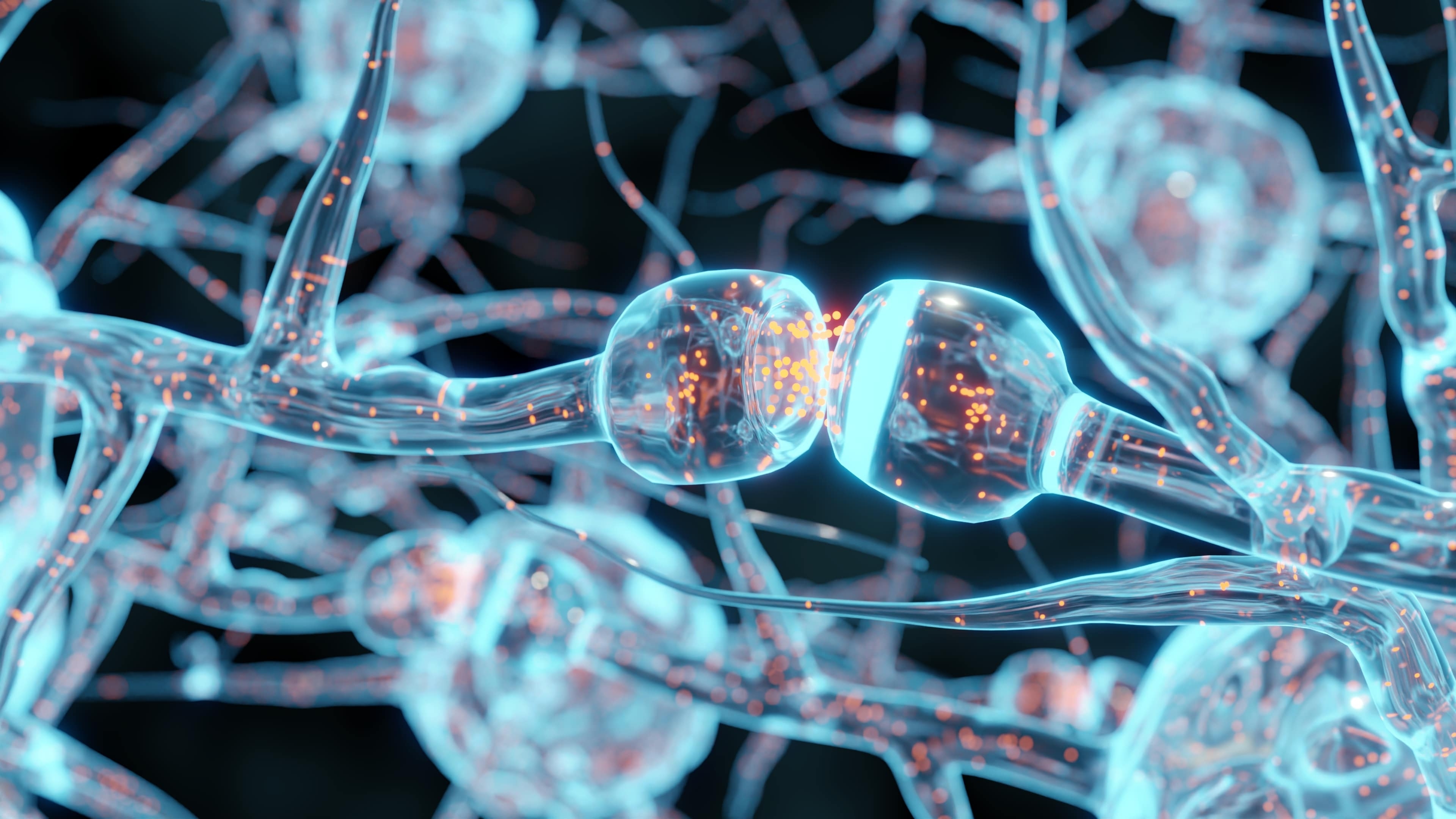
(Vienna, 05 August 2026) A research team at the Medical University of Vienna has developed a novel approach that could one day alleviate movement disorders associated with Parkinson’s disease. By genetically reprogramming a pathologically altered neural circuit, the motor symptoms in a mouse model were significantly improved. The study was published in the journal npj Parkinson’s Disease.
In Parkinson’s disease, nerve cells that produce the neurotransmitter dopamine degenerate. This throws certain brain networks out of balance: movements become more severely impaired, which results, amongst other things, in slowed movements, muscle stiffness and difficulty initiating voluntary movements.
Whilst previous treatment approaches have primarily sought to compensate for the loss of the neurotransmitter dopamine (for example, through standard therapy with L-DOPA), the research team led by Thomas Steinkellner from the Institute of Pharmacology at MedUni Vienna took a different approach: it specifically modified the communication between the remaining nerve cells, thereby helping to partially restore the balance of the affected brain network.
To achieve this, nerve cells that release the inhibitory neurotransmitter GABA within a key motor centre of the brain (the substantia nigra pars reticulata) were genetically modified so that, in addition to GABA, they could also release the excitatory neurotransmitter glutamate. This modification of the neural circuit led to a marked improvement in the animals’ mobility and also reduced the unilateral movement disorders typical of Parkinson’s disease. "Our results show that pathologically altered brain circuits can be specifically reprogrammed without having to replace the lost dopamine-producing cells," explains study leader Thomas Steinkellner.
Furthermore, the researchers observed no evidence of damage to the treated nerve cells or their target areas. The findings thus open up a new research approach for gene therapies that do not aim to replace lost nerve cells, but rather to specifically modulate disrupted brain circuits. Nevertheless, the researchers emphasise that this is an experimental basic science study using a mouse model. Whether the approach is safe in the long term and could also be used in humans will require further investigations.
The study was carried out in collaboration with scientists from the University of Vienna.
Publication: npj Parkinson’s Disease
Glutamate co-release from inhibitory nigral neurons reverses motor deficits in a Parkinson’s disease mouse model.
Sofia Ines Garcia Moreno, Laureta Gashi, Marina Lukenic, Catherine Gilbert, Sophia Khom, Thomas Steinkellner.
DOI: 10.1038/s41531-026-01508-3
https://www.nature.com/articles/s41531-026-01508-3