
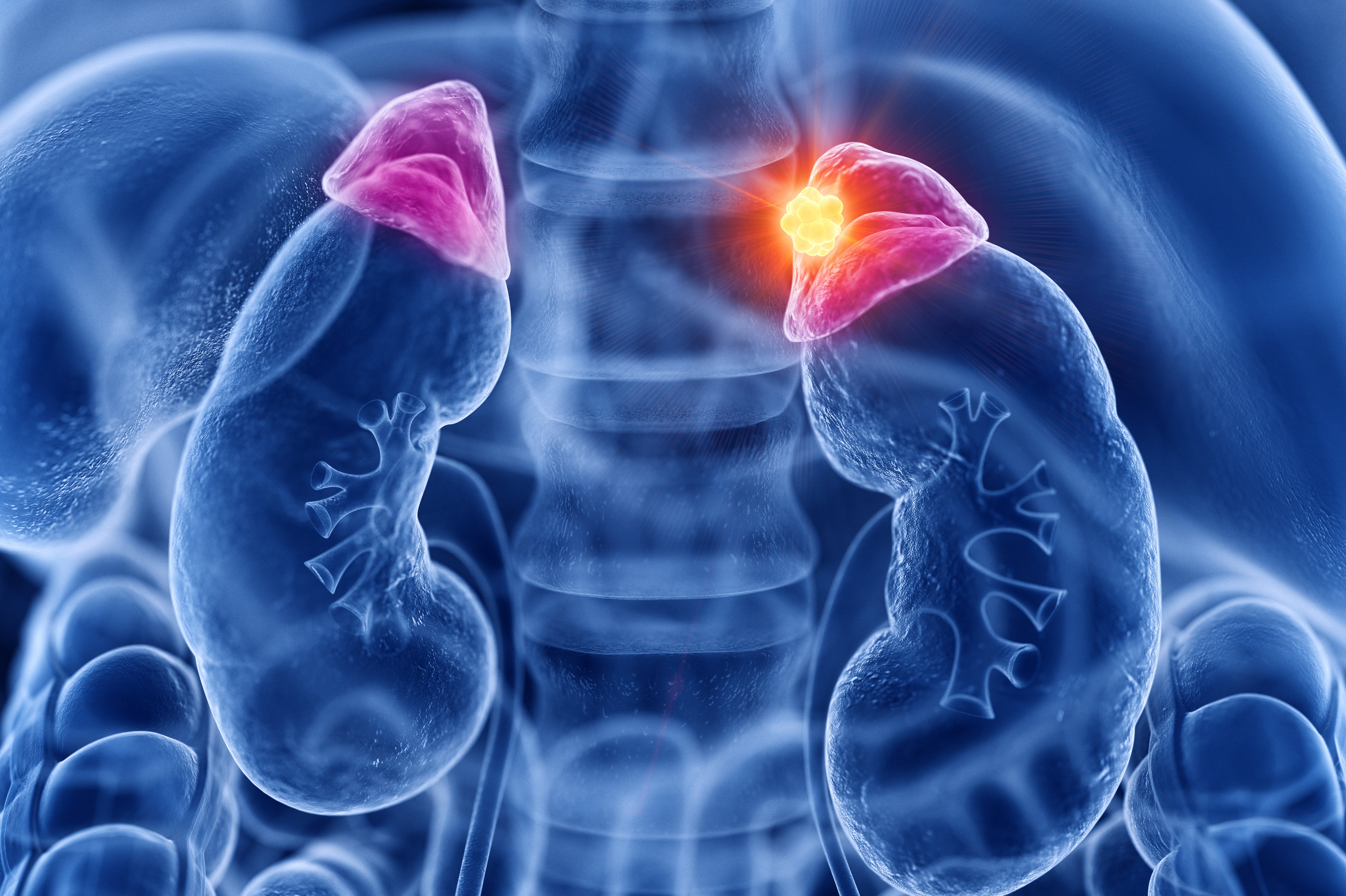
(Vienna, 09-02-2026) A research team led by Helena Niziolek and Peter Wolf from the Department of Medicine III at the Medical University of Vienna has investigated whether drug-induced reduction of cortisol production can cause metabolic changes in patients with hormonally active adrenal adenoma. The results show for the first time that treatment with the cortisol synthesis inhibitor metyrapone is associated with measurable positive effects on liver and sugar metabolism. The study was recently published in the journal eClinicalMedicine.
Adrenal adenomas are common incidental findings in imaging examinations of the abdomen and affect an estimated five percent of the general population. The majority of these tumours are benign, with about one-third associated with mild autonomous cortisol secretion (MACS). Although this form of hormone overproduction has long been considered clinically insignificant, recent data show a link to metabolic diseases such as arterial hypertension, lipid metabolism disorders and type 2 diabetes mellitus. "Against this background, the development of drug-based therapeutic approaches is becoming increasingly important, especially for patients for whom surgical treatment is not possible or the indication is unclear," says study leader Peter Wolf (Division of Endocrinology and Metabolism, Department of Medicine III, MedUni Vienna), outlining the starting point for the research work.
Metyrapone improved liver metabolism and insulin sensitivity
As part of the study, 15 patients with adrenal adenoma and MACS were treated with metyrapone exclusively in the evening for twelve weeks. This active ingredient specifically inhibits an intermediate step in cortisol synthesis (inhibition of 11β-hydroxylase) and has been approved and established for decades in the treatment of severe hypercortisolism (Cushing's syndrome). The short duration of action of metyrapone allows cortisol synthesis to be inhibited in the evening and at night. This leads to a normalisation of the circadian cortisol rhythm without the risk of adrenal insufficiency due to overtreatment.
After twelve weeks of drug therapy, detailed examinations of the study participants were carried out in cooperation with several experts from MedUni Vienna. These showed significant improvements in liver and sugar metabolism, insulin sensitivity, blood pressure and inflammation markers – results that motivate the research team to conduct more in-depth investigations: "Given the high prevalence of MACS, the drug therapy approach with evening administration of metyrapone could offer a new, promising option for many affected patients. To verify the results, we are now planning a larger randomised follow-up study to compare the observed positive effects of metyrapone with a placebo," says Peter Wolf about the next steps.
Publication: eClinicalMedicine
Metabolic effects of metyrapone treatment in patients with mild autonomous cortisol secretion: a prospective proof-of-concept study.
Helena Niziolek, Ivica Just, Anna Tosin, Clemens Baumgartner, Konrad Körmöczi, Luise Bellach, Paul Fellinger, Hannes Beiglböck, BSc Hana Skuciova, Greta Gericke, Stefan Lässer, Anton Luger, Siegfried Trattnig, Alexandra Kautzky-Willer, Marie Helene Schernthaner-Reiter, Florian Wolfgang Kiefer, Greisa Vila, Thomas Scherer, Michael Leutner, Martin Krssak, Michael Kreb, Peter Wolf.
https://www.sciencedirect.com/science/article/pii/S2589537026000222