
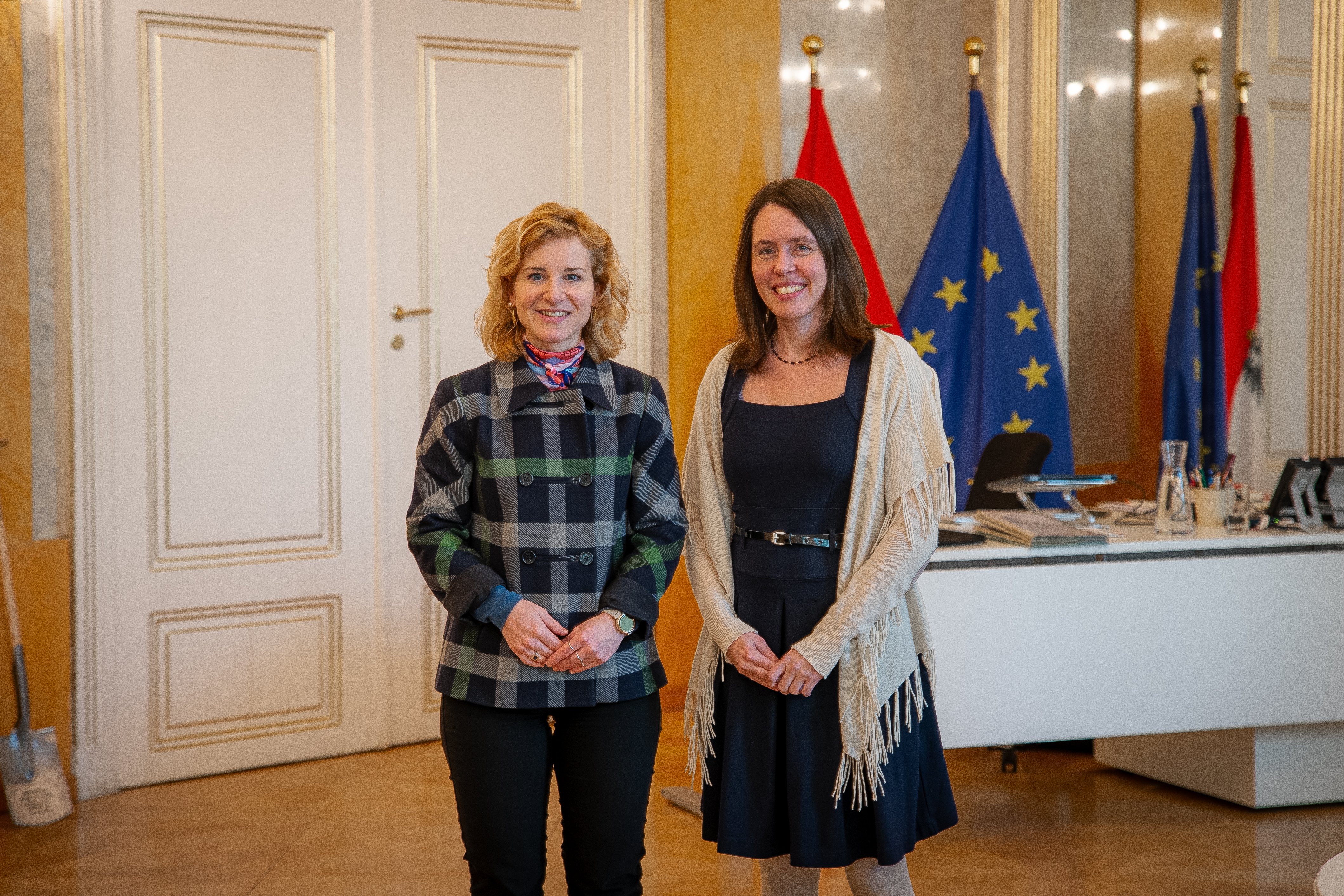
(Vienna, 03-02-2026) Since January 2026, 600 researchers have been volunteering as "Science Ambassadors" in schools, nurseries and after-school care centres throughout Austria. They give children and young people practical insights into their work, promote understanding of scientific methods and strengthen critical thinking. Katharina Bastl from the Vienna Pollen Service at MedUni Vienna was honoured as the 600th Science Ambassador by Science Minister Eva-Maria Holzleitner.
Katharina Bastl's research focuses, among other things, on pollen dispersal in Vienna and the effects of climate change on the flowering phases of allergy-relevant plants. "Many children and young people are affected by allergies themselves, but do not know the source of their allergens. Understanding what pollen is and what the respective plant looks like also helps to improve one's own allergen avoidance. Pollen allergy is a good example of how everything in nature is interwoven. I look forward to accompanying kindergartens and schools into the microcosm of pollen," says Bastl.
"Especially in times of great social challenges, we need direct dialogue between science and young people. The science ambassadors make an indispensable contribution here. My thanks go to all 600 researchers who, in addition to their scientific work, take time for children and young people, thereby strengthening curiosity, trust and democratic understanding," said Science Minister Eva-Maria Holzleitner, expressing her delight at the initiative, which is being implemented by the OeAD, Austria's Agency for Education and Internationalisation.
Jakob Calice, Managing Director of the OeAD, emphasises: "The fact that we are welcoming Katharina Bastl as our 600th science ambassador impressively demonstrates the great commitment of researchers in Austria. With the Science Ambassadors initiative, we are bringing scientific curiosity, critical thinking and trust in research to where they are most effective: to children and young people. Whether in schools, kindergartens or after-school care centres, these direct encounters make science tangible and make an important contribution to an informed, democratic society."