
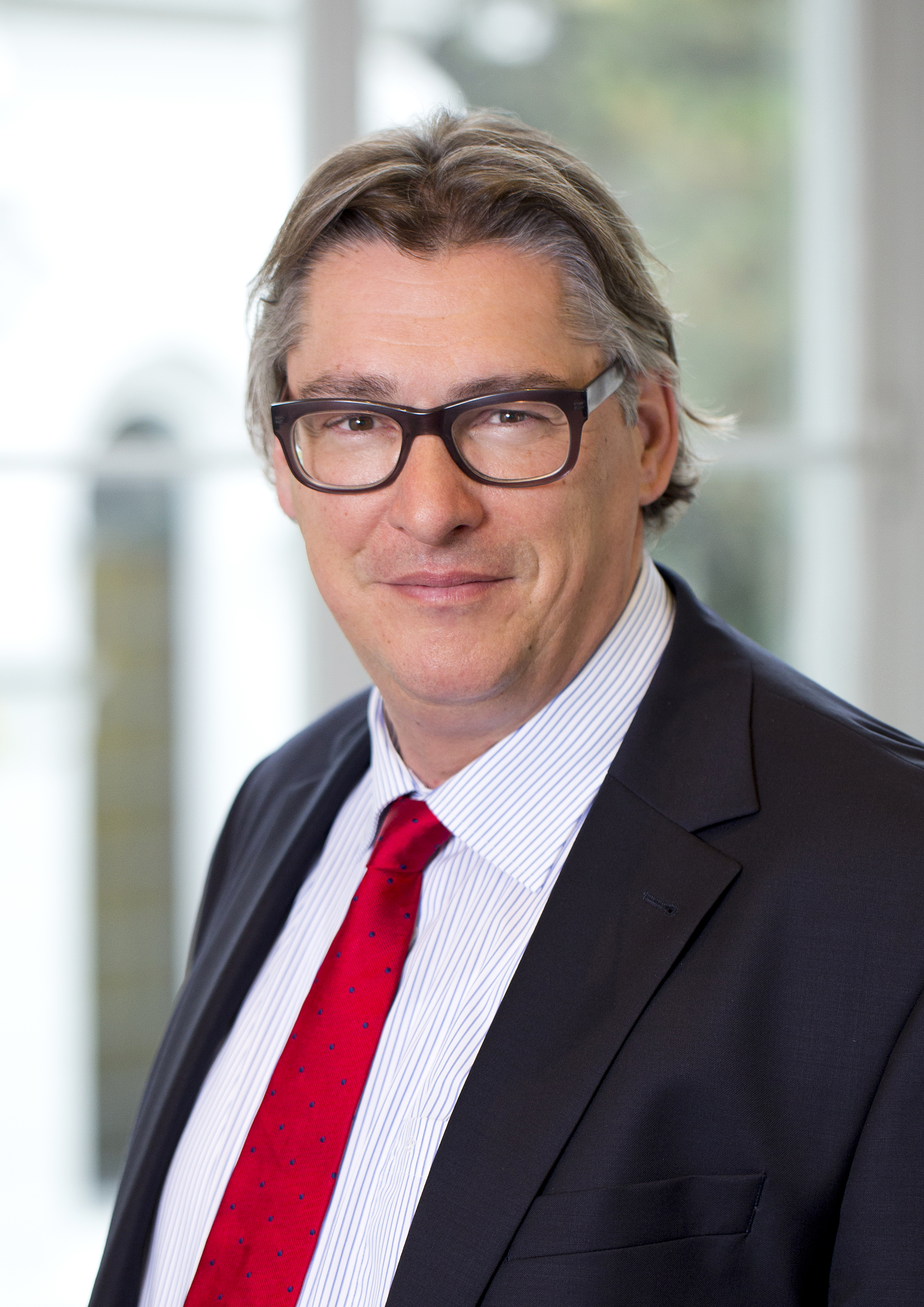
It is with great sadness that we say goodbye to Prof. Daniele Ugo Risser, born on 29 February 1960 in Lienz. After completing his secondary education in Lienz, he studied medicine at the University of Vienna and obtained his doctorate in 1987.
His professional career took him early on to the interface between practice and science: in 1989, he began working as a trainee doctor at what was then the Institute of Forensic Medicine. In 1996, he became a specialist in forensic medicine, in 2000 he habilitated on the topic of ‘Drug deaths in Vienna’, and on 1 December 2008 he took over as head of the institute. Since 2009, he had been a member of the board of the Austrian Society for Forensic Medicine (ÖGGM). He gained international research experience in 1995/96 at the Department of Physiology and Pharmacology at the Karolinska Institute in Stockholm.
Prof. Risser shaped forensic medicine in Vienna in terms of both structure and content: He designed and implemented the renovation and refurbishment of the autopsy facilities, adapted the spatial infrastructure at what is now the Centre for Forensic Medicine (ZGM), established the Department of Forensic Anthropology and created new training positions to ensure the continued existence of the discipline. Numerous stays abroad, particularly in the USA, served to transfer knowledge.
His sense of responsibility was also evident in extraordinary situations: as a member of the Austrian DVI team, he made an important contribution in 2005 after the tsunami disaster in Thailand, and in 2015 he organised and carried out the forensic examinations in connection with the discovery of 71 deceased refugees in Parndorf.
His career in forensic medicine was characterised by the highest professional standards and scientific excellence, which is reflected in numerous international specialist articles, among other things. The promotion of the younger generation of forensic pathologists was always a particular concern of his.
We have lost a forensic scientist who shaped his field with vision, consistency and a sense of responsibility, and a colleague who left his mark on the ZGM, but whose work had an impact far beyond the ZGM. He will remain present in our thoughts and in the institutions he built and helped shape. Our sincere condolences go out to his family, friends and all who worked with him.
Prof. Nikolaus Klupp, Head of the Center for Forensic Medicine
Vienna, 18 February 2026