
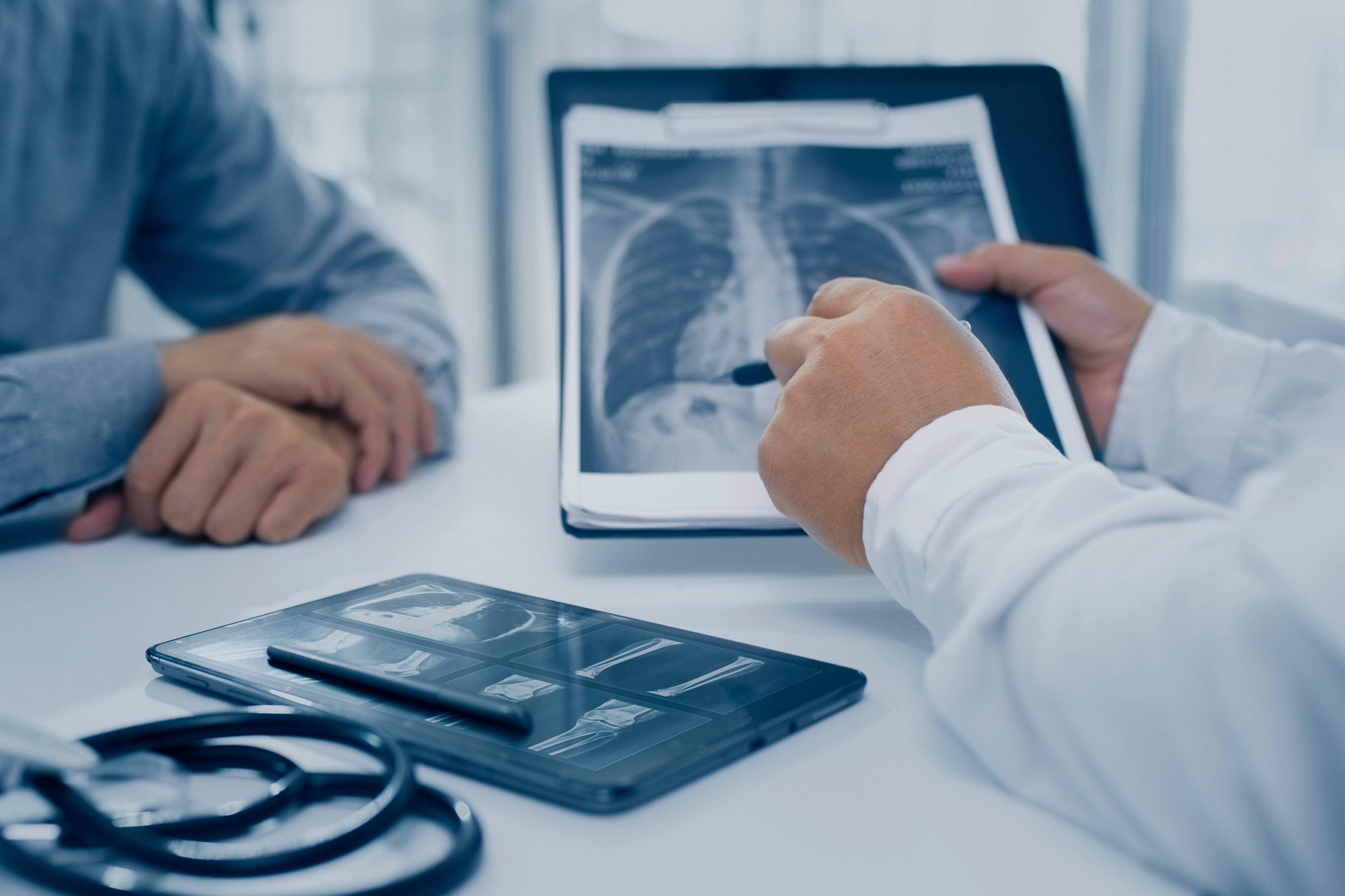
(Vienna, 18 February 2026) An analysis by the Medical University of Vienna indicates that short-term increases in particulate matter and air pressure are associated with more diagnoses of pulmonary embolism, but not with greater clinical severity at the time of diagnosis. The results were published in the journal Research and Practice in Thrombosis and Haemostasis.
A research team at the Medical University of Vienna investigated whether short-term environmental exposures could influence the occurrence of pulmonary embolism. Pulmonary embolism is a potentially life-threatening cardiovascular disease. In addition to established risk factors such as surgery, immobilisation or cancer, there has been discussion for several years as to whether air pollution and meteorological conditions could also contribute to the risk.
Environmental factors as possible triggers in addition to classic risk factors
The cohort study included 969 patients at the University Hospital Vienna with confirmed acute pulmonary embolism. Short-term exposures in the days prior to diagnosis were analysed. Environmental data on PM2.5 and PM10 particulate matter, air pressure and temperature were obtained from GeoSphere Austria's monitoring networks and from municipal measuring stations in the city of Vienna.
More diagnoses with higher particulate matter levels and higher air pressure
The evaluation showed an association between environmental exposures and the frequency of pulmonary embolism. More cases of pulmonary embolism were diagnosed during periods with higher particulate matter levels and increased air pressure. This association was particularly pronounced in patients without identifiable triggering risk factors, i.e. in cases of unprovoked pulmonary embolism, as well as in cases diagnosed on an outpatient basis. In contrast, no clear effects were observed in cases diagnosed during an inpatient stay.
No correlations were found between the clinical severity of pulmonary embolism and particulate matter, air pressure or temperature. This suggests that the environmental factors investigated may be more closely related to higher case counts than to a shift towards more severe clinical presentations at the time of diagnosis.
"Our data suggest that short-term increases in particulate matter and air pressure are associated with more diagnoses of pulmonary embolism, especially in patients without classic risk factors," says first author Stephan Nopp from the Division of Hematology and Hemostaseology at the Department of Medicine I at MedUni Vienna and University Hospital Vienna. "This underlines that environmental conditions should be considered as a potential trigger, even if the observed effects are minor at the individual level."
Study leader Cihan Ay, Division of Hematology and Hemostaseology, emphasises: "This is an observational, single-centre study from which no cause-and-effect relationship can be inferred. However, the results provide additional evidence for better understanding the role of potentially modifiable environmental factors in thromboembolic diseases."
The team sees a further need for multicentre studies in different climate regions and for investigations into biological mechanisms, such as inflammation, endothelial dysfunction and prothrombotic activation, in order to verify and better classify the findings.
Publication: Research and Practice in Thrombosis and Haemostasis
Association of air pollution and atmospheric conditions on pulmonary embolism incidence and severity
Stephan Nopp, Julia Bohnert, Thomas Mayr, Daniel Steiner, Ingrid Pabinger, Cihan Ay
https://doi.org/10.1016/j.rpth.2026.103394