
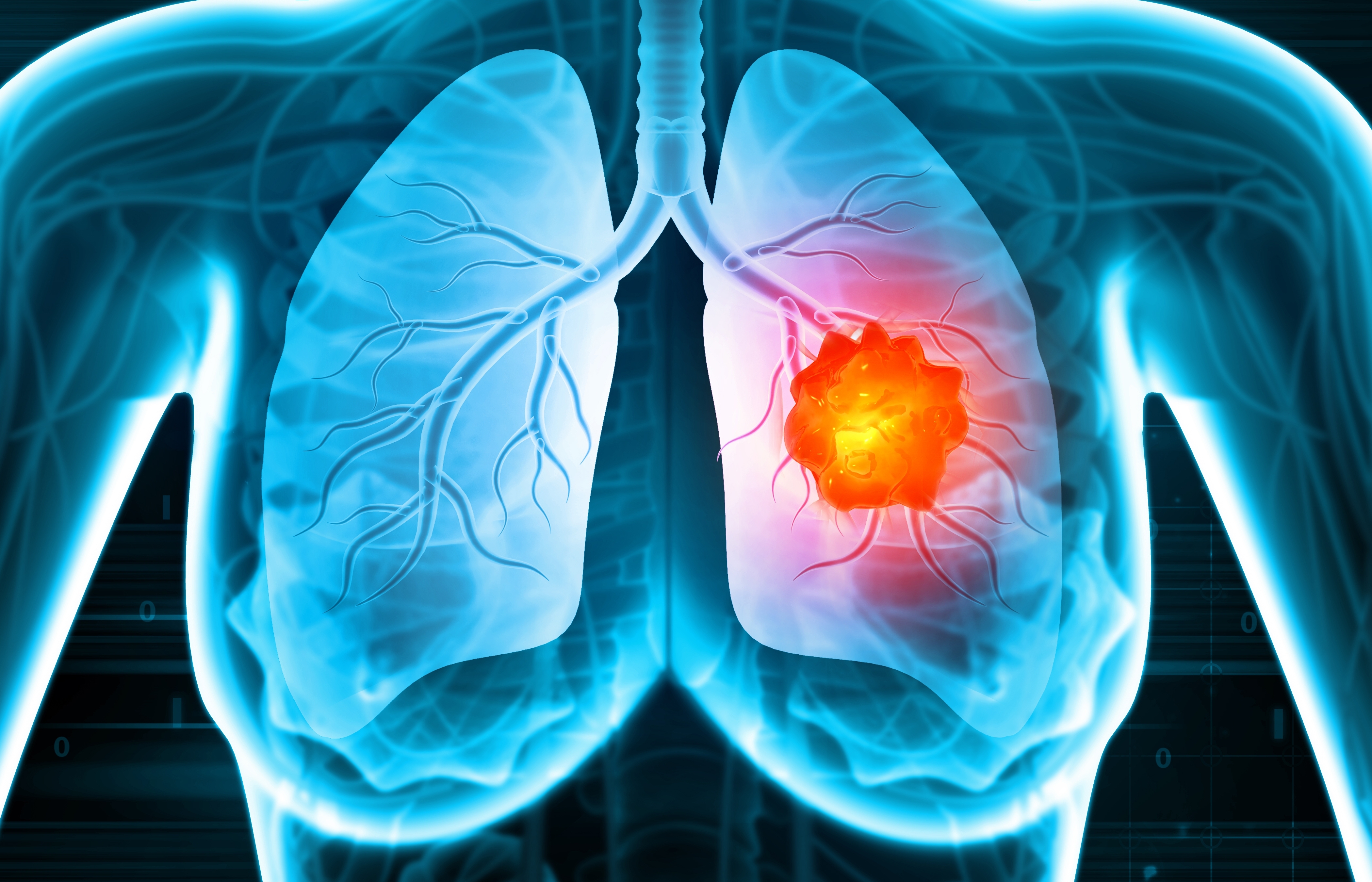
(Vienna, 13-01-2026) – A research team at the Medical University of Vienna has discovered a new approach to treating a particularly frequent and difficult-to-treat form of lung cancer. The study shows that a combination of two well-studied classes of drugs – ERBB inhibitors and Aurora kinase inhibitors – is significantly more effective against KRAS-mutated lung adenocarcinomas than existing therapies. The research, currently published in the journal npj Precision Oncology, opens up a new and promising path for patients for whom there are currently only limited treatment options.
KRAS mutations occur in around one third of all lung adenocarcinomas and mainly affect smokers. Although targeted drugs such as the KRAS-G12C inhibitor sotorasib are now available, treatment success is often short-lived. Many tumours develop resistance within a few months by activating alternative signalling pathways – a peculiarity that led the research team led by Iris Uras Jodl (Center for Physiology and Pharmacology, MedUni Vienna) to the newly identified therapeutic perspective.
"Although KRAS-mutated tumours use alternative signalling pathways to circumvent therapies, they remain dependent on certain molecules – ERBB receptors and Aurora kinases – in order to survive and continue to grow. It is precisely this dependency that represents a weak point that can be exploited therapeutically," says Iris Uras Jodl, summarising the core of the findings. Aurora kinases control central processes of cell division, while ERBB receptors transmit growth stimuli from outside the cell. Together, these systems ensure the survival of cancer cells – even when KRAS is already blocked by therapy.
Combination also effective in resistant tumours
Based on this discovery, the researchers conducted extensive screening for active substances that can specifically inhibit the alternative signalling pathways. They found that the pan-ERBB inhibitor afatinib is particularly effective when combined with an Aurora kinase inhibitor. In cell and mouse models, the combination led to increased apoptosis – a regulated cell death – blocked cell division and prevented the activation of signalling pathways through which tumours otherwise develop resistance. Of particular significance is that the combination also proved effective in tumours that had already developed resistance to afatinib or sotorasib. The simultaneous blockade of ERBB and Aurora kinase signals prevented the survival of cancer cells and completely eliminated resistant cell clones.
"The combination of active substances we have discovered opens up promising new therapeutic prospects. Since afatinib is already available and Aurora kinase inhibitors are already in clinical trials, the path to application could be relatively short," said Iris Uras Jodl in the run-up to further, more in-depth studies.
Publication: npj Precision Oncology
KRAS mutated lung adenocarcinoma responds to pan-ERBB and Aurora kinase inhibitors.
Iris Z. Uras*, Marija V. Trkulja, Abdelrahman K.A.A. Salama, Jaqueline Horvath, Khushi Asnani, Christoph Trenk, Stefan Kubicek, Martin Bilban, Herwig P. Moll, Emilio Casanova.
DOI: 10.1038/s41698-025-01242-8
https://www.nature.com/articles/s41698-025-01242-8