
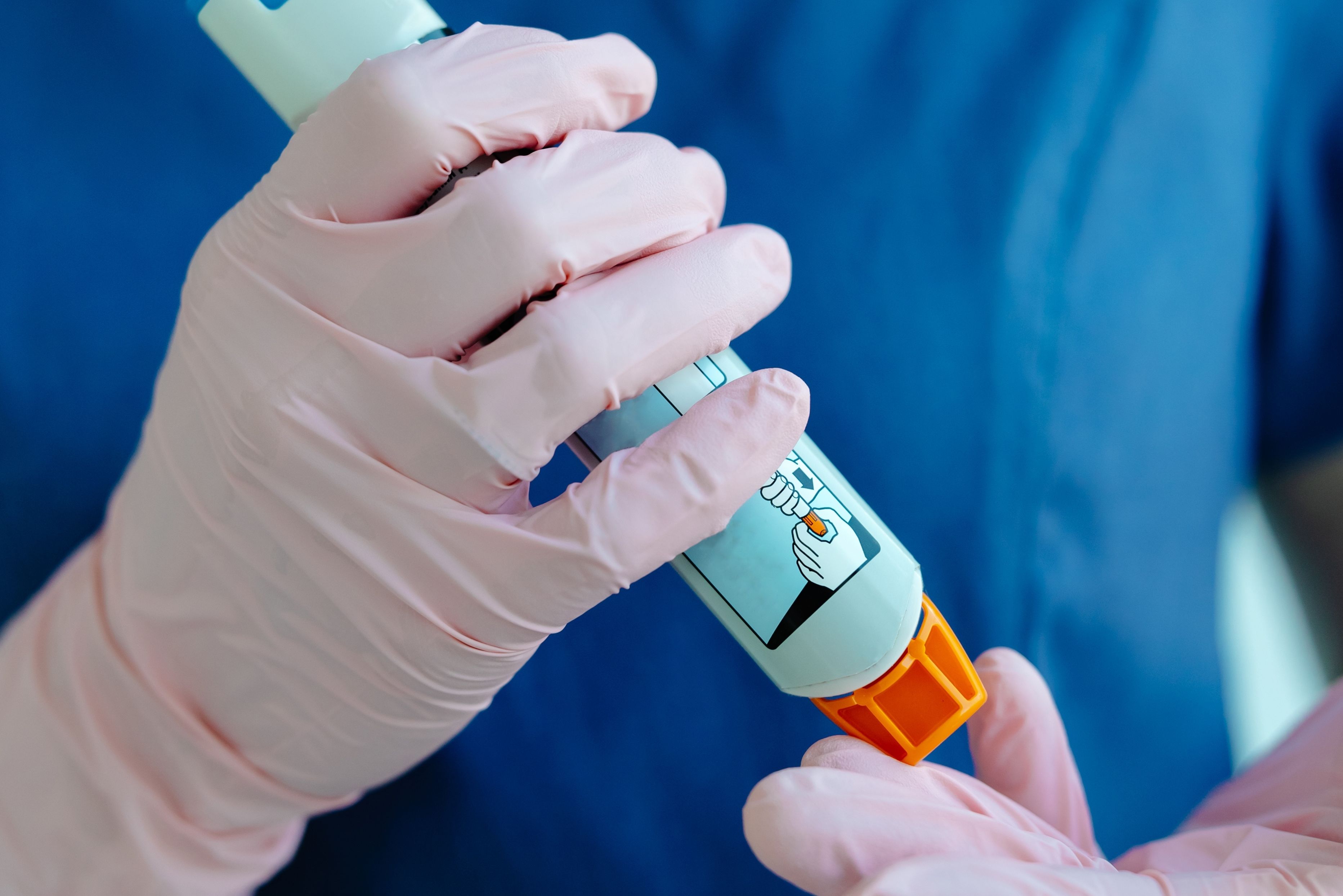
(Vienna, 17-03-2026) – Adrenaline (Epinephrine) injections are considered the most important first-line treatment for acute, severe allergic reactions (anaphylaxis), which can manifest, among other symptoms, as a drop in blood pressure. This recommendation is based primarily on clinical experience and observational data, as placebo-controlled studies in humans with severe anaphylaxis are not feasible. A research team at MedUni Vienna has now, for the first time, investigated in healthy volunteers how adrenaline affects the drop in blood pressure caused by histamine - the central mediator of anaphylaxis. The results, recently published in the journal Allergy, do not question current guidelines, but highlight the need for more effective treatment options.
The research team led by Matthias Weiss-Tessbach and Bernd Jilma (both from the Department of Clinical Pharmacology at MedUni Vienna) focused on the drop in blood pressure that can occur during anaphylaxis alongside other symptoms such as difficulty breathing and skin reactions. In severe allergic reactions, mediators - most importantly histamine - can dilate blood vessels and destabilise circulation. To study this mechanism in isolation, the researchers induced a controlled drop in blood pressure in healthy volunteers using a 15-minute intravenous histamine infusion. Plasma histamine levels were achieved that are typically measured in severe anaphylaxis. Five minutes after the start of the infusion, participants received either adrenaline or placebo into the thigh muscle. Only five of 20 participants showed a short-lived improvement in blood pressure following the injection. A second dose also failed to stabilise blood pressure. The difference between adrenaline and placebo was very small.
Adrenaline Still Recommended
"Our study is the first placebo-controlled investigation in humans to examine the effect of intramuscular adrenaline on histamine-induced hypotension," says first author Matthias Weiss-Tessbach. "The results show that this drop in blood pressure - caused by a single mediator - cannot be reliably reversed by intramuscular adrenaline." At the same time, the study authors emphasised that no immediate consequences should be drawn for patients: "Anaphylaxis is likely more complex than the model used here, although histamine has been identified in previous studies as the most important mediator in acute anaphylaxis in humans. Adrenaline remains the recommended first-line treatment for severe allergic reactions," adds principal investigator Bernd Jilma.
Anaphylaxis can be triggered by food, medications, or insect stings, and can be life-threatening. International guidelines have long recommended intramuscular adrenaline as the primary first-line treatment, often administered via auto-injectors that patients can use themselves. Since placebo-controlled clinical trials in acute, severe anaphylaxis are not feasible, experimental models play an important role in advancing medical knowledge. The findings of this study indicate that more effective therapies targeting histamine specifically are needed for the treatment of anaphylaxis.
Publikcations:
Allergy
Effect of Intramuscular Adrenaline on Histamine-Induced Hypotension: A Randomised Placebo-Controlled Pilot Trial.
Matthias Weiss-Tessbach, Al Medina Dizdarevic, Thorsten Bischof, Christa Firbas, Alexander Taschner, Eva-Luise Ritter-Hobl, Barbara Steinlechner, Eva Fischer, Lorenz Sonnberger, Georg Gelbenegger, Jolanta M. Siller-Matula, Christian Schoergenhofer, Bernd Jilma.
https://doi.org/10.1111/all.70277
Drug Discov Today
Effectiveness of histamine receptor antagonists in the treatment of histamine-driven clinical symptoms: do we have a histamine or, better, an anti-histamine problem?
Boehm T, Jilma B.
https://doi.org/10.1016/j.drudis.2025.104383