
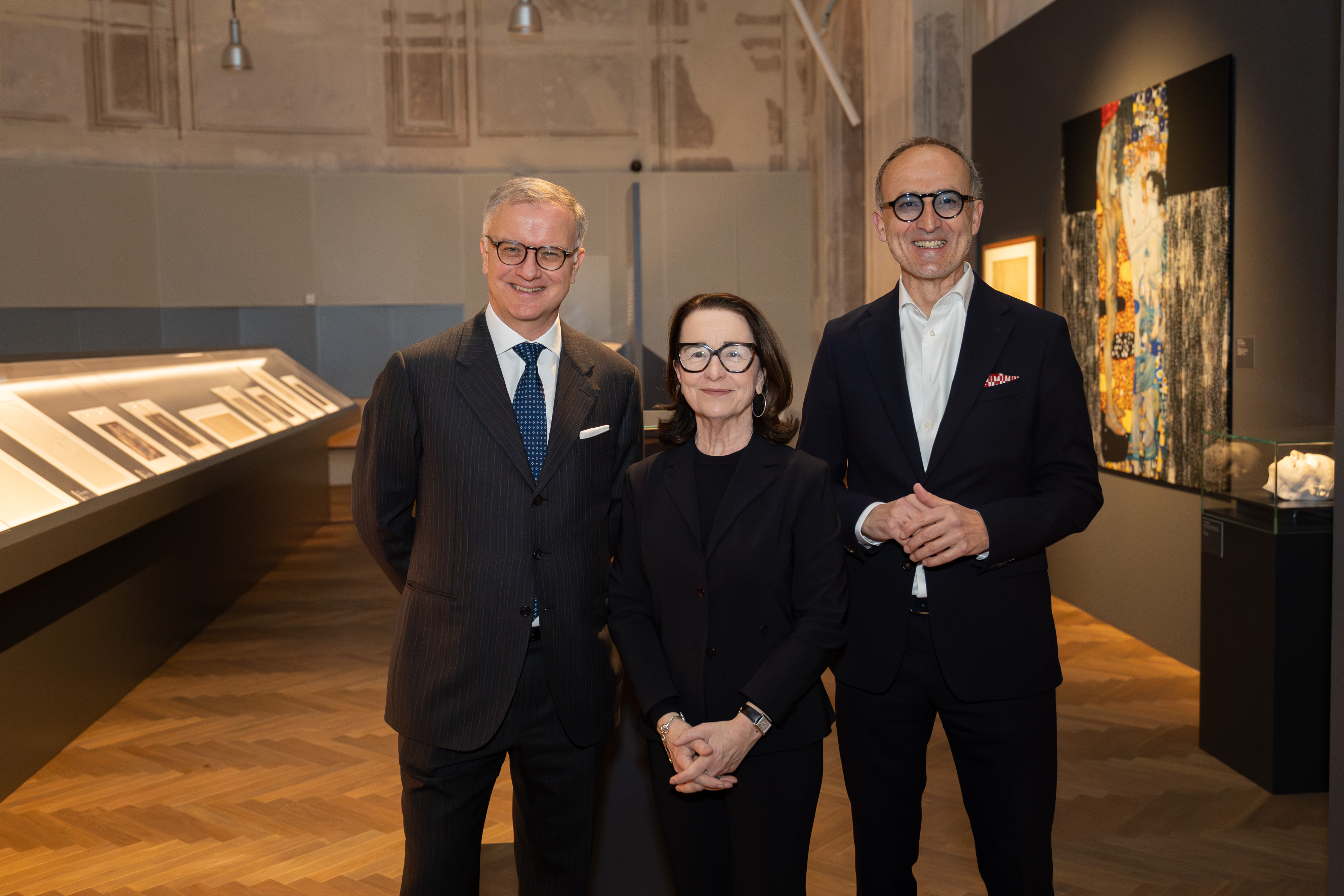
(Vienna, 25 March 2026) “Gustav Klimt and Medicine. Images of the Flow of Life” demonstrates the profound influence that scientific discoveries and medical innovation had on the works of Gustav Klimt, thereby opening up new perspectives on the artist as a visionary interpreter of the life cycle from birth to death. The exhibition, which runs until 28 June at the Josephinum of the MedUni Vienna, was presented today at a press conference.
The exhibition, which opens on 26 March 2026 at the Josephinum, the collections of the Medical University of Vienna, “Gustav Klimt and Medicine. Images of the Flow of Life” is the first comprehensive exhibition to explore the multifaceted relationships between Klimt, science and medical progress in Vienna around 1900. It demonstrates the profound influence that the intellectual atmosphere of the time – characterised by groundbreaking scientific discoveries, new medical methods and an open dialogue between disciplines – had on Gustav Klimt’s thinking and creative work.
At the heart of the exhibition is the faculty painting “Medicine”, which was destroyed in 1945 and is arguably one of the most controversial, most innovative and, at the same time, most visionary works by the Austrian artist. Following an elaborate, scientifically supported AI reconstruction as part of a project by the Belvedere in collaboration with Google Arts and Culture in 2024, visitors can now gain a colourful impression of Klimt’s monumental composition, which is currently on display in large format on the façade of the Anna Spiegel Research Building on the MedUni Campus AKH site.
“Gustav Klimt embodies the intellectual awakening of Vienna around 1900 like no other artist. The exhibition at the Josephinum highlights how closely art, science and medical progress were intertwined during this period, and how profoundly this interdisciplinary dialogue shaped Klimt’s work. In doing so, it also offers a new perspective on medicine as a cultural and social force,” says Markus Müller, Rector of MedUni Vienna,” says Markus Müller, Rector of MedUni Vienna.
In the historic lecture theatre of the Josephinum, around 25 original Klimt drawings are on display, sourced from renowned Austrian institutions and collections, as well as from selected private collectors whose works have rarely been accessible to the public until now. The exhibition illustrates Klimt’s working processes, his exploration of physicality and his intense preoccupation with the depiction of birth, life and death. The exhibition is complemented by medical-historical exhibits from the Josephinum’s collection. “For the first time, our special exhibition is dedicated in detail to the profound knowledge of the human body that found its way into Gustav Klimt’s work, thereby demonstrating his close connection with the great physicians in Vienna around 1900,” explains Christiane Druml, Director of the Josephinum.
The curator of the exhibition is Tobias G. Natter, former director of the Leopold Museum and author of the current catalogue raisonné of all Klimt’s paintings. Natter: “Even at its first presentation in 1901, the painting ‘Medicine’ sparked an ‘aesthetic civil war’. The exhibition also offers an insight into Klimt’s numerous allegories of life and, with a clarity never before seen, brings to life the extent to which Klimt engaged with the fundamental themes of the cycle of life and consistently created magnificent images of the flow of life between becoming and passing away.”
The exhibition is accompanied by a richly illustrated catalogue featuring specialist essays on philosophy, art history and medicine, published by Prestel, 240 pages.
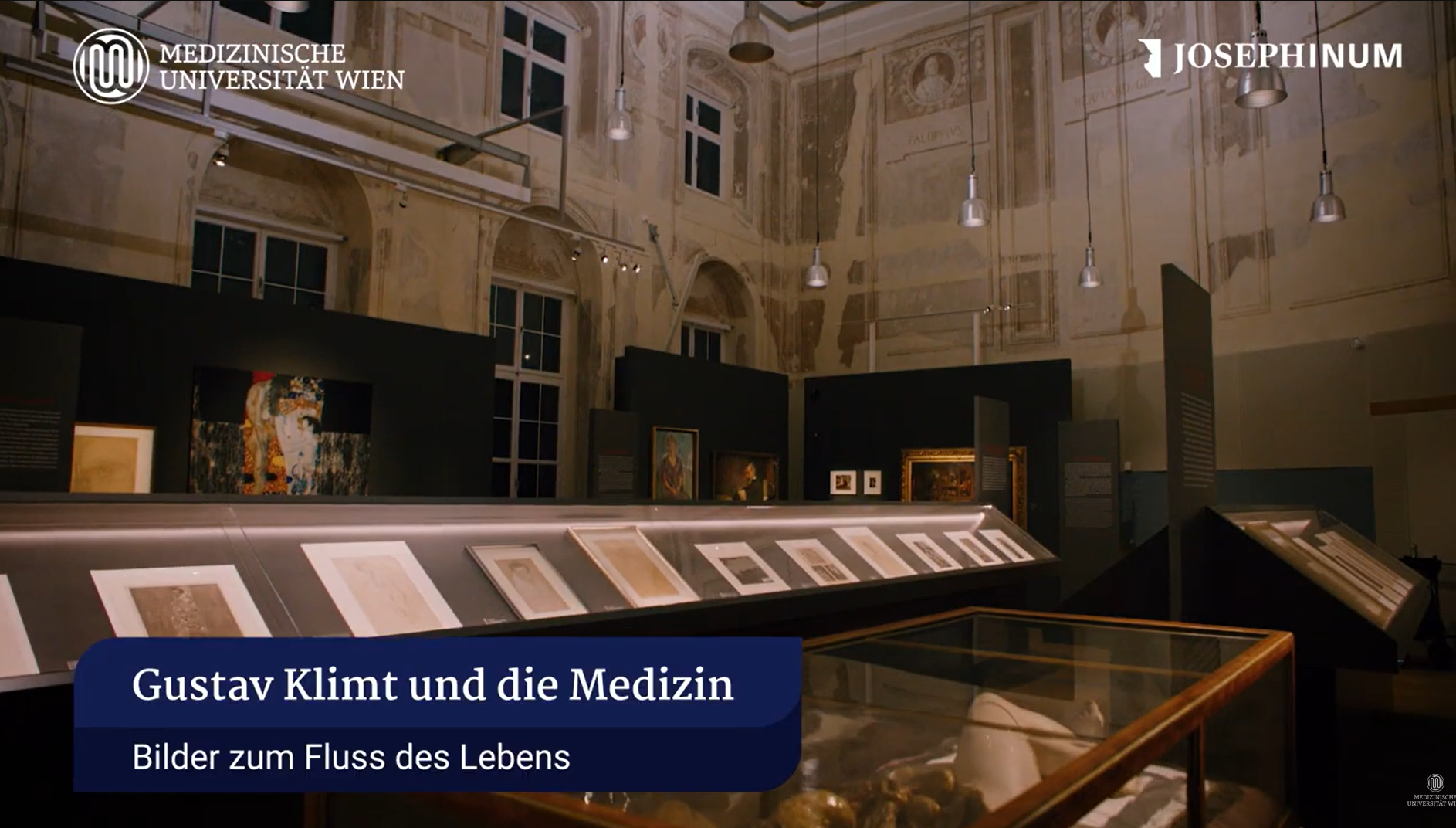
After activation, data will be sent to YouTube. Further information here: Data protection
Special exhibition “Gustav Klimt and Medicine. Images of the Flow of Life”
Exhibition dates: 26 March – 28 June 2026
Curator: Tobias G. Natter
Venue: Josephinum
Josephinum – Museum of the History of Medicine, Vienna
Währinger Straße 25, 1090 Vienna; www.josephinum.ac.at
Opening hours: Wed–Sun, 10.00–18.00, Thu, 10.00–20.00
Guided tours: Sat 3.00 pm (English), Sun 11.00 am & 3.00 pm (German)

Christiane Druml on the ‘Hörgang’ podcast
Klimt and medicine: How art and science shaped Vienna around 1900
An exhibition at Vienna’s Josephinum presents a new perspective on Gustav Klimt – as a chronicler of life between birth, illness and death
to the Podcast (in German)