
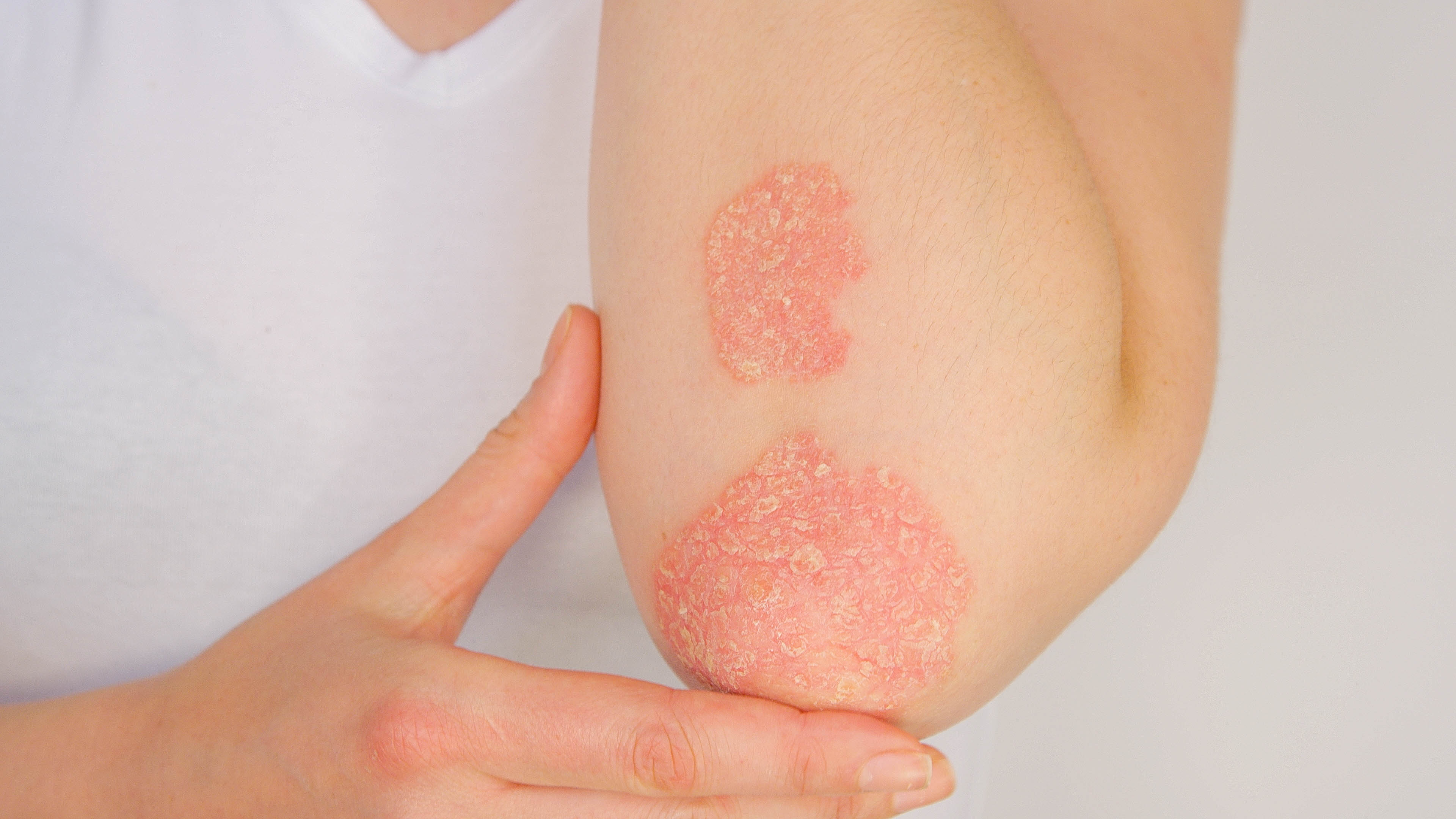
(Vienna, 10-03-2026) Chronic inflammation is generally considered a risk factor for the development of cancer. In psoriasis, a chronic inflammatory skin disease, the link with cutaneous squamous cell carcinoma, a common form of skin cancer, has not yet been clarified. In medical practice, it has long been observed that tumours in psoriasis often do not develop directly in inflamed areas of skin. Researchers at MedUni Vienna have now confirmed this phenomenon in a study and identified the possible biological mechanism behind it. The results have recently been published in the journal Proceedings of the National Academy of Sciences (PNAS).
As part of the study, the research team led by Panagiota Tsokkou (Department of Dermatology, MedUni Vienna) and Erwin F. Wagner (Department of Dermatology and Department of Laboratory Medicine, MedUni Vienna) investigated how psoriasis-like inflammation affects the development of cutaneous squamous cell carcinoma (cSCC). The investigations were carried out in mouse models in which psoriasis-like inflammation was triggered. Tumours were initiated either by transplantation of cSCC cells or by a chemical process. In both models, tumour growth was significantly inhibited in highly inflamed skin areas.
Immunological situation suppresses tumour development
Analyses of the affected skin areas provided clues to possible mechanisms behind this phenomenon. Neutrophils, immune cells of the innate immune system, which were greatly increased in the inflamed skin, proved to be an important factor. The researchers' investigations suggested that these cells alter the local tissue situation in such a way that tumour development is suppressed. At the same time, keratinocytes – the most important cells in the epidermis – showed clear signs of so-called cellular senescence. This is a state in which cells permanently stop dividing – a mechanism that can slow down uncontrolled cell growth and thus also tumour formation. Conversely, the researchers' experiments showed that targeted reduction of neutrophils in the mouse models reduced psoriasis-like inflammation and triggered tumour growth.
"Our results emphasise that inflammatory reactions do not necessarily promote tumour growth," said study leader Erwin F. Wagner. "Depending on the composition of the immune response, they can activate processes that slow down tumour growth." In the long term, these new findings could help to assess the cancer risk in chronic inflammatory diseases more accurately and to use immunomodulatory therapies for cancer treatment in a more differentiated manner.
Publication: Proceedings of the National Academy of Sciences (PNAS)
Psoriasis-like disease prevents squamous skin tumor development by neutrophil-driven Inflammation.
Panagiota Tsokkou, Martin Holcmann, Katharina Rindler, Kamil Mieczkowski, Lisa Shaw, Matthias Farlik, Maria Sibilia and Erwin F. Wagner.
https://www.pnas.org/doi/10.1073/pnas.2536378123