
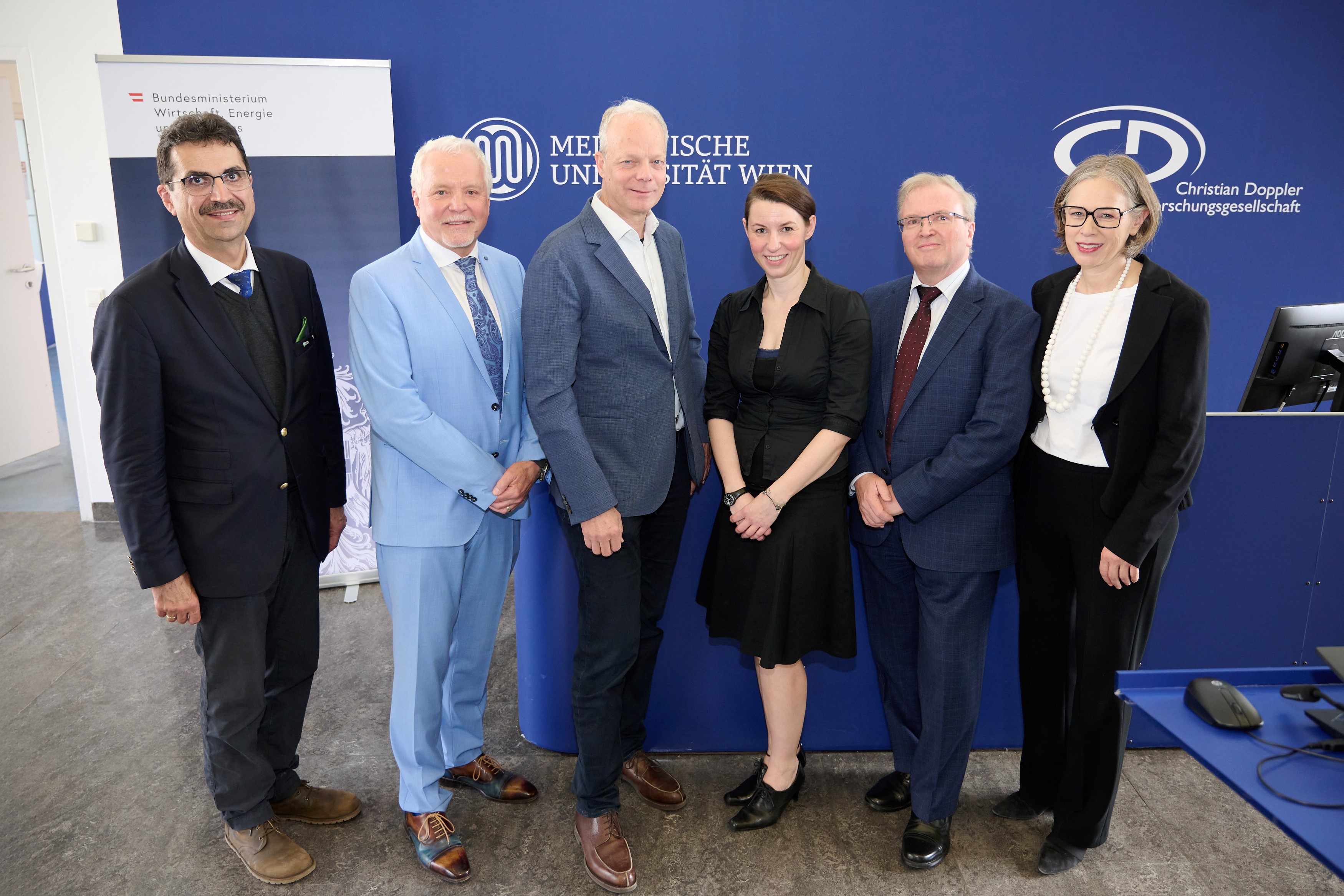
(Vienna, 21 May 2026) – The opening of a new Christian Doppler Laboratory at MedUni Vienna marks the establishment of a research focus aimed at improving peritoneal dialysis (‘home dialysis’). This form of treatment for chronic kidney failure often leads to inflammation-related complications. The CD Laboratory for Metaflammation in Peritoneal Dialysis aims to establish the scientific basis for the development of new therapies to improve and prolong patients’ lives.
In peritoneal dialysis, the peritoneum acts as a natural filter membrane through which waste products and excess fluid are removed from the body. Despite this established therapy, treatment is often characterised by severe comorbidities associated with a significantly increased mortality rate. Chronic inflammation plays a central role in this, being associated with increased susceptibility to infection and a heightened risk of cardiovascular disease. The new CD laboratory focuses on the disease processes associated with peritoneal dialysis, collectively referred to as metaflammation (metabolic inflammation). Their harmful effects on health have already been extensively studied in metabolic diseases such as diabetes mellitus and obesity; however, there is a significant need for research in the context of peritoneal dialysis.
"Our aim is to unravel the mechanisms of metaflammation in order to lay the scientific foundation for new therapeutic strategies," says Rebecca Herzog (Department of Pediatrics and Adolescent Medicine, MedUni Vienna), who heads the CD laboratory. The research programme, scheduled to run until 2033, is funded by the industrial partner Zytoprotec, a Viennese biotech company specialising in innovative dialysis solutions, in collaboration with the Federal Ministry for Economy, Energy and Tourism (BMWET).
Federal Minister Wolfgang Hattmannsdorfer:
"This research project demonstrates how modern location policy works: cutting-edge research, industrial application and tangible value creation are all interlinked. Life sciences and biotechnology are key technologies for us – which is precisely why we have firmly anchored them in our industrial strategy.
With the CD laboratory, we are not only strengthening medical care, but above all Austria’s position as a hub for innovation and industry. For research leads to products, innovation leads to jobs, and cooperation between industry and science leads to long-term competitiveness. Our goal is clear: we want value creation, expertise and new technologies to emerge and grow in Austria. This is precisely why we are making targeted investments in application-oriented basic research and strong partnerships between science and industry. "
Michaela Fritz, Vice-Rector for Research and Innovation, MedUni Vienna:
"For people with chronic kidney failure, dialysis is often the only life-saving treatment. This makes the research at our new CD Laboratory all the more important. Close collaboration with our corporate partner creates the conditions for newly gained insights to be rapidly translated into medical practice. And thanks to the support from the Ministry of Economic Affairs, a new chapter in application-oriented basic research can be opened at MedUni Vienna.v
About Christian Doppler Laboratories
Christian Doppler Laboratories conduct high-level applied basic research, with outstanding scientists collaborating with innovative companies. The Christian Doppler Research Association is internationally recognised as a best-practice example for promoting this collaboration. Christian Doppler Laboratories are jointly funded by the public sector and the participating companies. The main public funding body is the Federal Ministry for Economic Affairs, Energy and Tourism.