
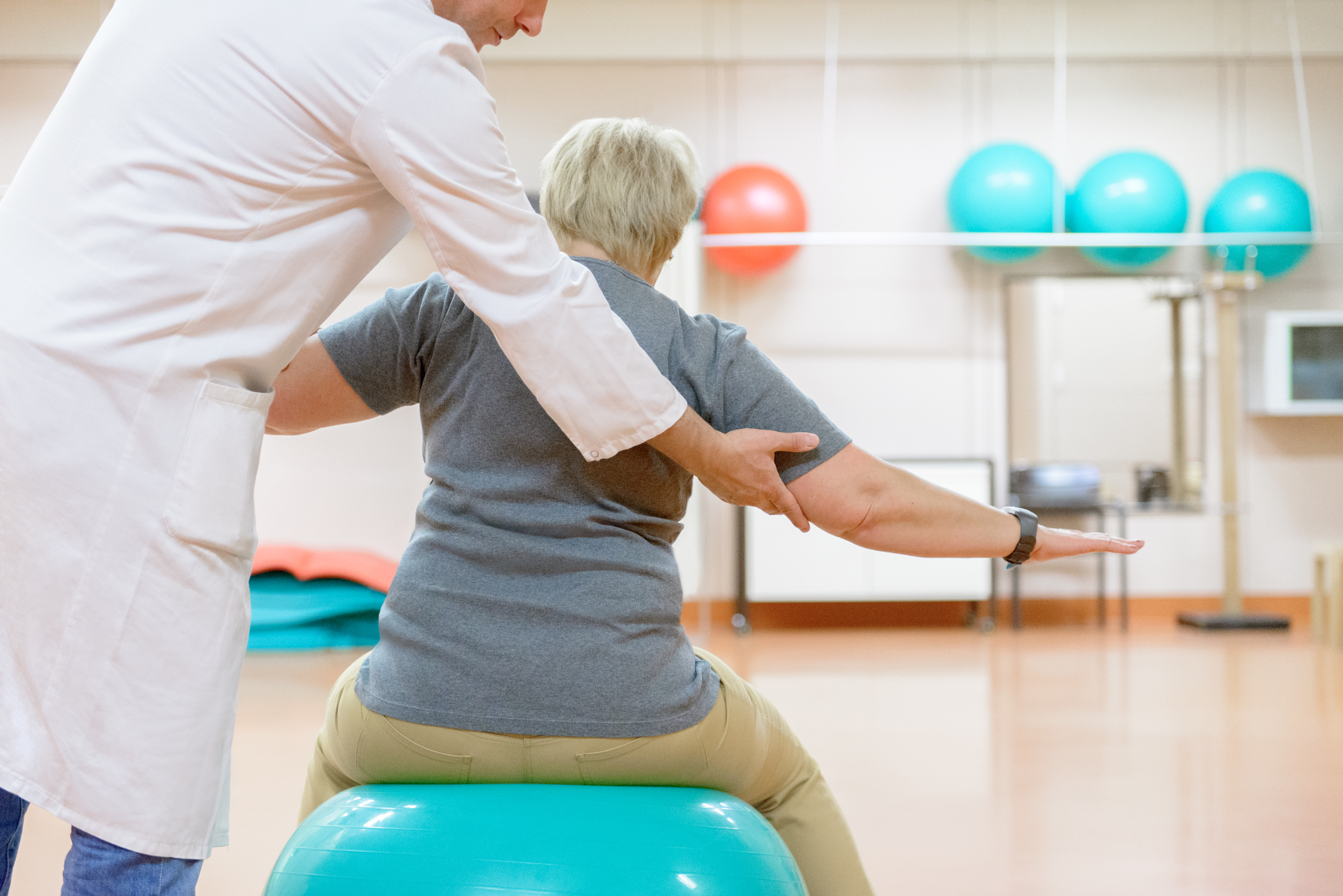
(Vienna, 7 October 2026) – Heat, cold, water, light, oxygen, electrical impulses, shock waves, magnetic fields, massage, exercise and much more besides: regenerative physical therapies make targeted use of physical stimuli to support the body’s own repair and healing processes, and have become an indispensable part of modern treatment approaches for pain and mobility restrictions. However, their significance and potential are often misjudged. In the guidebook recently published by MedUni Vienna through MANZ Verlag, Richard Crevenna, Head of the Department of Physical Medicine, Rehabilitation and Occupational Medicine at MedUni Vienna, provides scientifically sound and practical information on the benefits and limitations of regenerative physical therapies.
The book has emerged from day-to-day work with patients who are treated at the Department of Physical Medicine, Rehabilitation and Occupational Medicine at MedUni Vienna, headed by Richard Crevenna, primarily due to pain and associated mobility restrictions: "Time and again, it becomes clear that there is a great need for reliable yet accessible information on regenerative physical therapy approaches. Many of those affected would like to know what options are available, which procedures can be usefully applied in their specific case, and what they can and cannot expect from them," explains Crevenna.
Ensuring mobility, participation and quality of life
Pain and associated mobility impairments are among the most common health problems of our time – with significant consequences for those affected and for society as a whole. Accordingly, the treatment of patients is not only about managing symptoms, but also about restoring and maintaining the ability to meet everyday and occupational demands. It is precisely here that regenerative physical therapy approaches, in all their diversity, play a special role: "By focusing not primarily on an isolated symptom such as pain, but on the body’s biological systems as a whole, they create the conditions for sustainable functional improvements," explains Crevenna.
This book describes exactly how these conditions are created, what effects different types of physical stimuli can and cannot have on specific health impairments, and under what circumstances. Movement – particularly in the form of controlled exercise – plays a particularly important role in this context. "Targeted mechanical loading activates adaptation in muscles, bones and connective tissue, improves metabolic processes and stabilises neural networks. No other method has such a broadly systemic effect on improving the body’s regenerative processes, " says Richard Crevenna.
Active participation as a prerequisite for therapeutic success
Which of the many different physical therapies – often used in combination – should be applied must be decided on a case-by-case basis. Pain and the associated functional limitations are a common indication, but by no means the only one. These methods can also help in neurological rehabilitation – for example, following a stroke – or in cases of impaired wound healing and many other health problems, as they "specifically support biological regenerative processes whilst simultaneously influencing the functional consequences of the original condition", as Crevenna explains.
Common to all methods is the active participation of patients as a prerequisite for lasting therapeutic success: “Exercise, a stable metabolism, sufficient sleep and healthy stress management create the conditions under which physical stimuli can become effective in the first place. Without applying this to everyday life, there can be no lasting improvement,” says Crevenna, highlighting a key point he emphasises to his patients day in, day out. However, the limitations of regenerative physical therapies – namely, the complete structural normalisation of biological processes – remain: "A degeneratively altered joint, for example, cannot be anatomically ,restored’ by shockwave therapy, but it can be functionally stabilised to such an extent that its load-bearing capacity and mobility improve and pain is significantly alleviated," says Richard Crevenna. "Treating Pain – What Regenerative Physical Therapies Can Do – and What They Cannot" is a guide for anyone wishing to make informed decisions and specifically improve their mobility and quality of life.