
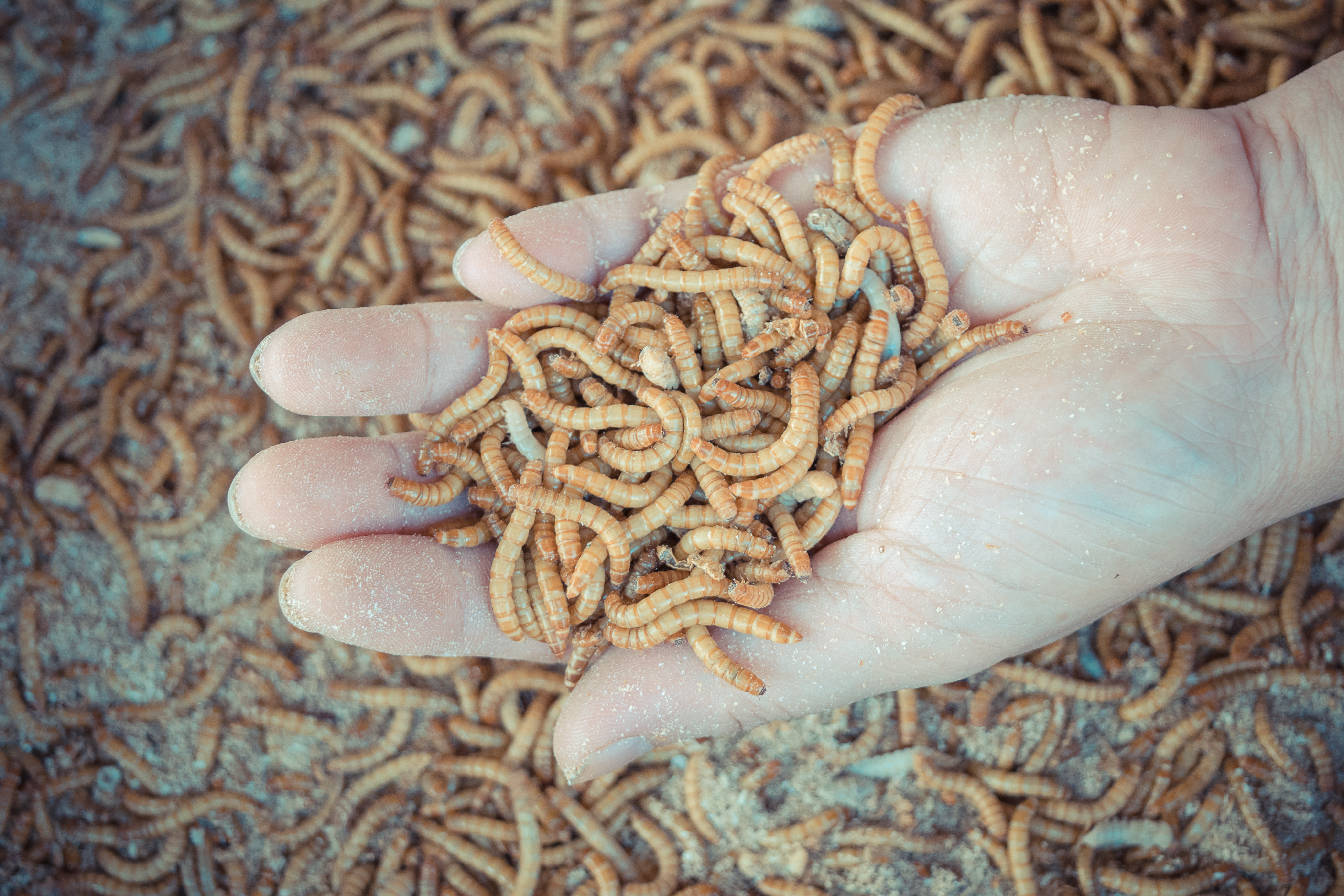
(Vienna, 18 September 2026) Edible insects are increasingly being used as an alternative source of protein. However, some of their proteins are similar to allergens found in shrimp and house-dust mites and may therefore be recognised by the immune system of people with these allergies. An international study involving researchers from the University of Porto, the University of Vienna and the Medical University of Vienna has now investigated how common food-processing methods affect these proteins in lesser mealworm (Alphitobius diaperinus). The results show that cooking and processing alter the proteins but do not prevent them from binding allergy-related antibodies. The study was published in the Journal of the Science of Food and Agriculture.
Buffalo worms are the larvae of the lesser mealworm beetle and are increasingly used as food or as an ingredient in protein-rich products because of their high protein content. The researchers examined commercially available lesser mealworm prepared using a range of common methods, including boiling, baking, microwaving, steaming, frying and grilling. They then tested the processed insect proteins with blood samples from people with crustacean and house-dust-mite allergies.
Processing changes proteins but does not eliminate IgE binding
The laboratory analyses showed that processing can substantially change the proteins involved in allergic reactions. However, their ability to bind immunoglobulin E (IgE) – antibodies that play a key role in allergic reactions – remained detectable. In several cases, stronger or more numerous antibody-binding reactions were observed after processing. Boiling also released some of these proteins into the cooking water.
“Our results show that people with shrimp or house-dust-mite allergies should not assume that edible insects become unproblematic simply because they have been cooked or processed,” says Michelle Epstein from the Department of Dermatology at the Medical University of Vienna. “Some of the same kinds of proteins that cause problems in shrimp and mites are also present in edible insects.”
Clinical relevance still needs to be established
The findings do not show that every person with a shrimp or house-dust-mite allergy will also experience an allergic reaction to lesser mealworm. They demonstrate that insect proteins can continue to interact with allergy-related antibodies in the blood even after cooking and processing. Clinical studies are needed to determine how frequently this laboratory finding translates into actual allergic reactions.
As insect-based ingredients become more widely used in food products, the results indicate that people with crustacean or house-dust-mite allergies should be aware of the possibility of cross-reactivity.
Publication: Journal of the Science of Food and Agriculture
Extraction-dependent changes in IgE-binding profiles of processed lesser mealworm (Alphitobius diaperinus) proteins.
Michelle M. Epstein, Isabel Mafra, Carla S. S. Teixeira, Bruno Carriço-Sá, Anna-Laura Mettinger, Caterina Villa, Sahar Kazemi, Oskar Hoffmann, Joana Costa
Journal of the Science of Food and Agriculture, 2026
http://doi.org/10.1002/jsfa.71060