
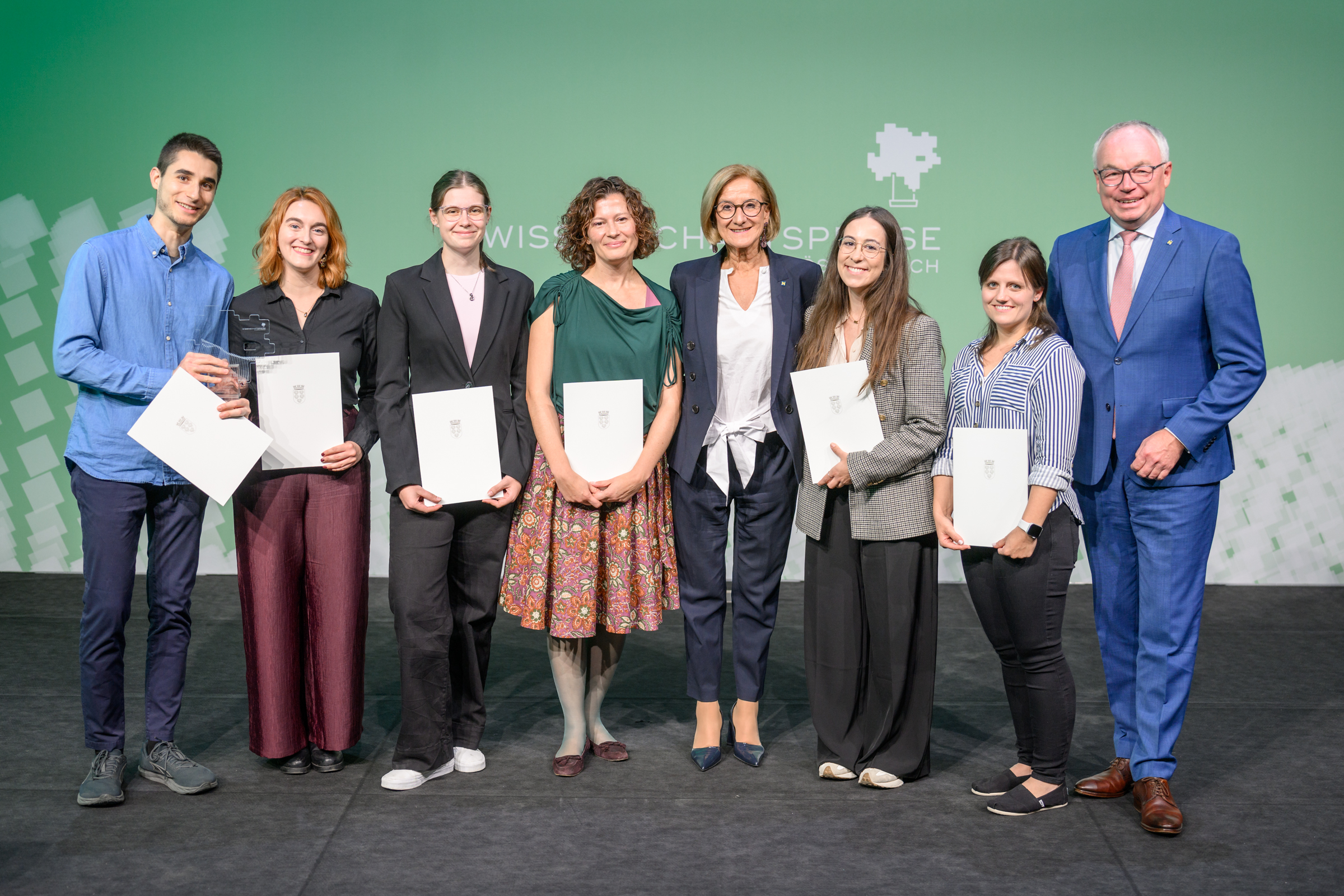
(Vienna, 30 September 2026) The Translational Radiobiology research group at the Medical University of Vienna, based at the MedAustron Centre for Ion Therapy and Research in Wiener Neustadt, has been awarded a Recognition Prize by the Province of Lower Austria for 2026. Led since 2021 by Dea Slade from the Department of Radiation Oncology at MedUni Vienna, the research group is investigating how particle radiation works in cancers with low survival rates and how its therapeutic effect can be further improved. The award was presented during the Lower Austria Science Gala.
The research focuses on aggressive forms of cancer such as pancreatic cancer, glioblastoma and triple-negative breast cancer. Compared with conventional X-ray radiotherapy, particle therapy allows for more precise targeting of the tumour and can cause more complex, hard-to-repair DNA damage in tumour cells. At the same time, it is better able to spare surrounding healthy tissue.
In particular, the research group is investigating how particle radiation can activate the immune system against cancer and which combinations with other therapies could make treatment more effective. The team has already identified more effective radiation modalities, drugs to activate the immune system against cancer cells, and new biomarkers.
“The proximity of our laboratory to the MedAustron Ion Therapy Centre, where cancer patients are treated with particle radiation every day, is a great source of motivation for us. It reminds us every day that our research has the potential to further improve treatment options and the quality of life for these patients in the future,” says Dea Slade.
Science Future Prize for glioblastoma research
Another award linked to MedUni Vienna went to Luca Lippert from the Slade group. For his Master’s thesis ‘Radiation-induced immunogenicity in glioblastoma’ at the University of Vienna, he received the 2026 Science Future Prize from the Lower Austrian Research Promotion Society. The work was carried out at the Max Perutz Labs of the University of Vienna and MedUni Vienna, and in the Translational Radiobiology group at MedAustron in Wiener Neustadt.
Lippert investigated how the immune system, which is suppressed in glioblastoma, can be reactivated to enable immunotherapies. His research demonstrated for the first time that combining hypofractionated radiotherapy – radiation treatment with higher single doses over fewer sessions – with the inhibition of the PARP7 enzyme amplifies immune-activating signals and activates immune cells. The findings lay the groundwork for further research into overcoming immune suppression in glioblastoma.
The Lower Austria Science Awards are presented annually in recognition of outstanding scientific achievements. The Recognition Awards honour scientists whose work has already garnered professional acclaim. The Science Future Award recognises scientific theses by academics at the start of their scientific careers.
