
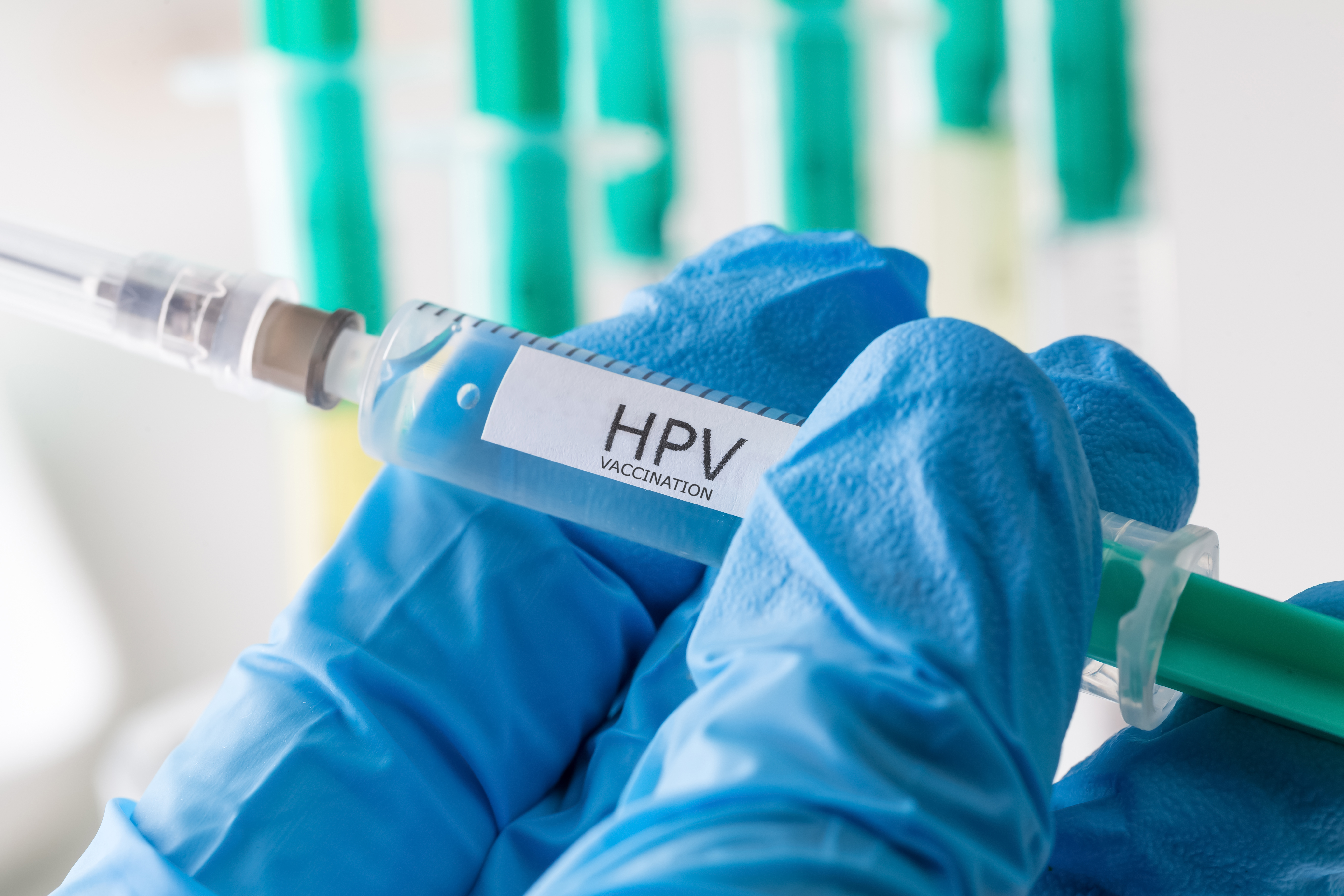
(Vienna, 03 December 2025) After scientists at the Comprehensive Cancer Centre of the Medical University of Vienna and the University Hospital Vienna demonstrated the benefits of the 4-valent HPV vaccination in women after surgical treatment of precancerous cervical lesions in 2012, this has now been confirmed with the 9-valent vaccine. The latest analysis of international HPV vaccination trials shows that a 9-valent HPV vaccination given before surgery can significantly reduce the risk of disease in the cervix, vagina and vulva. The study was published in the journal Obstetrics & Gynaecology.
The precancerous stage of cervical cancer (cervical carcinoma) is characterised by high-grade changes in the epithelial cells of the cervix. These changes are caused by an infection with human papillomavirus (HPV) and, if left untreated, may progress to invasive cancer. To prevent this progression, conisation is the established treatment. This surgical procedure removes a cone-shaped piece of tissue from the cervix, providing an effective method for excising abnormal (dysplastic) cells while allowing precise examination of the tissue.
Increased risk of secondary diseases
"Conisations are not only associated with an increased risk of premature birth in subsequent pregnancies, but patients also have an increased risk of secondary diseases, including several types of cancer," explains first author Elmar Joura from the Department of Obstetrics and Gynecology and the Comprehensive Cancer Centre at MedUni Vienna and University Hospital Vienna. The aim of the study was to assess the risk of disease of the cervix, vagina and vulva after conisation and prior 9-valent HPV vaccination. 1510 women aged 16 to 26 were included in the post-hoc analysis of the large registration study and followed for up to six years.
The result: Those study participants who had been vaccinated with the 9-valent vaccine prior to conisation were significantly less likely to develop new or recurrent HPV-related cell changes. The probability of a precancerous lesion forming again after surgery was reduced by up to 90 per cent. "In Austria, additional HPV vaccination has become the clinical standard for patients undergoing conisation since 2022, so we are particularly pleased with this result," says Elmar Joura.
HP viruses can cause cancer in women and men
More than 200 different human papillomaviruses are known to date. Some types can cause genital warts or, in the case of long-term HPV infection, lead to cervical, penile, anal and vulvar cancer, as well as cancer of the mouth and throat. The 4-valent HPV vaccine used in Austria until 2016 covers HPV types 6, 11, 16 and 18, while the 9-valent vaccine additionally covers HPV types 31, 33, 45, 52 and 58. The 9-valent vaccine has been in use in Austria since 2016 and is available free of charge up to the age of 21 as part of the National Immunisation Programme. Until 30 June 2026, free vaccination will also be offered to people up to the age of 29 if the first jab is given by 31 December 2025.
Publication: Obstetrics & Gynecology
Effect of Prior 9-Valent Human Papillomavirus Vaccination on Subsequent Lower Genital Tract Dysplasia After Cervical Excisional Surgery.
Elmar Joura, MD, Susanne K. Kjaer, MD, Oliver Bautista, PhD, Alain Luxembourg, MD, PhD,
Alfred Saah, MD, and Anna Giuliano, PhD.
DOI: 10.1097/AOG.0000000000006113
https://journals.lww.com/greenjournal/fulltext/9900/effect_of_prior_9_valent_human_papillomavirus.1394.aspx