
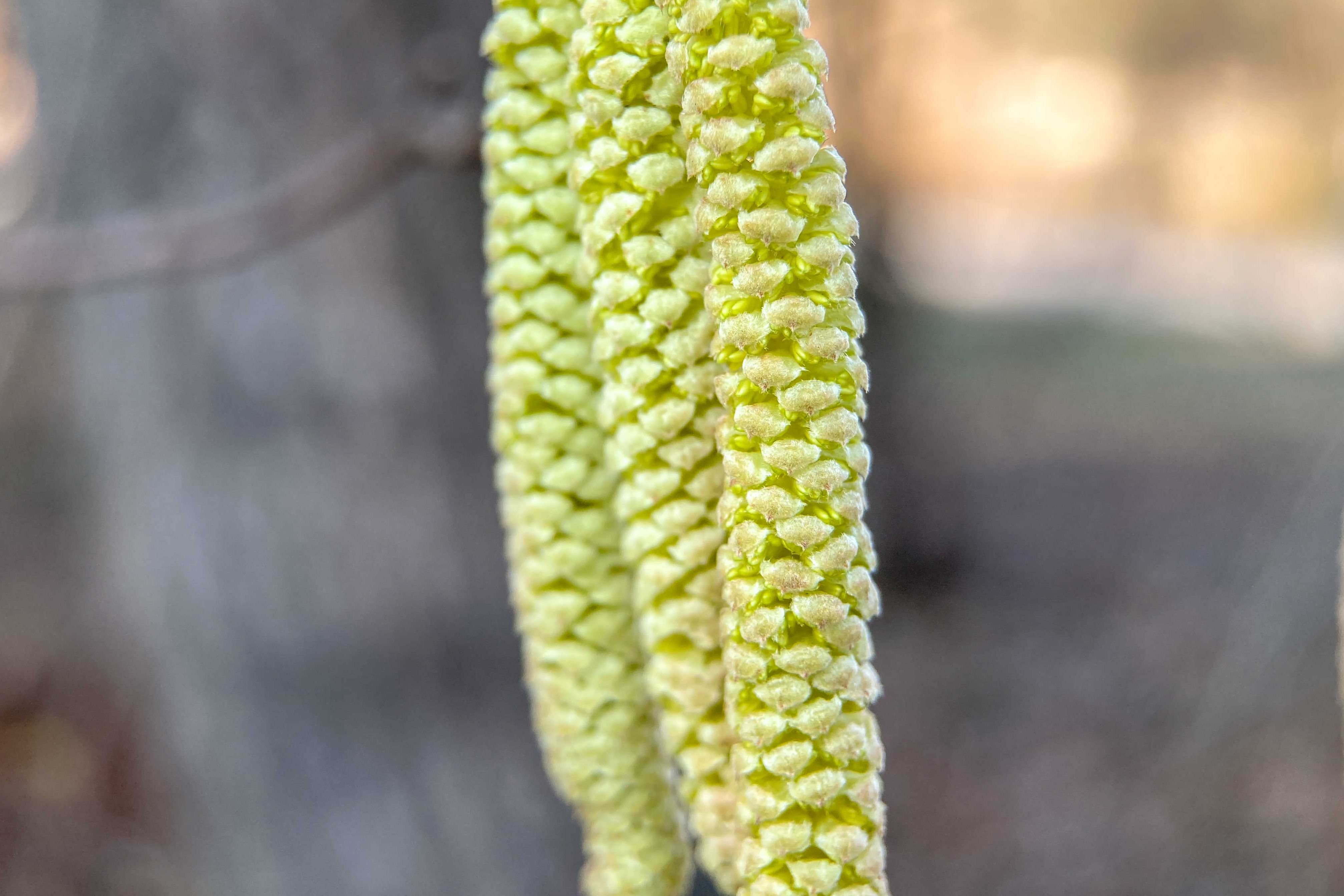
(Vienna, 27 January 2026) Last year, pollen concentrations were average to below average for most major aeroallergens. However, this will change in 2026: hazel, especially Turkish hazel trees, are showing abundant catkins and thus the potential for more intense pollination. The hazel pollen season starts later than in the last years.
Birch trees also have a larger number of male catkins than last year. Pollen allergy sufferers must therefore prepare for a more intense flower of early bloomers, reports the Pollen Service Vienna of MedUni Vienna.
Retrospective view: The 2025 pollen season was not intense. The birch pollen season was in second-to-last place in the 50-year history of pollen measurements, with a new all time low for April, and hazel, mugwort and ragweed also produced below-average pollen concentrations. All figures and graphs are available under "Annual Report" at www.pollenservice.wien.
The 2026 pollen season starts later when defined with the begin of the hazel flower. As usual, purple alder (Alnus x spaethii) began to flower around Christmas. This hybrid tolerates the urban climate very well and flowers early, but its pollination is barely measurable due to its infrequent occurrence. Other alder species flower later; the hazel species are the first to flower and first hazel catkins are ready to flower. Pollen allergy sufferers should prepare themselves now.
Hazel pollen season 2026 more intense
The hazel species show an above-average number of catkins. If conditions are favourable, this can result in intense flowering. The weather conditions during flowering are crucial.
"The hazel pollen season has the potential to be significantly more intense than last year. In Vienna, the Turkish hazel, which is used as a city tree, is the main contributor," reports Katharina Bastl from the Pollen Service Vienna at MedUni Vienna.
Hazel pollen is not yet frequently in the air and this is due tot he cooler wintert hat causes a later start than in the last years. However, first plants in sunny locations are ready to flower. In Germany, there were reports of the first hazel pollen released as early as mid-December. With sunshine and temperatures above 5°C, the first pollination is now also to be expected in Vienna and eastern Austria.
Keeping your eyes open is extremely useful, as Maximilian Bastl from the Pollen Service Vienna at MedUni Vienna recommends: "Recognising flowering plants and avoiding proximity to them is a great advantage. Pollen concentrations are much higher in the immediate vicinity of the source."
Alder pollen season is complex
The alder pollen season is caused by the flowering of several species of alder. The purple alder is the first to flower and is now already fading. It is followed by the grey alder and black alder, which, depending on temperature developments, usually only start to release pollen from February onwards.
The grey alder (Alnus incana) is less common in Vienna than the black alder (Alnus glutinosa). "If you have an alder pollen allergy, you should avoid walking in floodplains and near the Danube," advises Maximilian Bastl from the Pollen Service Vienna at MedUni Vienna.
Birch pollen season more intense
The extremely below-average birch pollen season in 2025 will be followed by above-average pollen concentrations this year. The number of catkins is above average, so the potential is there. However, the weather conditions during the flower are important – in this respect, it is still questionable whether the flower of birch will reach its full potential.
The "early bloomers"
Hazel, alder and birch belong to the birch family. Due to their close relationship, there is a possibility of cross-allergy, meaning that people may also react to a cross-reactive pollen type.
Pollen allergy sufferers who are sensitised to early bloomers must prepare for a more intense year and should also be aware of cross-reactions to food (nuts, apples, carrots, etc.).
Further information
Pollen Service Vienna website: www.pollenservice.wien
Social media: "pollenpaar" on Instagram, X, Bluesky and TikTok