
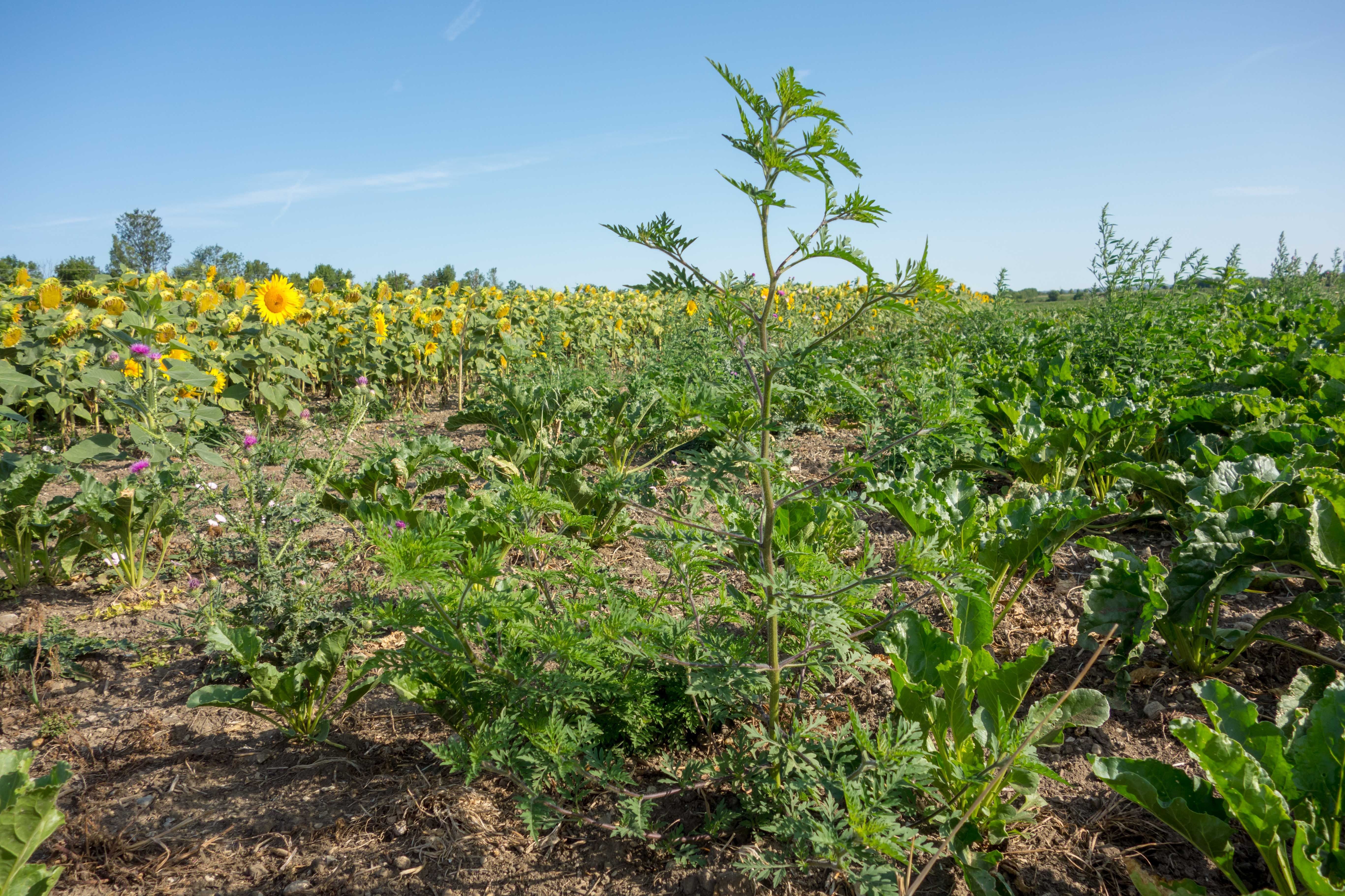
(Vienna, 28 July 2026) This year’s pollen season is entering its final phase with the flowering of mugwort and ragweed. However, this phase varies significantly across different regions of Austria, according to reports from the Pollen Service Vienna at MedUni Vienna and the Pollen Information Service Salzburg. Both, mugwort and ragweed cause allergic symptoms in pollen allergy sufferers even at relatively low pollen concentrations. Mugwort grows primarily in the lowlands and throughout whole Austria. Ragweed, on the other hand, is most prevalent in the southern and eastern parts of Austria. In Salzburg, ragweed and late-flowering, neophyte mugwort species are very rare. This makes Salzburg – particularly the mountainous regions – a welcome refuge for allergy sufferers. In contrast, suitable autumn weather conditions in the eastern and southern areas of Austria, can even trigger a second pollen peak of these plants.
Recent drought and heat have limited the growth of mugwort and ragweed. While there are fewer plants in terms of numbers, it is well known that drought stress makes pollen more allergenic.
Mugwort: Neophytes in Vienna; respite in Salzburg
The flowering season for mugwort ranges from July to September, with the peak pollination period occurring in mid-August. This flowering phase is mainly driven by the native mugwort species, common mugwort (Artemisia vulgaris). Allergies to mugwort pollen are quite common, ranking third among sensitization rates right after grasses and birch. The main flowering period is now beginning at the start of August.
In addition to the flower of common mugwort, two late-flowering neophytes – Chinese mugwort (Artemisia verlotiorum) and annual mugwort (Artemisia annua) – play a role in eastern Austria. These species caused a second mugwort pollen peak in autumn in 2023 and 2024, but not in 2025. As a recent study by MedUni Vienna demonstrates, the decisive factors are autumn weather conditions and climate change. Consequently, the Pollen Service Vienna at MedUni Vienna has intensified its phenological monitoring.
In the city of Salzburg, annual mugwort plays a very minor role. While Chinese mugwort is considered established within the urban area, it is absent from the mountainous regions. Common mugwort, however, can be found throughout the entire province of Salzburg.
Ragweed: a major issue in eastern Austria; no threat in Salzburg
Ragweed (Ambrosia artemisiifolia) has long been a major issue across many parts of Austria, typically thriving on wasteland,roadsides, motorways, construction sites and fields. Depending on weather conditions pollen dispersal lasts from August through October. Ragweed poses a well-known challenge for the healthcare sector, agriculture and infrastructure maintenance. While removing the plants before they flower is considered the most effective control method, it remains highly labor-intensive.
This year’s early summer was characterized by severe drought, which directly impacted plant development: ragweed plants are fewer in number and smaller in size. However, drought stress is a key factor that triggers the production of more pathogenesis-related (PR) proteins, including allergens. Furthermore, the long-distance transport of pollen from south-eastern Europe is difficult to predict, yet it plays a significant role in determining pollen concentrations in eastern Austria.
Maximilian Bastl from the Pollen Service Vienna at MedUni Vienna sums up the situation: “Cross-reactions between mugwort and ragweed are frequent. The overlapping flowering periods present a challenge, as do south-easterly winds during the ragweed pollen season. With the flower of ragweed starting in August in eastern Austria, pollen allergy sufferers should take precautions and prepare thoroughly – especially since the pollen may be significantly more allergenic, even if total pollen concentrations remain below average.”
Good news: In the province of Salzburg, ragweed does not yet pose a problem for pollen allergy sufferers, according to the Pollen Information Service Salzburg. Currently, the plant is mainly introduced through seeds from bird feed or imported soil. Due to low autumn temperatures, these plants fail to ripen their seeds, causing them to disappear the following year. However, further expansion remains possible as warm periods in autumn are becoming longer, which could allow the species to establish itself and reproduce locally in the future.
Katharina Bastl from the Pollen Service Vienna at MedUni Vienna summarises: “The weed pollen season is now starting. In this phase of the pollen season, Austria, offers a sharp contrast between eas and west. This distinct regional variation allows pollen allergy sufferers– particularly those with a ragweed pollen allergy – to find relief by traveling relatively short distances within the country.”
Universities guarantee ethics and quality
Nowadays, pollen information comes from a wide variety of sources, ranging from model data to AI driven forecasts, which are often of questionable quality. Universities are not only indispensable for data collection; they also guarantee independent information and scientifically sound pollen forecasts in accordance with professional standards.
Further information
Pollen Service Vienna website: www.pollenservice.wien
Pollen Information Service Salzburg website: https://www.plus.ac.at/ u mwelt-und-biodiversitaet/institutionen/pollenwarndienst/aktuelle-polleninformation/
Social media: “pollenpaar” on Instagram, Bluesky and TikTok
Link to the MedUni Vienna publication on mugwort: https://link.springer.com/a r ticle/10.1007/s10453-024-09836-8