
(Vienna, 24 June 2026) In 1966, Austrian Newborn Screening was launched at what is now the Department of Pediatrics and Adolescent Medicine at MedUni Vienna and University Hospital Vienna. Over the past six decades, around five million newborns have been screened to detect congenital metabolic disorders, hormonal disorders and other rare diseases at an early stage and treat them in good time. This has already helped around 3,500 children get a better start in life. 28 June is International Newborn Screening Day.
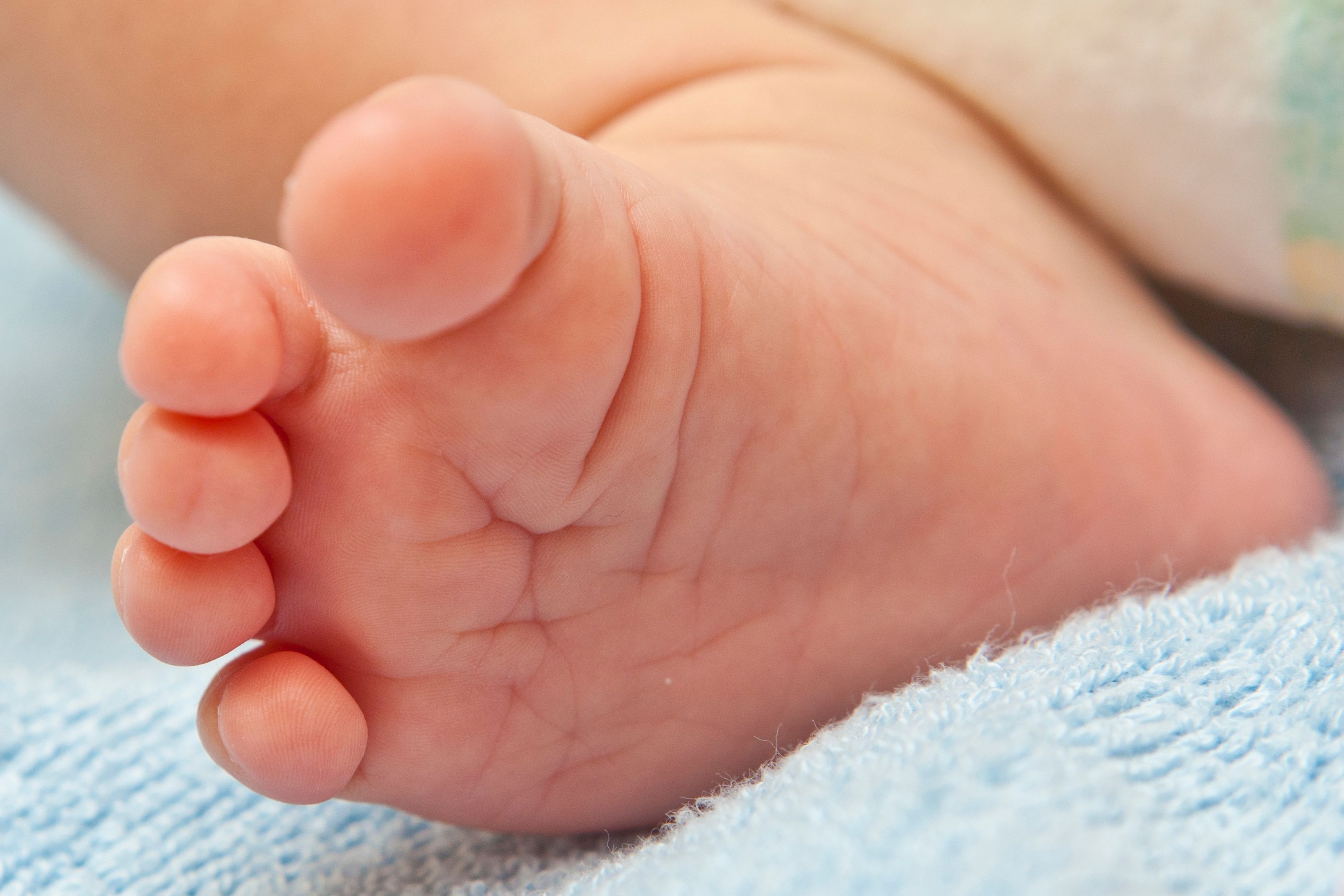
The screening programme is carried out on behalf of the Federal Ministry of Women, Science and Research nd is a central preventive strategy of public healthcare. Every year, blood samples from currently around 78,000 newborns from across Austria are analysed at the Department of Pediatrics and Adolescent Medicine at MedUni Vienna and University Hospital Vienna – in a standardised and quality assured manner and free of charge for all families as part of the Parent-Child Health Record. The blood sample is taken 36 to 72 hours after birth, preferably via a heel prick; just a few drops are sufficient to identify a wide range of potentially serious conditions.
The aim of the screening is to diagnose congenital conditions before clinical symptoms appear. If left untreated, many of these conditions can lead to severe organ damage, developmental disorders or death. Currently, the programme enables the early detection of conditions requiring treatment in around 130 babies each year. In total, this has already enabled around 3,500 children in Austria to lead a life free from serious long-term complications. "Early diagnosis is crucial because, for many congenital disorders, we can only intervene effectively if treatment begins before irreversible damage occurs. In recent years, new treatment options – for example, for congenital immunodeficiencies – have further increased the importance of screening, because starting treatment early has a direct impact on the course of the disease," explains Susanne Greber-Platzer, Head of the Department of Pediatrics and Adolescent Medicine at MedUni Vienna and University Hospital Vienna (AKH), as well as the screening programme.
Programme is continuously being expanded and improved
The origins of the screening model date back to 1963, when newborns in the USA were systematically screened for phenylketonuria (PKU) via blood samples for the first time. If left untreated, this congenital metabolic disorder leads to severe mental and physical developmental disorders, which can, however, be completely prevented by an early-onset diet. In 1966, the paediatrician Otto Thalhammer, a professor at the Medical Faculty of the University of Vienna (now MedUni Vienna), introduced PKU screening in Austria, thereby laying the foundations for the current programme.
Since then, newborn screening has been continuously expanded. A major advance came in 2002 with the introduction of tandem mass spectrometry, which makes it possible to detect numerous metabolic disorders simultaneously with a single analysis. Today, the programme covers more than 30 conditions, including hormonal disorders, metabolic disorders, cystic fibrosis, spinal muscular atrophy and severe congenital immunodeficiencies.
"The analytical challenge lies in generating highly precise and reliable results from minimal sample quantities – and doing so within the shortest possible time. We work with highly standardised, quality-assured laboratory processes and are constantly developing these further, for example through new markers or enzymatic testing methods. This enables us not only to detect more conditions, but also to further improve the accuracy and speed of diagnosis," emphasises Maximilian Zeyda, technical laboratory director of the Austrian Newborn Screening.
Internationally recognised model for preventive medicine
The Austrian programme is one of the most comprehensive of its kind internationally and is closely networked with specialist clinical centres and research institutions. New conditions are included in the screening programme on the basis of clearly defined criteria – in particular the availability of effective treatments and diagnostic reliability. "The continuous development of the programme follows a clear objective: to detect as many treatable conditions as possible at such an early stage that affected children can grow up without limitations or with a significantly improved quality of life," says Vassiliki Konstantopoulou, medical laboratory director for newborn screening. "With around five million newborns screened since its introduction and a steadily growing number of successfully treated children, the Austrian Newborn Screening is an internationally recognised model for effective preventive medicine," concludes Susanne Greber Platzer.