
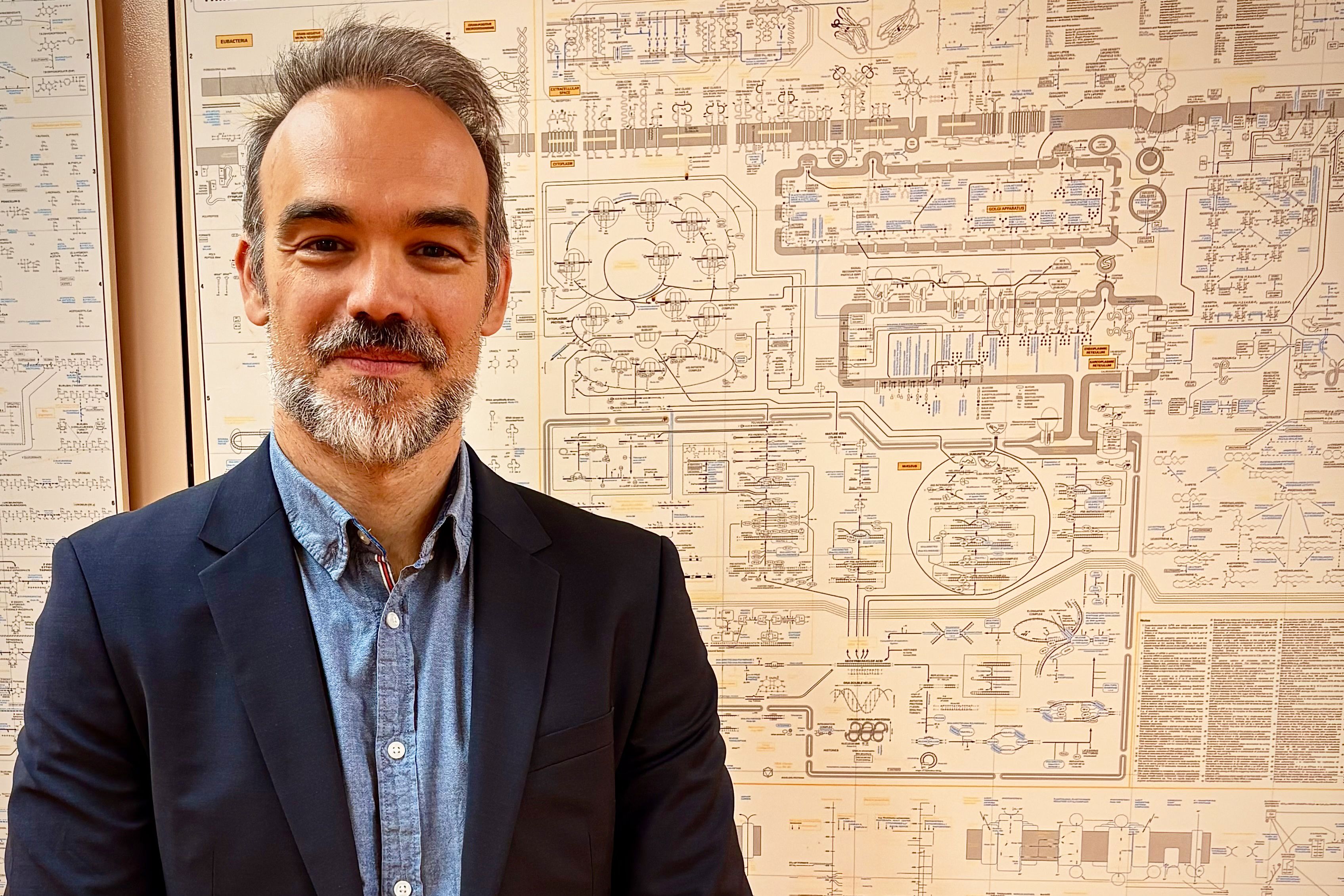
(Vienna, 26 June 2026) Domagoj Cikes, head of a research group at the Division of Endocrinology and Metabolism at the Department of Medicine III, MedUni Vienna, has received a grant from the Austrian Research Promotion Agency (FWF) for his project investigating mitochondrial proline metabolism in sarcopenia.
As we age, we lose muscle mass and strength, a disease known as sarcopenia that affects millions of people worldwide and currently has no FDA-approved treatment. Projections estimate that the number of affected individuals will rise to 200 million, severely impacting quality of life and leading to multiple secondary chronic age-related diseases. Domagoj Cikes’ lab discovered that a key, yet unexplored aminoacid pathway of proline metabolism in the energy-producing compartments of muscle cells (mitochondria) breaks down with age, leading to a sharper drop in the specific metabolite than even previously recognized aging markers like creatine or NAD+.
This project will investigate exactly how this disrupted pathway weakens muscle, what it does to the molecular machinery inside mitochondria and their neighboring organelles, and crucially whether restoring its levels through dietary supplementation or gene therapy can reverse muscle aging and extend healthspan for the millions affected.
About the person
Domagoj Cikes was born in Split, Croatia, and completed his medical studies at the Medical University of Innsbruck, where he began his journey into metabolic research. His interest in the biology of aging was sparked at MEDILS in Split and deepened during his postdoctoral work at IMBA in Vienna, where he combined the fields of aging and metabolism. His research has led to several discoveries in the field of metabolism and muscle aging that have gained international recognition and attention in leading scientific media. He currently leads a research group at the Division of Endocrinology and Metabolism (Department of Medicine III) at the Medical University of Vienna, which focuses on the biology of aging and metabolism.