
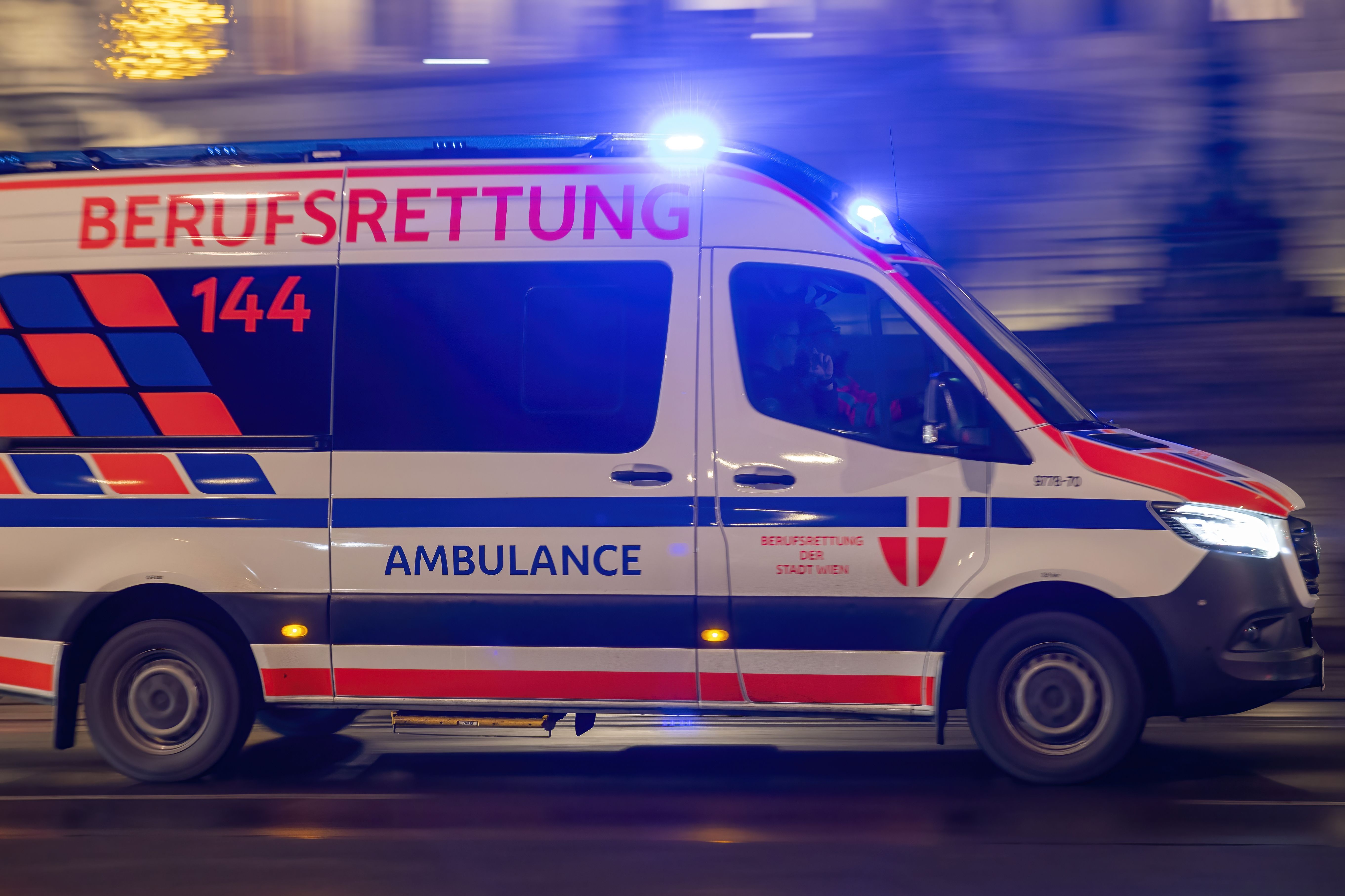
(Vienna, 30 June 2026) Whilst large parts of Europe are currently affected by a heatwave, a new study (published in the journal Scientific Reports, Springer Nature) by the Medical University of Vienna and the Vienna Emergency Medical Service provides reliable data on the specific impact of heatwaves on the workload of a Central European emergency medical service. Four years’ worth of data from the Vienna Ambulance Service show that children, older people and patients with respiratory conditions are particularly affected by heatwaves, and that recovery during the night is crucial.
For the study, 936,461 ambulance call-outs from 2018 to 2021 were linked to localised weather data from 506 monitoring stations in Vienna. On days when temperatures reached at least 20.5 degrees for at least two consecutive days, the number of daily ambulance call-outs rose by around 8 to 9 per cent – an effect that persisted even after taking into account the year, month, day of the week and public holidays.
Night-time heat as a decisive factor
A key finding of the study is that it is not the maximum daytime temperature, but the minimum night-time temperature that is most strongly associated with increased call-out numbers. If it remains hot at night, the body cannot recover and cool down – the strain builds up over several hours and days.
Children and older people particularly affected
The strongest effects were observed in children and young people (aged 0–18) and in people aged between 76 and 85. Women were, on the whole, slightly more affected than men.
First heatwave of the season most dangerous
Notably, the first heatwave of each summer was associated with the sharpest rise in emergency call-outs – more so than subsequent heatwaves in the same year. The researchers suspect this is due to a lack of acclimatisation at the start of the season. Furthermore, the number of emergency call-outs continued to rise with each passing day of a prolonged heatwave, and the strain remained elevated for up to five days even after the heatwave had ended.
Implications for heat warning systems
The authors recommend that regional heat-related health warning systems be aligned more closely with the minimum night-time temperature and that particular attention be paid to the first heatwave of the season, prolonged periods of heat and the days following the end of a heatwave, in order to ensure that emergency services are specifically prepared and that at-risk groups are better protected.
Publication: Scientific Reports
Zeiner S, Rietzinger S, Ledebur K, Dobler M, Aigner P, Schnaubelt S, Krammel M, Laxar D, Mueller J, Maleczek M, Kimberger O, Klimek P. Effects of heatwaves on emergency medical service activity in Vienna: a 4-year analysis. Scientific Reports (2026). https://doi.org/10.1038/s41598-026-55670-y
(Article in press, published online 26 June 2026).