
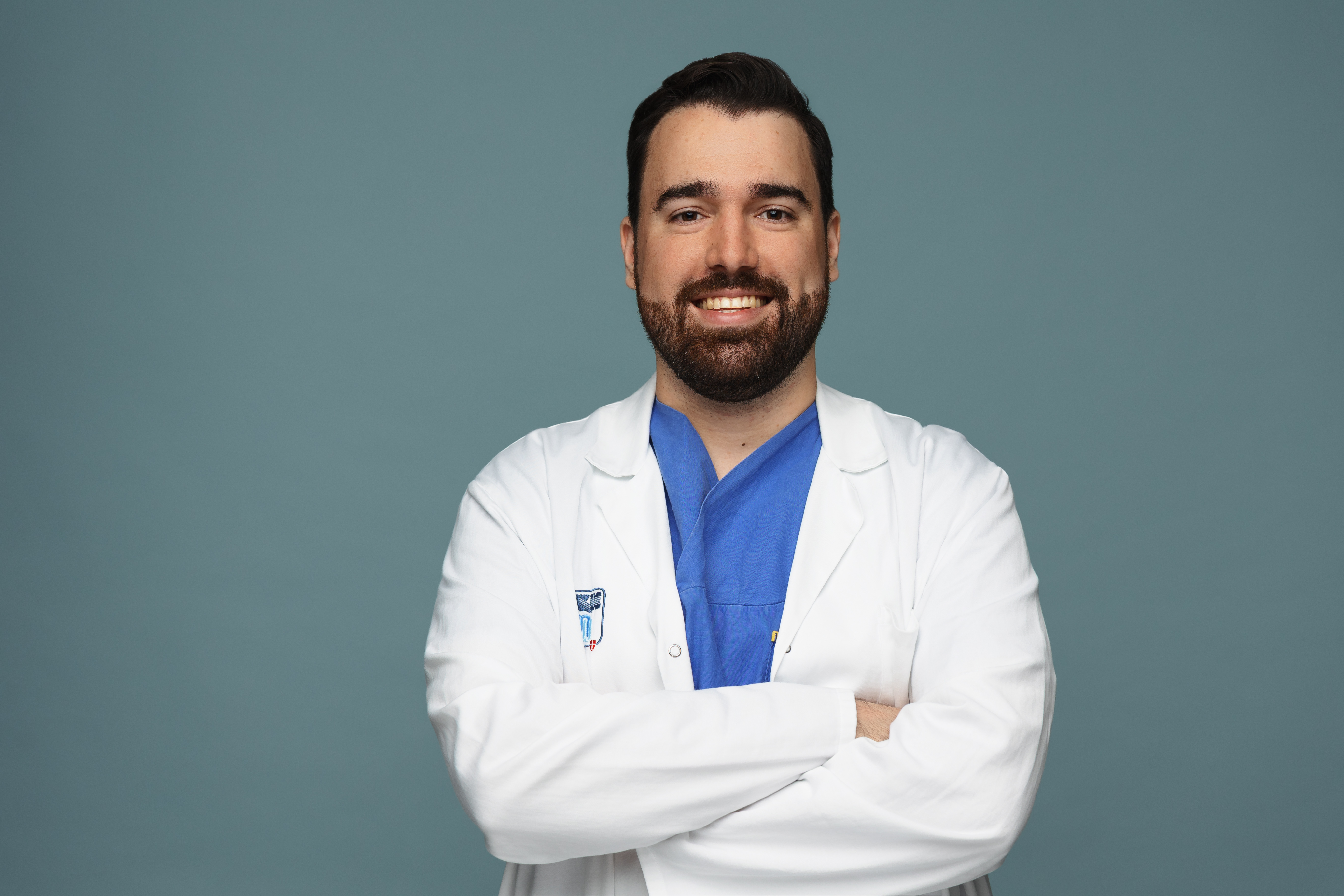
(Vienna, 01 June 2026) Pedro Wendel Garcia will take up a §99 (5) assistant professorship in “Translational Intensive Care Medicine” under the tenure-track model at the Medical University of Vienna from the beginning of June 2026. At the Division of Cardiac Thoracic Vascular Anaesthesia and Intensive Care Medicine at MedUni Vienna, he will combine clinical intensive care medicine, basic research, data science and artificial intelligence.
Over the past decades, intensive care medicine has made a significant contribution to keeping critically ill patients alive and developing new treatment standards. At the same time, the discipline now faces a key challenge: many patients are still classified according to clinical syndromes and treated with standardised treatment bundles. Whilst this classification is important for clinical practice, it often fails to adequately reflect the biological diversity of severe illnesses.
Pedro Wendel Garcia’s research group is therefore pursuing a translational precision approach to intensive care medicine. The aim is to gain a better biological understanding of classic intensive care syndromes, such as therapy-refractory septic shock, and thereby enable more targeted treatments. To this end, the team combines laboratory research with big data methods and artificial intelligence.
The focus is on determining which patients benefit from specific therapies and which do not. Together with international consortia, Wendel Garcia is developing data-driven methods to identify treatable subgroups of critically ill patients. In addition, his team is researching new therapeutic approaches such as synthetic oxygen carriers and is working on a certifiable AI assistant for the control of mechanical ventilation.
About the person
Pedro Wendel Garcia studied mechanical engineering at ETH Zurich and subsequently completed studies in medicine and biostatistics at the University of Zurich. There, he completed his doctorate on the use of extracorporeal blood purification methods in septic shock. This combination of engineering, data science and clinical medicine continues to shape his scientific approach to this day.
His career initially took him to the Institute of Robotics and Intelligent Systems at ETH Zurich, where he conducted research into micro- and nanorobots for biological applications. He then worked at the Institute of Intensive Care Medicine at the University Hospital of Zurich. At MedUni Vienna, he works as a doctor and conducts research at the Division of Cardiac Thoracic Vascular Anaesthesia and Intensive Care Medicine within the Department of Anaesthesia, Intensive Care Medicine and Pain Medicine. His current research into the application of artificial intelligence in mechanical ventilation control is funded by the Austrian Research Council.