
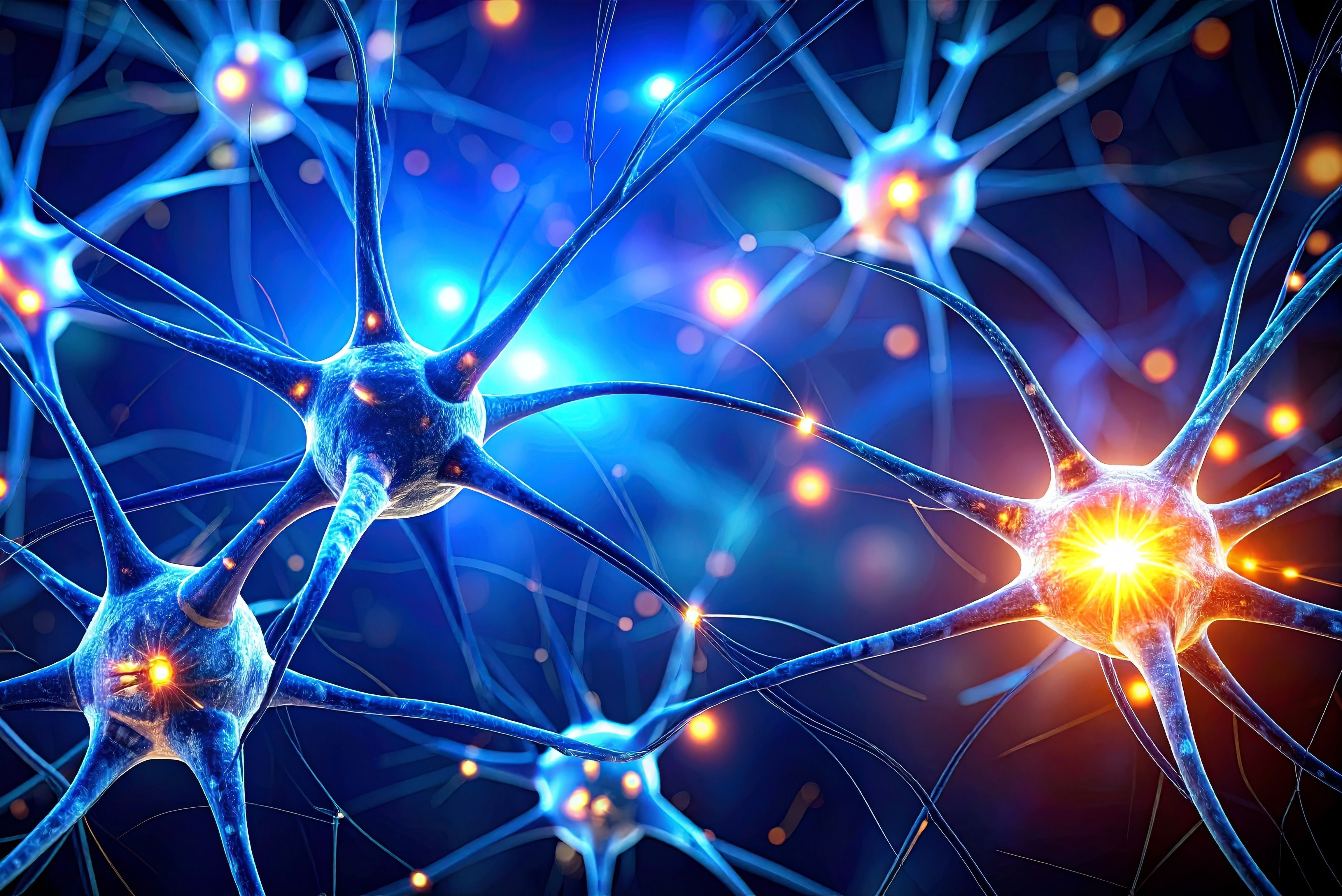
(Vienna, 07-05-2026) – Following brain injuries such as stroke or traumatic brain injury, nerve cells in the brain can become overactive, causing further damage beyond the direct consequences of the injury. A research team led by MedUni Vienna has now identified a molecular mechanism that links this process directly to the cells' energy metabolism. The findings, currently published in the Journal of Cell Science, provide a new starting point for developing targeted protective strategies for nerve cells to reduce neuronal impairment following brain injuries.
The research team led by Vanessa Göschl and Helmut Kubista from the Division of Neurophysiology and Neuropharmacology at the Center for Physiology and Pharmacology at MedUni Vienna focused their investigations on the so-called alpha-ketoglutarate dehydrogenase complex (α-KGDHC), a key enzyme in the mitochondria – the cells' "powerhouses". This enzyme plays a central role in how nerve cells generate energy whilst simultaneously processing the neurotransmitter glutamate – a chemical messenger that enables communication between nerve cells.
Reducing overstimulation of nerve cells
In cell models, the researchers identified a mechanism whereby elevated glutamate concentrations can, via signalling cascades, also impair cells in peripheral areas outside the directly injured brain tissue. In this way, the extent of long-term functional deficits – such as those occurring after a stroke or traumatic brain injury in the form of memory or concentration disorders, language or speech problems, and motor impairments – can be further exacerbated. "Our study shows that such damage can arise not only from the actual brain injury itself, but also from subsequent biochemical processes in the brain," explains lead author Vanessa Göschl. The enzyme α-KGDHC plays a central role in this, linking the energy metabolism of nerve cells with the processing of the neurotransmitter glutamate.
The findings now obtained regarding the close link between energy metabolism and signal transmission in nerve cells can not only improve our understanding of how neuronal disorders develop following brain injuries, but also provide a new starting point for the development of protective strategies: "Our investigations of cell cultures have shown that the vitamin B1 thiamine can reduce the overstimulation of nerve cells and thus potentially minimise damage," says study leader Helmut Kubista. Further research is needed to examine how targeted support for energy metabolism in nerve cells following brain injuries can be utilised therapeutically.
Brain injuries such as strokes or traumatic brain injuries are among the most common causes of long-term neurological impairment worldwide. According to the WHO, around twelve million people suffer a stroke each year, with approximately 30 to 40 per cent of them living with permanent functional limitations. Similarly, among the approximately 21 million people who suffer traumatic brain injuries each year, nerve cell damage often persists. The frequency and severity of such damage underscore the urgency of developing targeted protection and regeneration strategies for nerve cells to minimise the long-term consequences of brain injuries.
Publication: Journal of Cell Science
αKGDHC activity modulates glutamate excitotoxicity via metabotropic 1 regulation of NMDA receptors in primary cultures.
Vanessa Goeschl, Matej Hotka, Bernhard Hochreiter, Karlheinz Hilber, Stefan Boehm, Andrey V. Kozlov and Helmut Kubista.
DOI: 10.1242/jcs.264420
https://journals.biologists.com/jcs/article-lookup/doi/10.1242/jcs.264420
The study was funded by the Austrian Science Fund (FWF) (projects P-36145, P-33799 and PAT8605623).