
(Vienna, 11 May 2026) Just in time for the 2026 Eurovision Song Contest in Vienna, the Vienna Pollen Service at the Medical University of Vienna is providing information on the current pollen situation. Pollen forecasts are also available in English for national and international guests, so that travellers with pollen allergies can prepare adequately for their stay.
In the Vienna area, the grass pollen season has started in the beginning of May and is now in progress. As grass pollen is one of the most significant allergy triggers, this is particularly relevant for those with sensitivities to allergy. In addition, the flowering of the manna ash should also be taken into account. This tree, which is common in Vienna – including in the area in front of the Wiener Stadthalle – produces pollen that cross-reacts with olive pollen, a major allergen in the Mediterranean region. However, the good news is that pollen concentrations indoors are significantly lower. From an allergy perspective, a stay inside the Wiener Stadthalle might even be beneficial.
The grass pollen season has recently begun in Vienna
Pollen allergies are a cross-border matter. Grasses are the source of the most common pollen allergy in Austria. Grass pollen is a significant allergen worldwide. This is partly because grasses (Poaceae) are widespread across the globe. Furthermore, cross-reactivity within this plant family is very high, meaning that people usually react to several types of grasses. The gradual flowering of a wide range of grass species makes the grass pollen season complex and the longest pollen season of the year.
The first early-flowering grasses, which herald the begin of the grass pollen season, started to flower at the end of April: sweet vernal grass (Antoxanthum odoratum) and foxtail grass (Alopecurus pratensis). These grass species are almost only found in natural meadows (e.g. in the Vienna Woods).
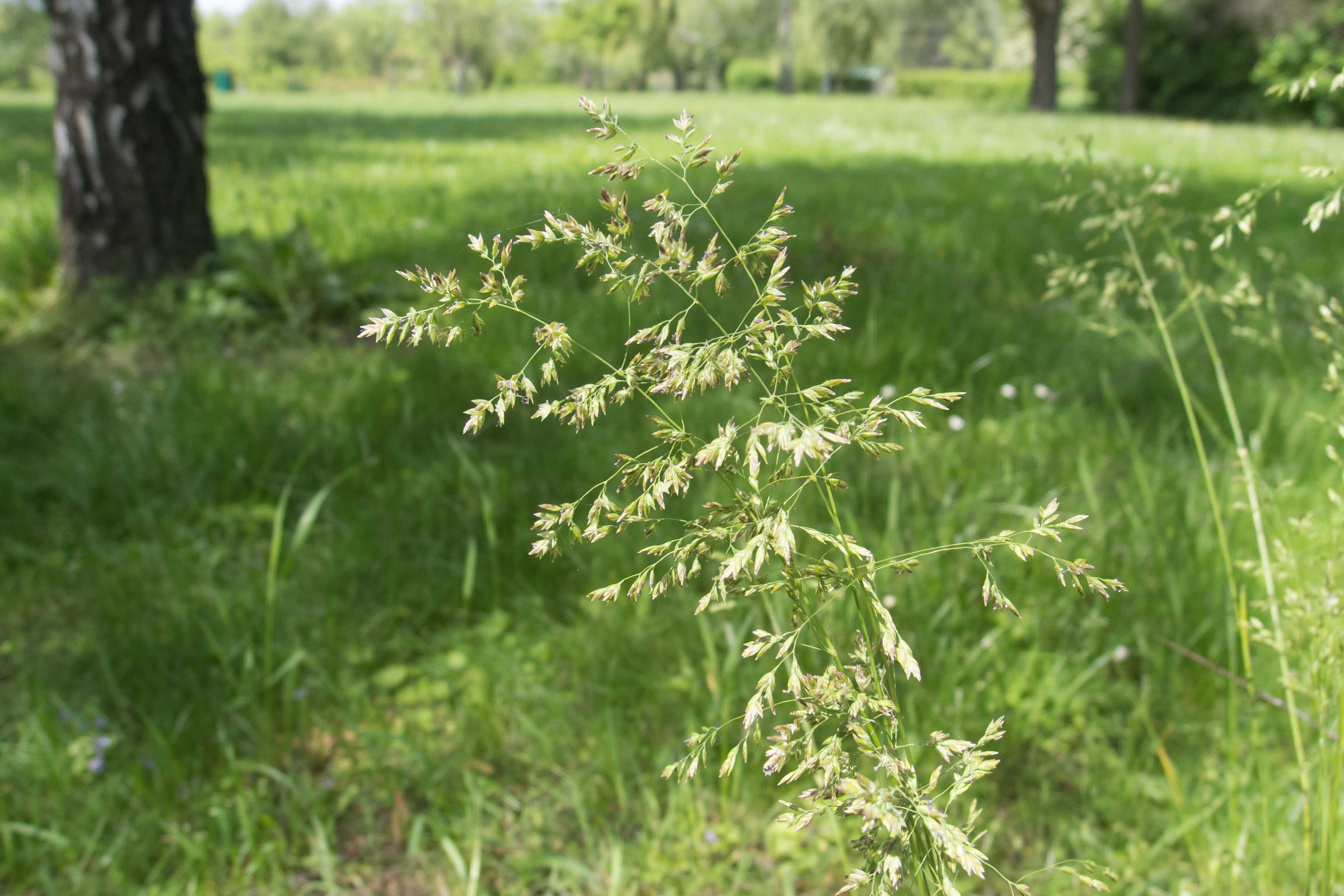
Kentucky bluegrass (Poa pratensis) and orchard grass (Dactylis glomerata) are the grass species whose flowering announce the start of the grass pollen season for pollen allergy sufferers. The former began flowering in early May. Orchard grass and false oat grass (Arrhenatherum elatius), both widespread in urban areas, are also in flower.
Maximilian Bastl from the Vienna Pollen Service at MedUni Vienna explains: “Orchard grass and false oat grass are known for their high allergenicity. They play the leading role at the start of the grass pollen season.”
Manna ash: a late trigger for ash/olive pollen allergy
For anyone with an olive pollen allergy, ash pollen can cause cross-reactivity. Although most ash trees in Vienna have long since finished flowering, there is one species that flowers later: the manna ash, also known as the flowering ash (Fraxinus ornus). It is primariliy insect- and only secondarily wind-pollinated, meaning it relies on insects, unlike other ash species. The striking white inflorescences give off an intense fragrance. Manna ash pollen is still detected in the air, although the tree is already in its post-flowering stage. Locally, in the park in front of the Wiener Stadthalle, there is a large cluster of manna ash trees.
Less pollen in the Wiener Stadthalle
Well known to most, but still important: there is significantly less pollen indoors than outdoors. To minimise exposure on the way, you can wear sunglasses, a hat, or even an FFP2 or FFP3 mask. Taking tissues with you, taking medication in advance and discussing any uncertainties with a medical specialist are important tips alongside checking the pollen forecast.
The website www.pollenservice.wien will be updated regularly during ESC week.
Katharina Bastl from the Vienna Pollen Service at MedUni Vienna sums it up: “Being inside the Wiener Stadthalle is a relief for anyone with pollen allergies compared to being outdoors. Nevertheless, it’s best to be prepared so you can enjoy the ESC with as few allergic symptoms as possible.”
Cooperation with the City of Vienna
The Vienna Pollen Service at MedUni Vienna and the City of Vienna’s Health Service (MA 15) are cooperation partners and are working together to provide more comprehensive information on pollen and allergies. Collaborations include social media (specifically regarding the ESC).
Further information
Full pollen forecast available on the Vienna Pollen Service website: www.pollenservice.wien
Social media: Pollenpaar
Pollen forecast for the main grass species: https://www.meduniwien.ac.at/web/en/pollenservice-wien/pollen-calendar/