
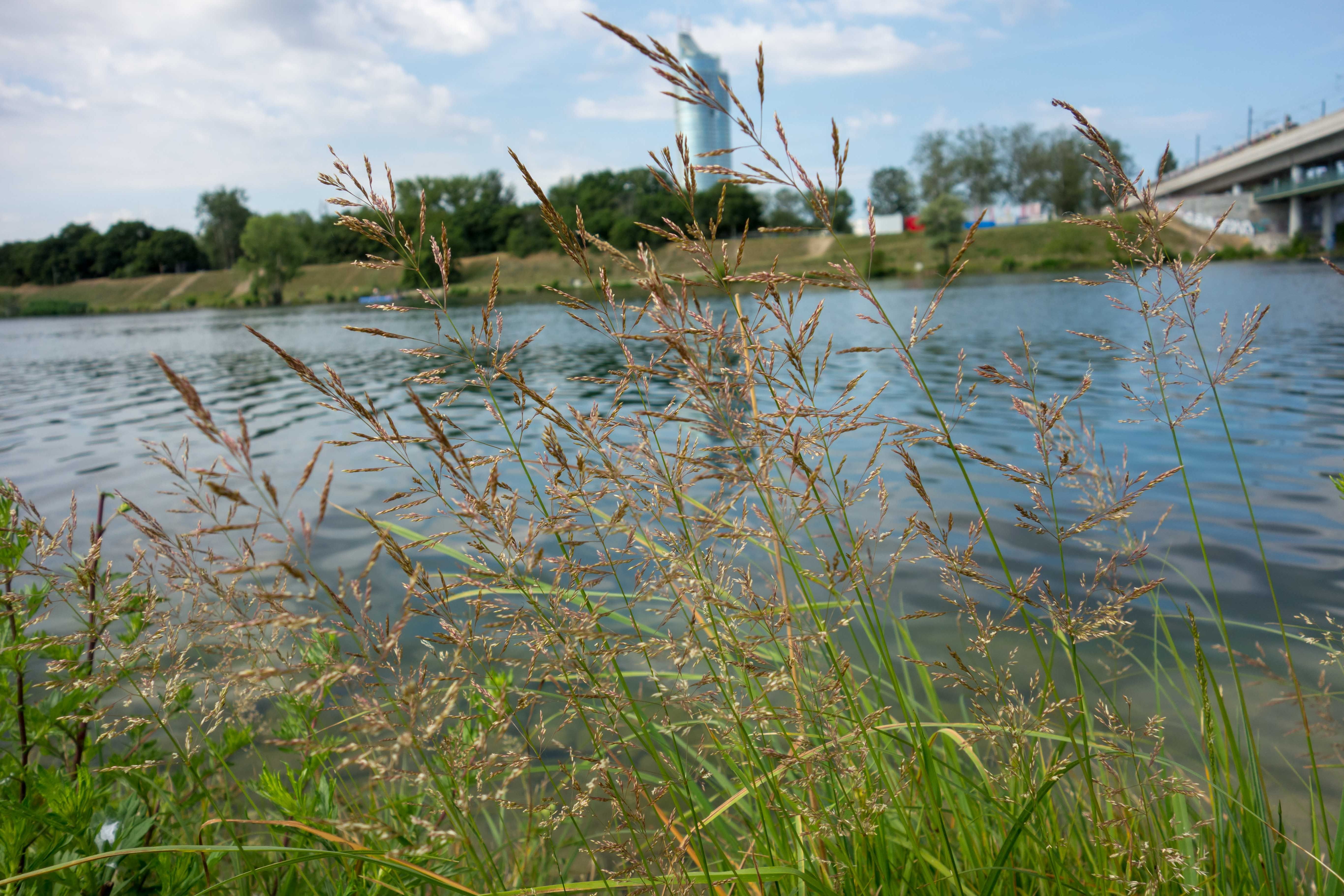
(Vienna, 30 June 2026) Pollen allergy sufferers can expect fairly favourable conditions this year at the Danube Island Festival this coming weekend, from 3 to 5 July 2024. Although the main grass flowering period has come to an end, pollination from grasses is still expected due to secondary flowering and late-flowering grass species, according to the Pollen Service Vienna of the MedUni Vienna. Fungal spores are the second major aeroallergen and can cause high spore concentrations. However, the mugwort pollen season has not yet begun.
The grass pollen season started a little later this year and has so far been slightly below average. The peak level in June was in line with the long-term average. The flowering of many different grass species in May was challenging for many persons concerned. The flower of grasses has now shifted to shadier areas (including forests).
Grasses on the Danube Island
Large areas of the Danube Island have been mowed, and many grass species have finished flowering. Ryegrass, bent grass and reed grass are of particular significance among the flowering grass species found on the Danube Island. Ryegrass is dominant and covers large parts of the meadows on the Danube Island, whilst bent grass and reed grass are more commonly found near the riversides along the banks of the Danube. Bent grass is currently in full flower.
Maximilian Bastl from the Pollen Service Vienna of the MedUni Vienna advises: “Most grasses release their pollen into the air mainly during the morning, but some, such as bent grass, cause pollination during the afternoon. Therefore, local pollination is currently to be expected on the Danube Island also in the afternoon.”
The current, but often forgotten main allergen: fungal spores
Fungal spores are the second main allergen besides grasses. High levels are quite possible at this time of year.
The occurrence of fungal spores benefits particularly from warm, humid conditions. Spore concentrations rise rapidly shortly after rainfall during warm weather. Alternaria and Cladosporium are the most common types of spores in the air.
Other allergy triggers
Plantain is growing and flowering in the meadows and along the verges on the Danube Island and throughout the rest of Vienna. Plantain frequently is an additional trigger in grass pollen allergies.
Urticaceae such as stinging nettle and glasswort flower as well.
The season of later-flowering trees, such as the tree of heaven and the sweet chestnut, has come to an end.
The next flowering phase is approaching: mugwort
Mugwort is commonly found on the Danube Island. However, its development has not yet progressed far enough. The majority of the plants have not yet formed influorescences. The start of the mugwort pollen season is therefore still ahead of us.
Katharina Bastl from the Pollen Service Vienna of the MedUni Vienna concludes: “The basic conditions are good for pollen allergy sufferers this year. However, if you have a pollen allergy, you should always make sure you’re prepared. We provide updates, as the weather still has a say in pollination and spore concentrations.”
Pollenservice Vienna as partner of the Danube Island Festival
The Pollen Service Vienna of the MedUni Vienna is an official partner of the Danube Island Festival. Accordingly, there is also collaboration on social media.
Further information
Pollenservice Wien website: www.pollenservice.wien
Direct link to the event forecast: https://www.meduniwien.ac.at/web/en/pollenservice-wien/event-forecast-donauinselfest/
The websites will be updated again before the weekend.
Social media: Pollenpaar on Instagram, Bluesky, X and TikTok