
Pollen season 2026: An overview
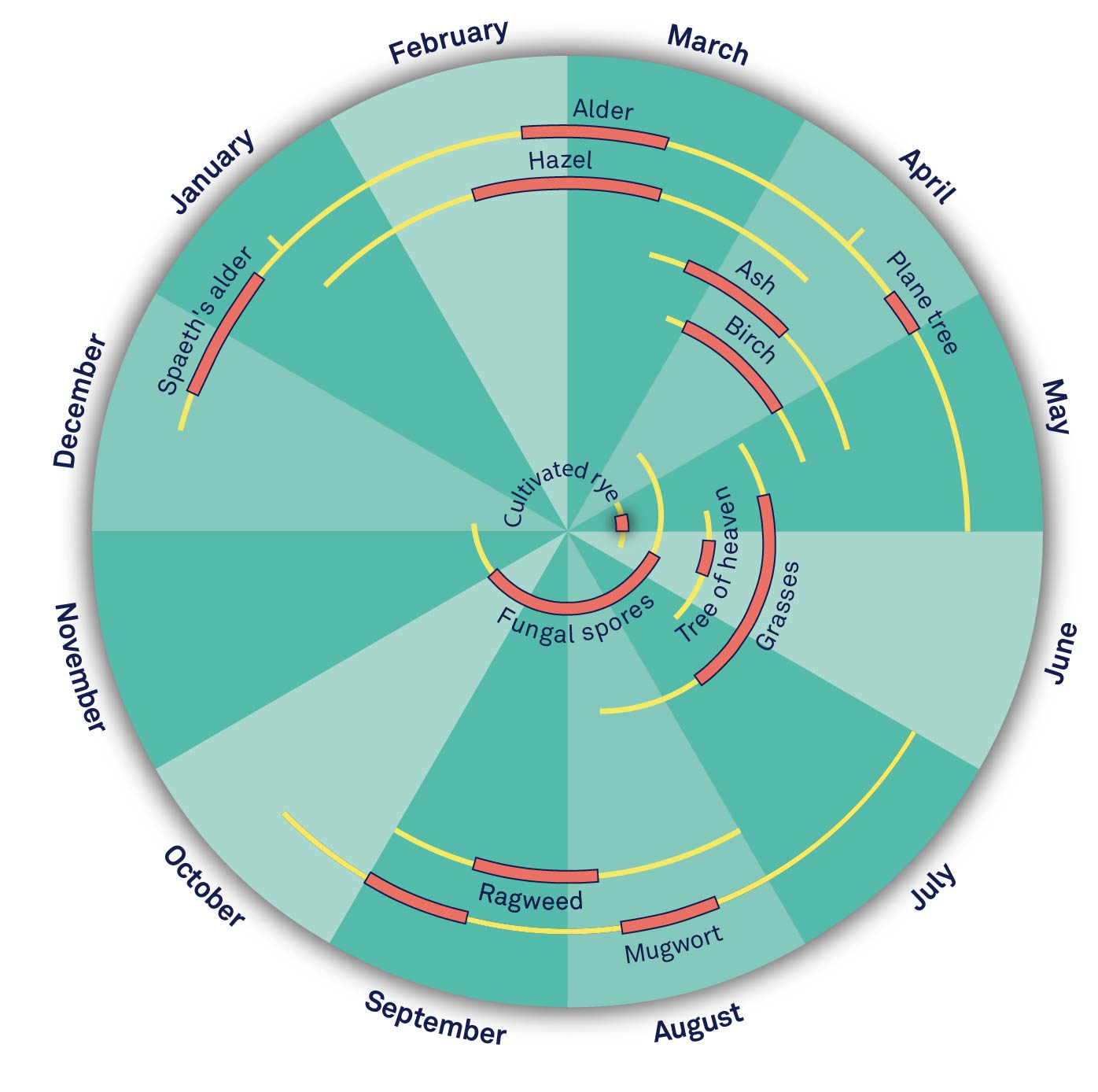
March marks the change from the pollen release of early flowering plants such as hazel and alder to the next major aeroallergens, ash and birch.
What has happened so far:
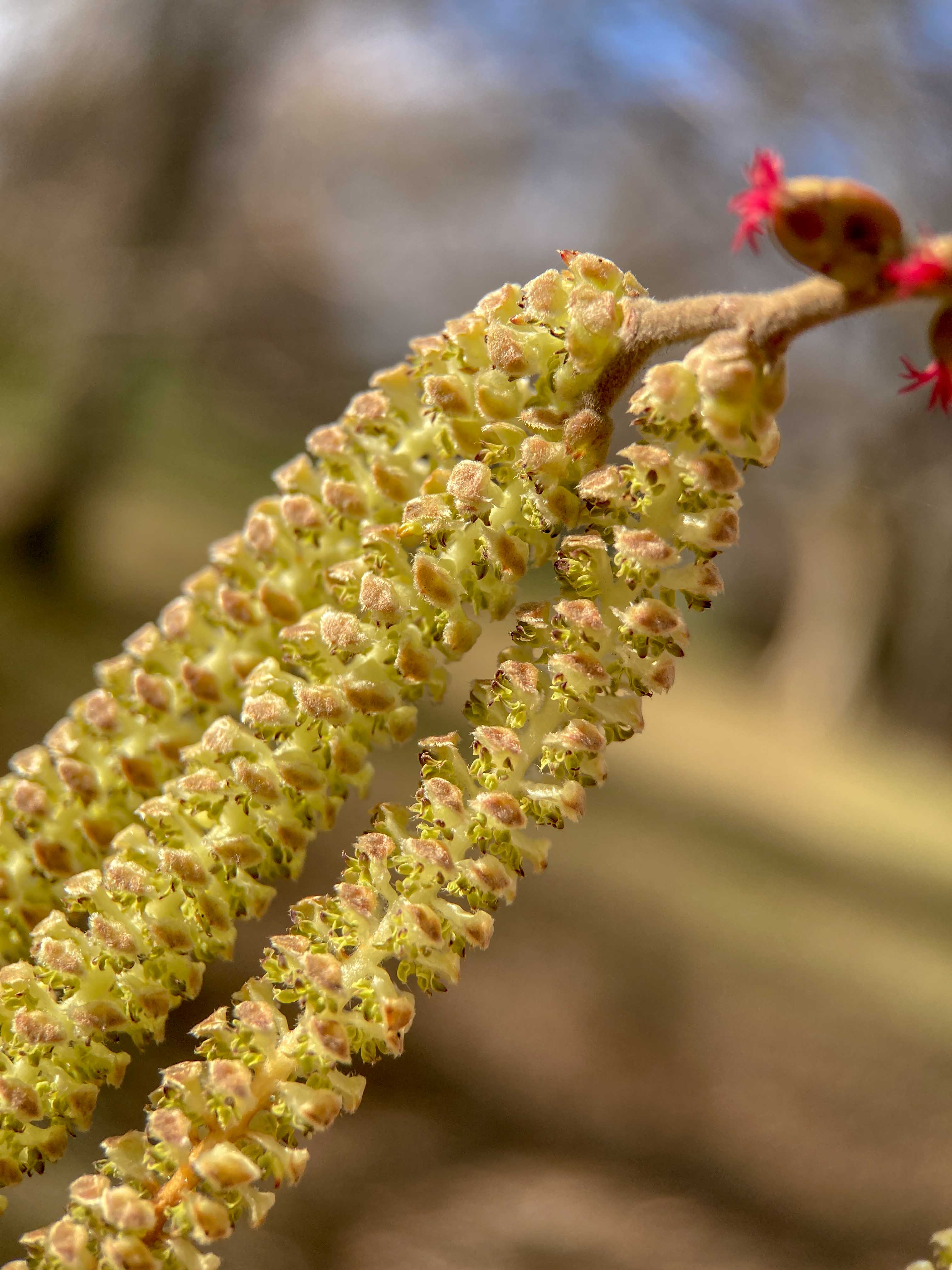
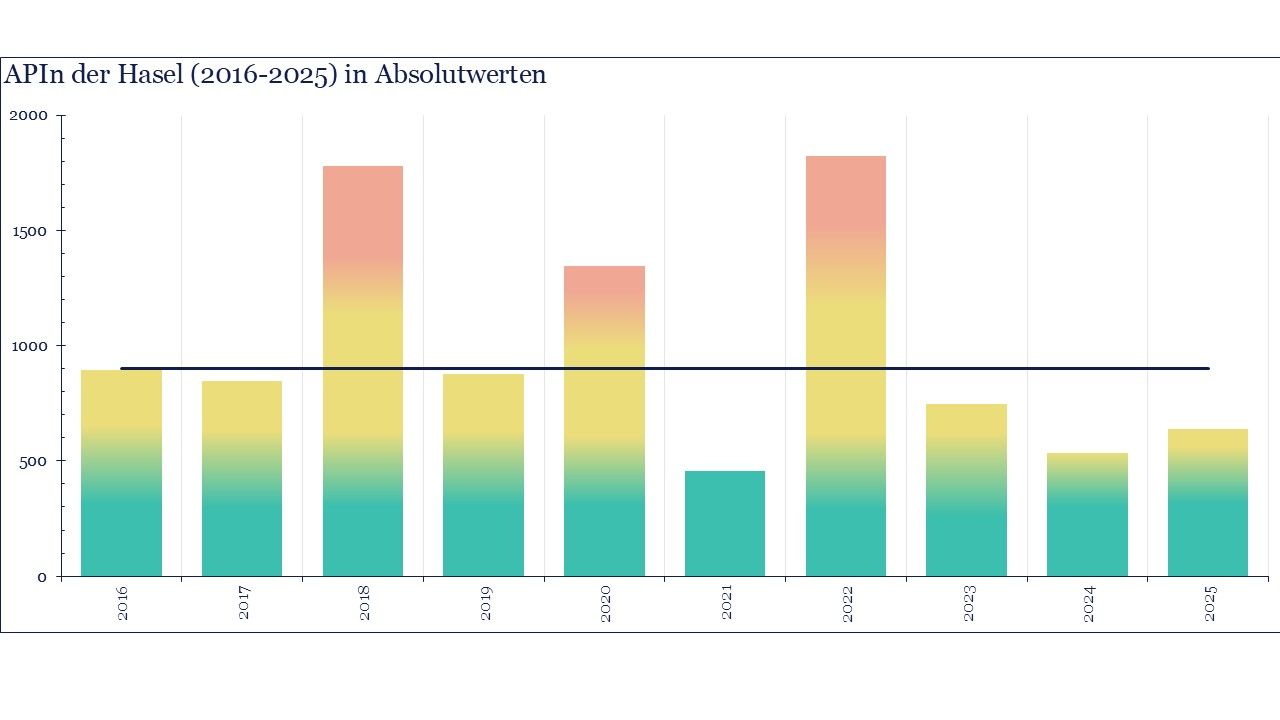
Hazel reached its readiness to flower at the end of January. The first hazel pollination was measured on 5th of February 2026. The highest hazel pollen concentration was measured on 1st of March 2026 (as of March 5, 2026).
This hazel pollen season is a more intense one as announced in January 2026. Even though flowering is not yet complete, it already ranks 22nd out of 51 in Vienna's pollen measurement history.
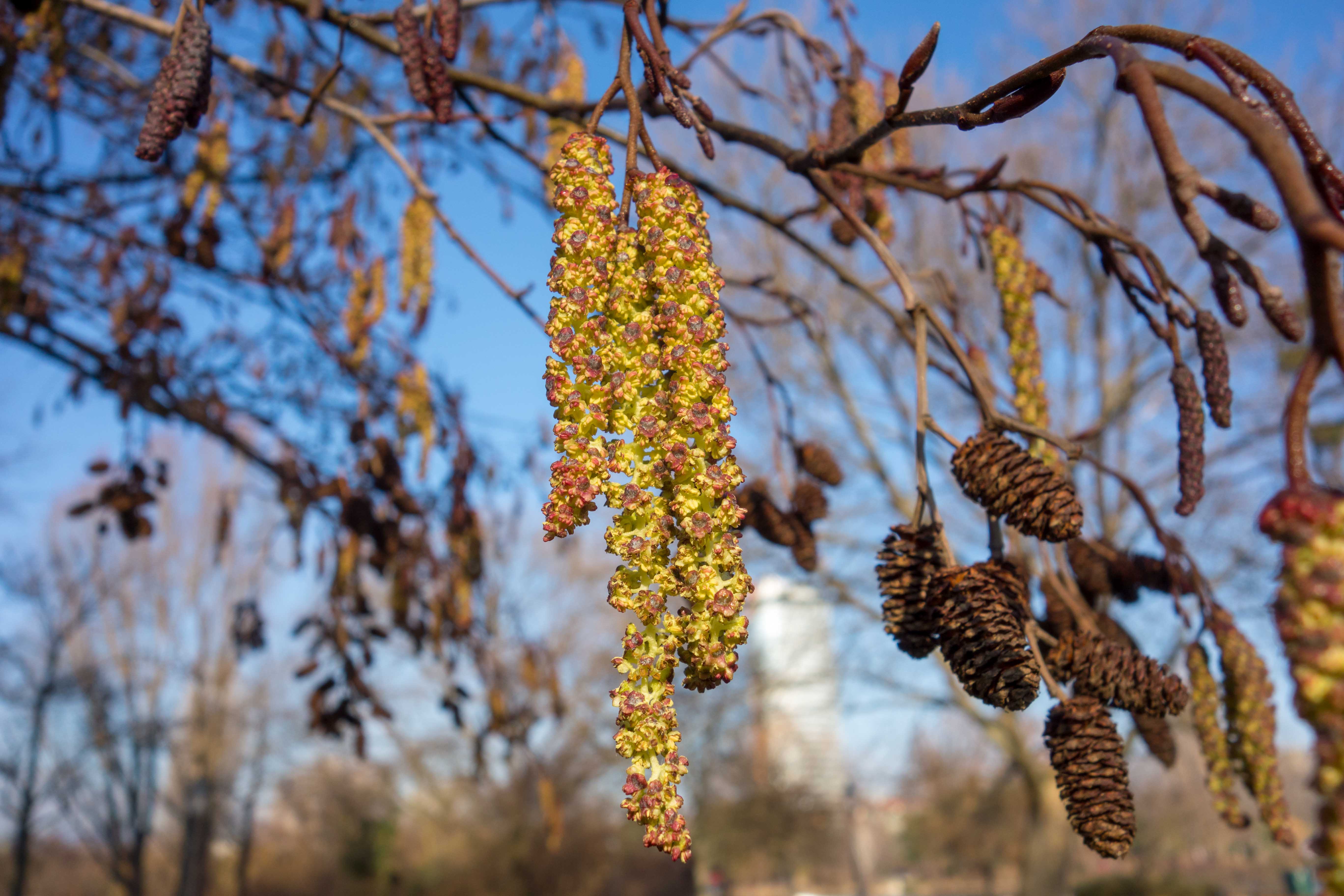
Alder reached its readiness to flower shortly after hazel. The first alder pollination was measured on 13th of February 2026 (note: purple alder flowering can only be monitored phenologically in Vienna, as it is rarely planted). The highest alder pollen concentrations this season were measured on 1st of March 2026 (as of March 5, 2026).
Also, the alder pollen season is a more intense one as announced in January. Although flowering is not yet completed, it already ranks 15th out of 51 in Vienna's pollen measurement history.
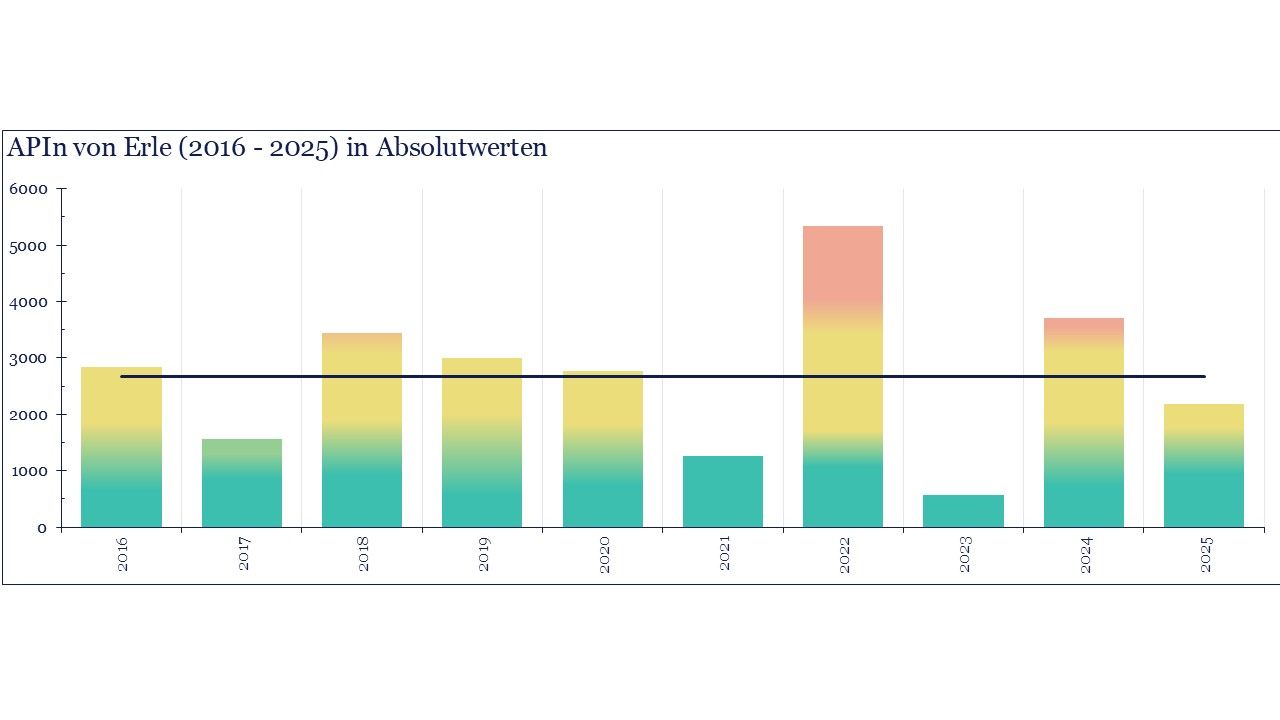
Status quo and near future:
Pollen concentrations for the early flowering plants hazel and alder are declining.
Ash pollen season:
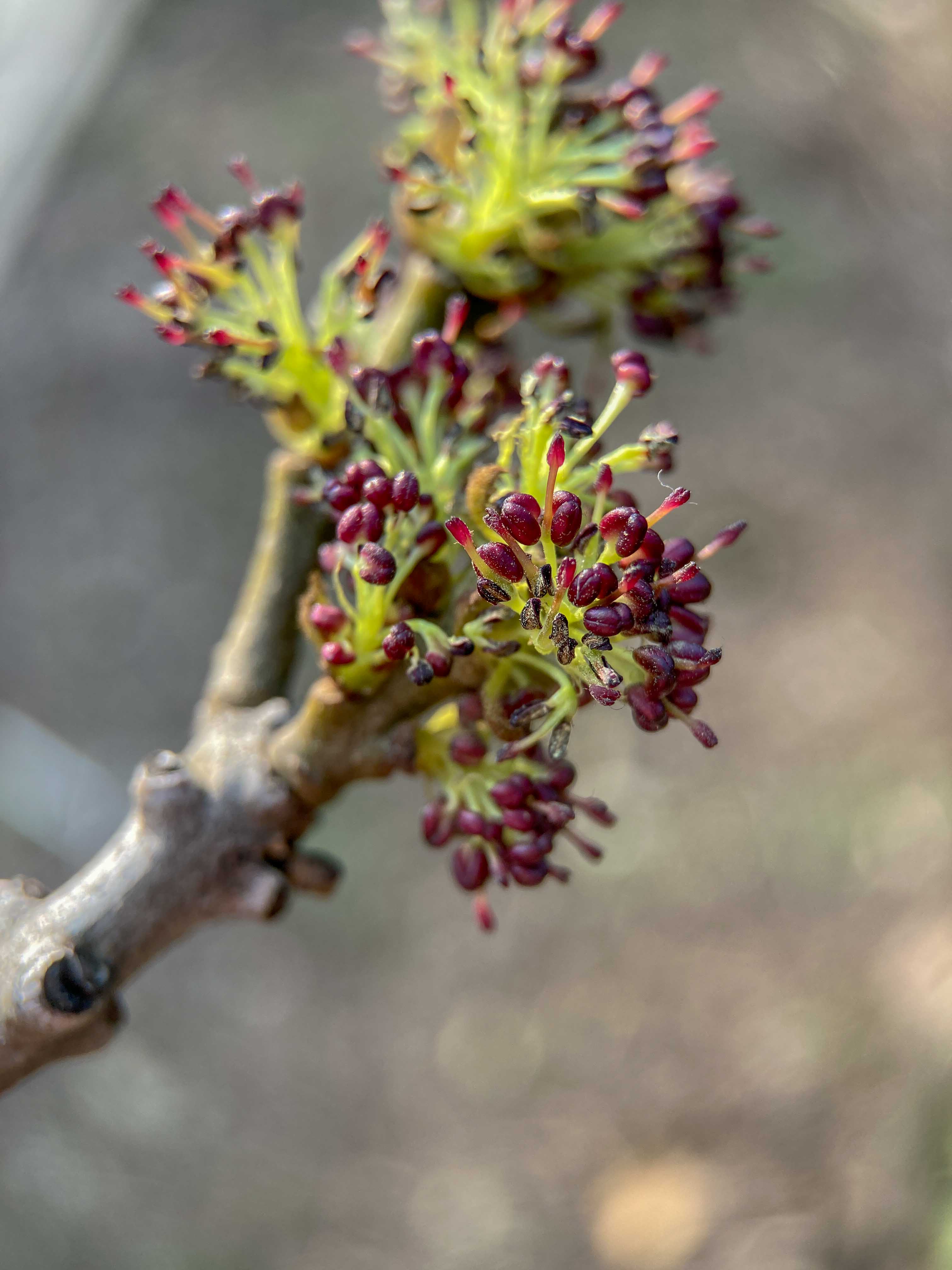
The first ash trees started to flower in Vienna and ash pollen has already been observed in the pollen trap on the roof of the MedUni Vienna's Institute of Forensic Medicine. It is not possible to reliably estimate the intensity of flowering based on the buds alone. Similarly, it is not currently possible to make any statements about ash dieback based on pollen concentrations.
Birch pollen season:
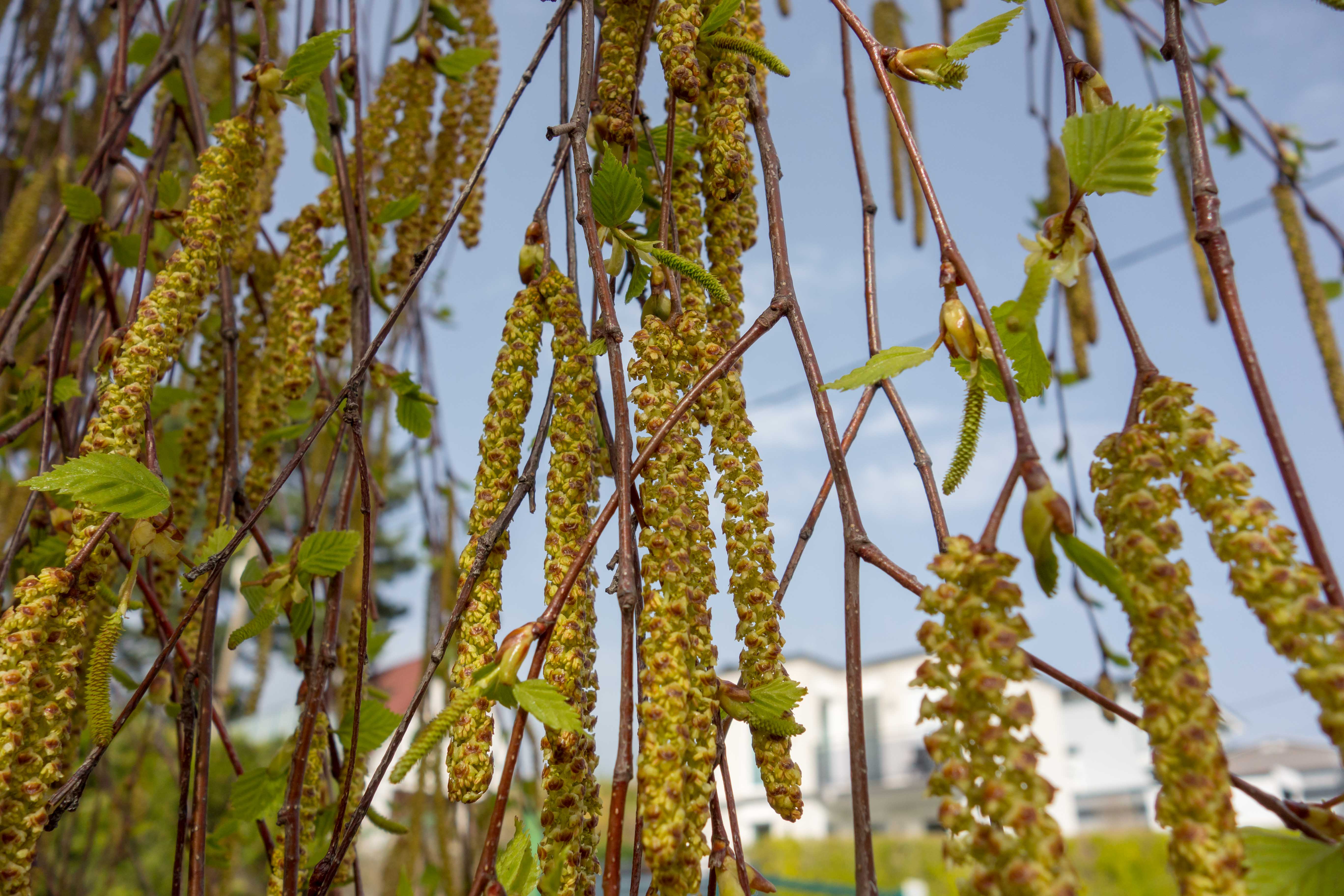
There is potential for a more intense birch pollen season this year as already announced in January. The catkin yield is above average. However, the weather during the birch pollination period has a decisive influence on pollen dispersal. In recent years, one potentially intense birch pollen season has been “washed out” due to persistent rainfall.
When will it start?
Currently (as of March 8, 2026), the catkins are still immature. Flowering usually begins at the end of March in Vienna. In mild weather the flower has started as early as mid-March but also April is possible if flowering is delayed due to unfavorable weather conditions.
The Pollen Service Vienna of the MedUni Vienna reports continuously as soon as the readiness to flower has been reached and only the right weather for the start of flowering is needed.

What else is coming?
Grasses
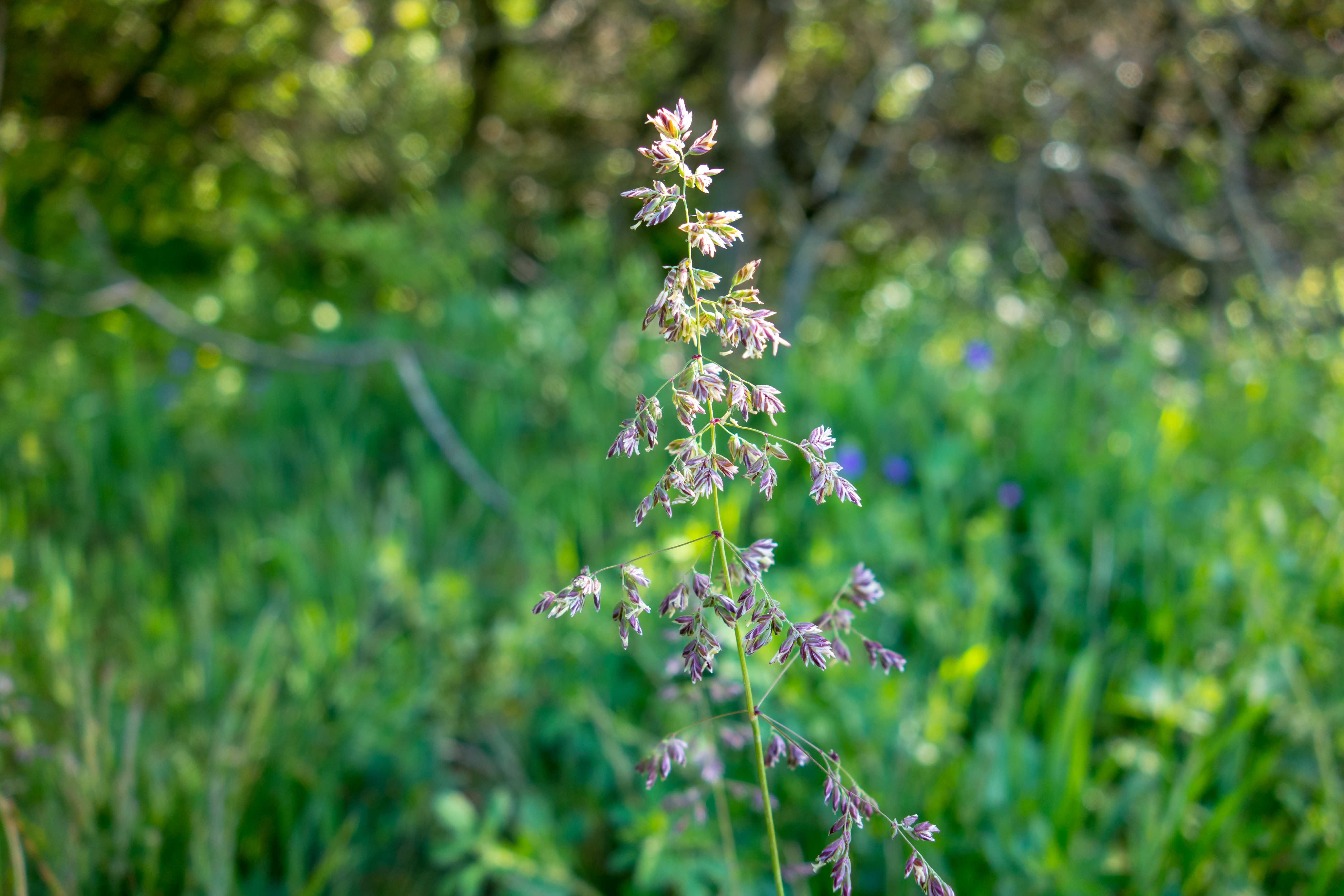
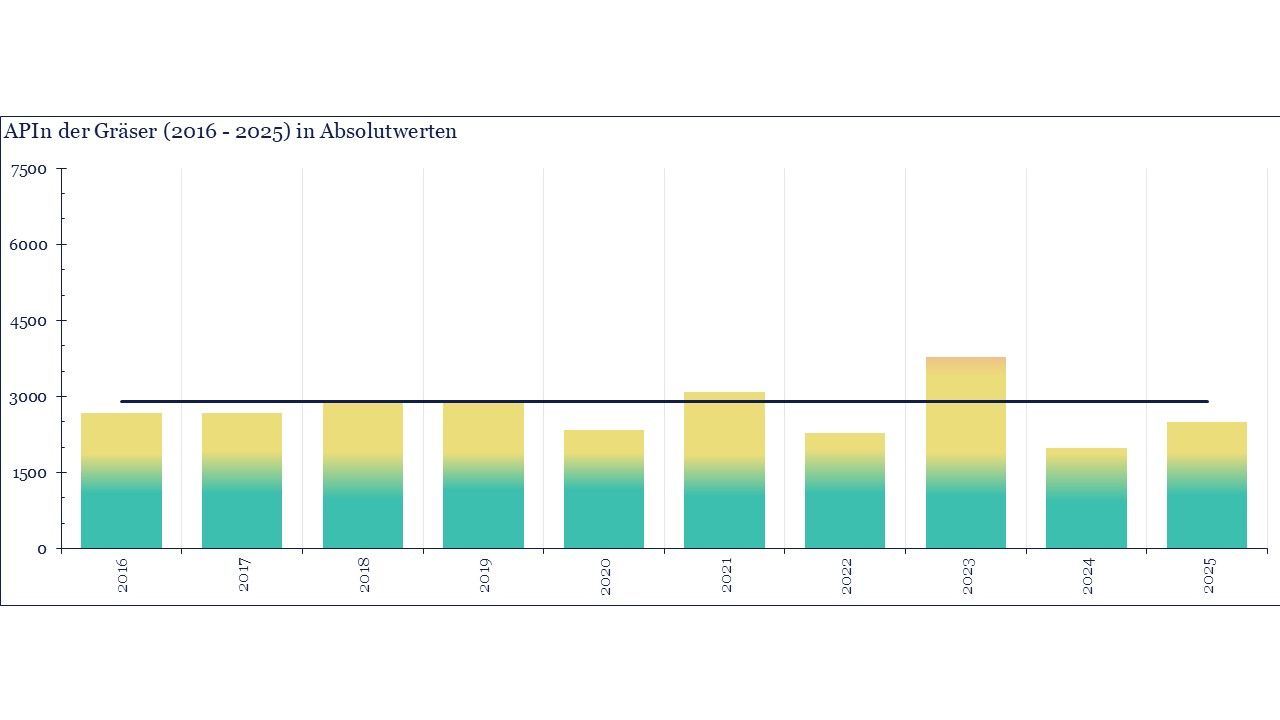
At this point it is impossible to predict how intense the grass pollen season will be. An important factor in the grass pollen season is which grass species will benefit from this year’s climatic conditions. Different types of grass not only have different pollination periods, but also different allergenicity. Although cross-reactivity among sweet grasses (Poaceae) is very high, there are still significant differences between people affected by grass pollen allergy, which can be explained by the composition of the different genera and species that contribute to pollen dispersal.
The first flowering grasses in natural meadows can be observed in April. The grass pollen season usually starts in the first half of May.
Mugwort
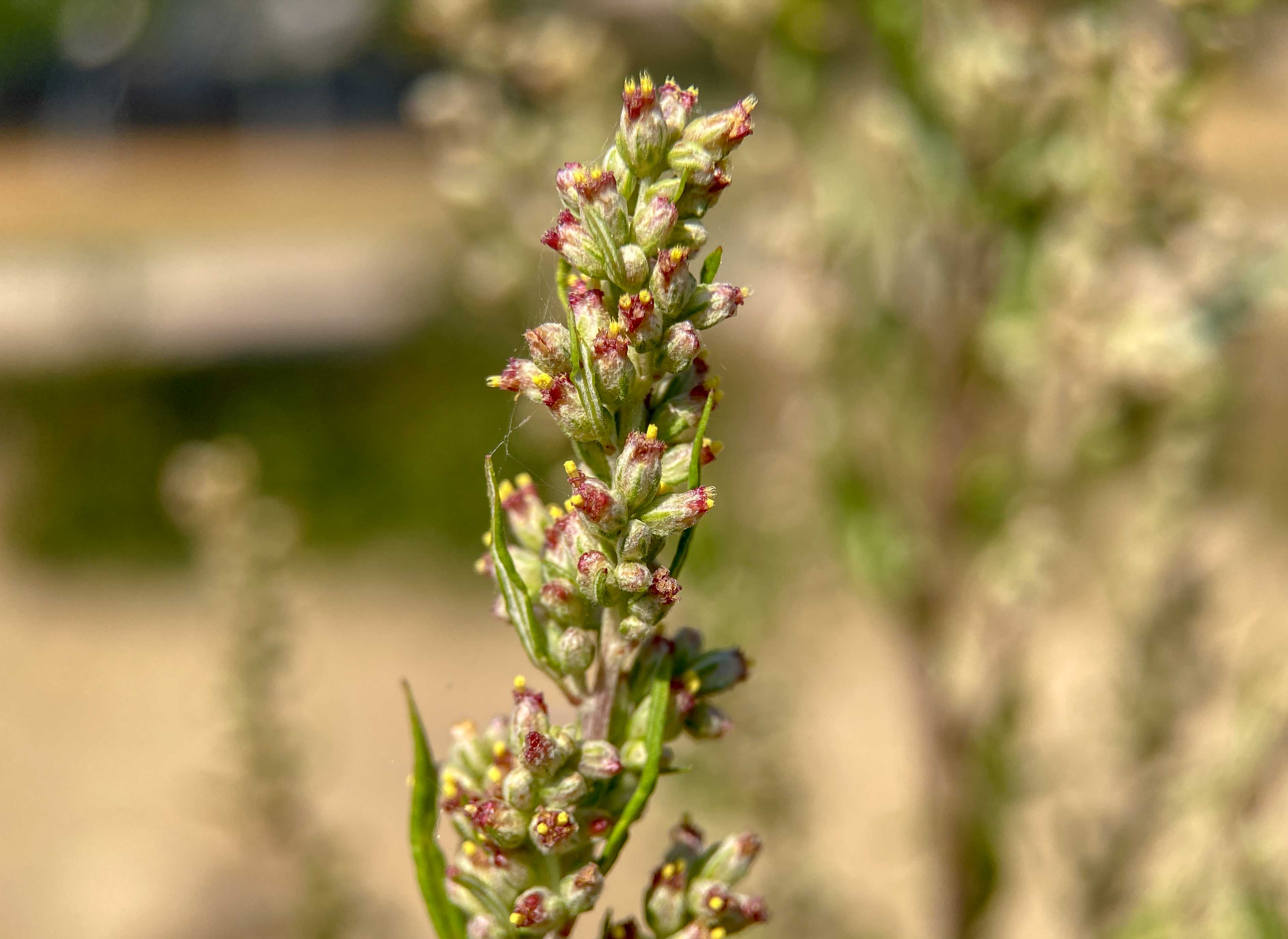
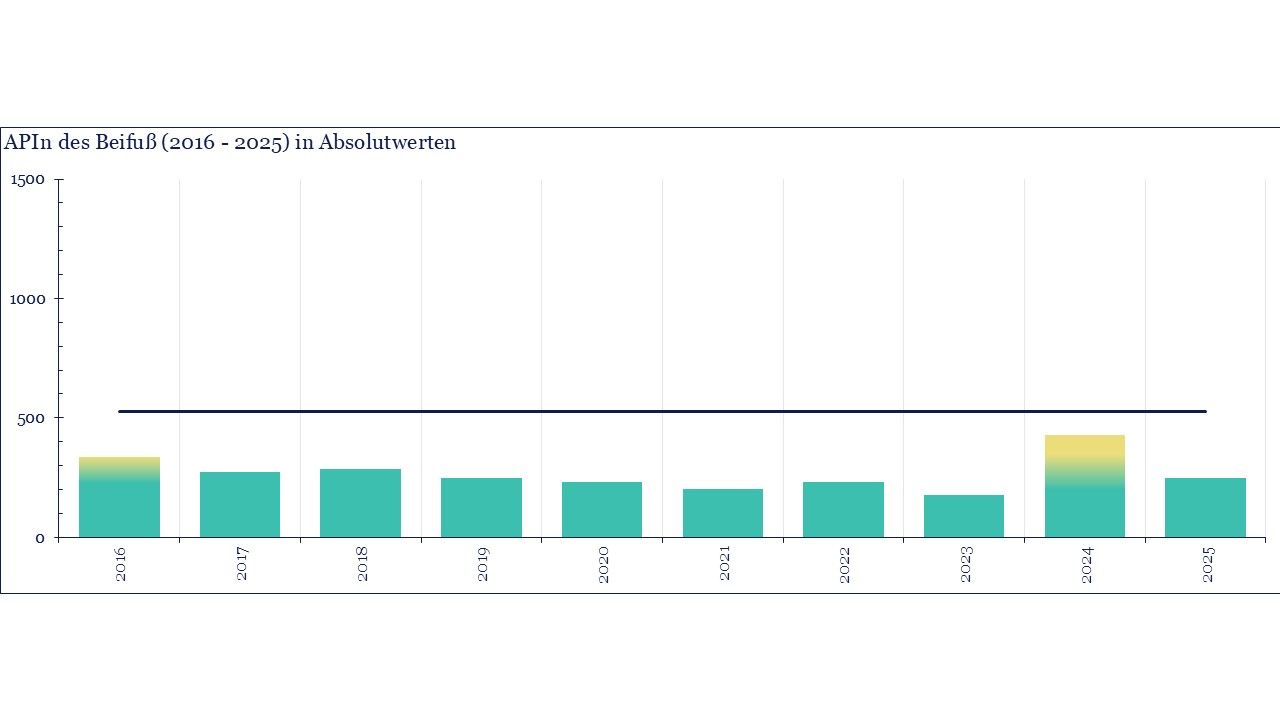
At this point it is impossible to forecast how intense the mugwort pollen season will be. Rainfall in spring and early summer is a decisive factor for plant growth. Moreover, a second flowering phase may occur in autumn due to neophytic mugwort species (see Fig. 1), especially in hot years (such as 2023 and 2024). We have also published the scientific outcomes on this phenomenon in Vienna. These non-native species only flower in mild autumns.
You can read more about neophytic mugwort species and how to recognize them in the Bioskop article. Mugwort usually starts to flower in July, with the main pollination period occurring in August.
Ragweed
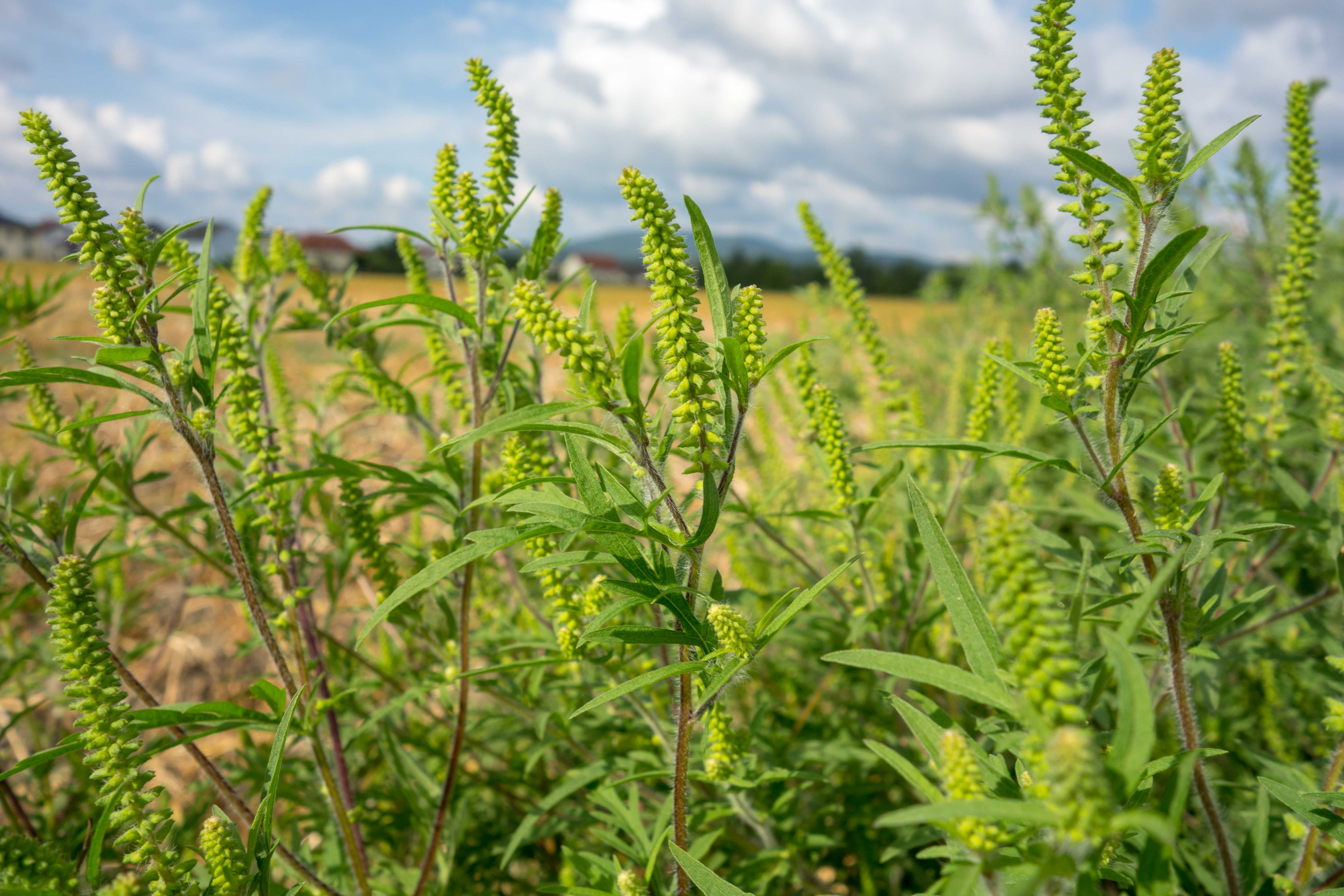
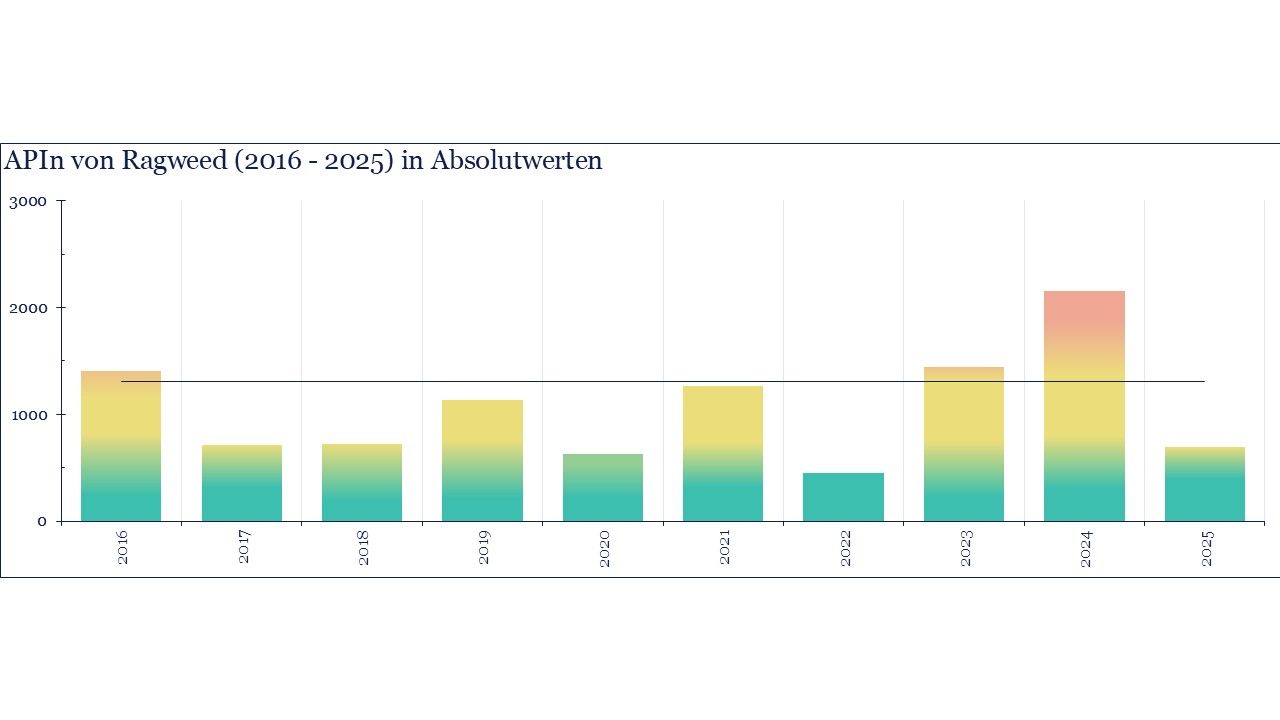
Ragweed is a neophyte that established itself in eastern and southern Austria some time ago. Prof. Siegfried Jäger from MedUni Vienna was the first to draw attention to this then-new allergen. There is a high degree of cross-reactivity between mugwort and ragweed, which can significantly prolong the duration of symptoms for those affected. Currently, it is not possible to predict how intense the ragweed pollen season will be. Precipitation in spring and early summer is a decisive factor for plant growth.
Ragweed usually starts to flower in August, with a peak pollination period occurring in late August/early September.
What does this mean for pollen allergy sufferers?
The last year (2025) was generally not very intense (see review), but this year will be different. The early-flowering trees and shrubs, which all show cross-reactivity, have the potential for a more intense flowering. This also means greater vigilance regarding cross-allergies to foods such as nuts, stone and pome fruits, or other foods in the case of hazel/alder or birch pollen allergies.
Allergies are individual. Remember to optimize and adapt your allergen avoidance where possible and contact medical specialists if you have severe problems so that you can achieve the best possible quality of life. Also, don't ignore pollen forecasts, preferably from local sources and scientific institutions.
New research findings:
The importance of aromatic-lactate-producing bifidobacteria in reducing the tendency to develop allergies and sensitization rates in early childhood has recently been proven. High concentrations of these bacteria during breastfeeding significantly reduce the incidence of allergic diseases and are a key element in shaping the immune system. The window of opportunity for such bacteria to have a beneficial effect is short and, according to the study, is already reached around the second month of life. Higher concentrations of these bifidobacteria also occur in vaginal births, siblings, and exclusive breastfeeding, thus providing an explanation for these already known beneficial factors.
You can find the publication here.
Just recently, findings on misinformation about allergies on social media (Facebook, Instagram, TikTok, and X) in English-speaking countries were analyzed for the first time. The results: Allergy-related misinformation is ubiquitous, generates high engagement, and is only corrected to a limited extent. Among the most common narratives are promotion for natural cure, medication fearmongering, and conspiracy theories about the pharmaceutical industry. There is a need for more evidence-based, scientific communication on social media.
You can find the publication here.
That is our motivation for being active on social media. As the “Pollenpaar”, we communicate scientific information on the topics of pollen and allergies.
Helpful:
You can find the usual pollen season times in our pollen calendar.
An FAQ on pollen allergies (how many people are affected, how they are diagnosed and treated) can be found here.
Tips on allergen avoidance can be found here.
Want more?
Feel free to contact us for more images and information.